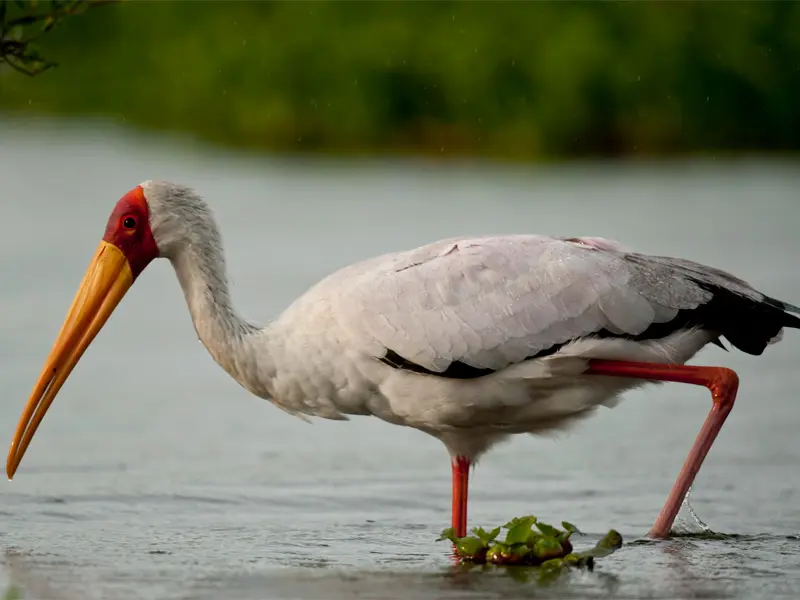
Shoebill Stork Uganda
TL;DR – The shoebill stork is one of the strangest, most ancient-looking birds on earth. Uganda is one of the best places to find one, and Mabamba Swamp – just outside Entebbe – is where most sightings happen. A half-day canoe trip is all it takes. Here’s exactly what to expect.
What Is the Shoebill Stork?
The shoebill (Balaeniceps rex) is a massive, prehistoric-looking waterbird that stands up to 1.5 meters tall and carries a bill the size and shape of a Dutch clog. It doesn’t look like it belongs in the modern world – and evolutionarily speaking, it barely does. The shoebill lineage is ancient, and its closest living relatives are pelicans and herons, though it looks like neither.
It moves in near-total stillness. It can stand motionless in shallow water for 30 minutes at a stretch, waiting to strike at lungfish with a sudden, violent lunge. When it finally does move, it moves fast. The rest of the time, it just stares.
That stare is the thing people remember. It looks directly at you with an expression that suggests it has seen entire geological epochs come and go and remains deeply unimpressed.
Where to See Shoebill in Uganda
The shoebill is found across a narrow band of central African swamps – from Sudan and South Sudan down through Uganda, Rwanda, and into the DRC. Uganda holds one of the healthiest populations, with key sighting spots including:
- Mabamba Swamp – the most accessible and most reliable
- Murchison Falls National Park – particularly the delta area where the Nile meets Lake Albert
- Ziwa Rhino Sanctuary wetlands
- Semuliki Wildlife Reserve
Of all these, Mabamba is where to see shoebill if you want a near-guaranteed sighting with minimal effort. It sits on the northern shore of Lake Victoria, about 35 kilometers from Entebbe – meaning it works perfectly as a half-day addition before or after a flight.
The Mabamba Swamp Tour: What Actually Happens
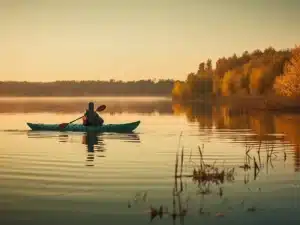
The Mabamba Swamp tour runs by canoe. There are no motorboats – the papyrus channels are too narrow and the noise would scatter everything. You sit low in a wooden dugout, your guide paddles, and you move through a maze of reeds in near silence.
The swamp is dense. Channels open and close depending on the season, and your guide navigates from memory. You’ll hear the calls of other waterbirds – jacanas, malachite kingfishers, African pygmy geese – before you see much of anything.
Then someone spots it.
The shoebill is almost always found standing completely still in shallow papyrus. Sometimes it’s in the open, sometimes half-hidden by reeds. Your guide maneuvers the canoe to within 10 or 15 meters. And then you just – sit there together. The bird looks at you. You look at the bird. It doesn’t flinch. It doesn’t move. It simply holds your gaze with a calm, prehistoric authority that makes you feel like the newer species in the conversation.
Most sightings last between 10 and 40 minutes. When the shoebill decides it’s done with you, it opens its wings – a wingspan of over 2 meters – and lifts off with a slow, heavy grace that doesn’t seem possible for something that size.
Birding in Uganda: More Than Just the Shoebill
For serious birders, Uganda is one of Africa’s top destinations – and Mabamba is just the starting point. Birding in Uganda covers over 1,060 recorded species, placing it among the highest bird diversities on the continent relative to its size.
A dedicated birding itinerary in Uganda might include:
| Location | Key Species |
| Mabamba Swamp | Shoebill, African Finfoot, Papyrus Gonolek |
| Bwindi Impenetrable Forest | African Green Broadbill, Shelley’s Crimsonwing |
| Queen Elizabeth National Park | Martial Eagle, African Skimmer |
| Murchison Falls | Shoebill (delta), Goliath Heron, Pel’s Fishing Owl |
| Kibale Forest | Green-breasted Pitta, Nahan’s Francolin |
Even if you’re not a dedicated birder, Uganda’s diversity is hard to ignore. Clients who go for gorillas almost always come back talking about something they saw in the trees on the way to the forest.
Adding a Mabamba Day to Your Entebbe Itinerary
Most Uganda itineraries route through Entebbe at the start or end of the trip – it’s where the international airport is. Mabamba sits 35 kilometers away on the lake shore, which means:
- Morning arrival flight: Head straight to Mabamba before your internal connection
- Pre-departure day: Do the swamp in the morning, airport in the afternoon
- Dedicated Entebbe day: Combine Mabamba with the Uganda Wildlife Education Centre for a full day
The canoe trip itself runs about 2 to 3 hours. Add 45 minutes each way for the drive and you’re looking at a half-day commitment – which is nothing against what you get in return.
Book your canoe guide through a registered local operator at the swamp. Expect to pay around $30-50 per person including the guide and boat. It’s one of the best value wildlife experiences in East Africa.
FAQ
Where to see shoebill stork in Uganda? – Mabamba Swamp near Entebbe is the most reliable and accessible location. Murchison Falls National Park – specifically the Nile delta area near Lake Albert – is the other top spot, particularly for visitors already doing a northern Uganda circuit.
How long does a Mabamba Swamp tour take? – The canoe trip itself runs 2 to 3 hours on the water. Factor in 35-45 minutes of driving each way from Entebbe. It works comfortably as a morning half-day activity.
Is the shoebill sighting guaranteed at Mabamba? – Nothing in wildlife is guaranteed, but Mabamba has a very high hit rate – experienced guides put it at around 90% during good conditions. Early morning is best, when the birds are more active and the light is better for photography.
Do I need to be a birder to enjoy this? – Not at all. The shoebill is the kind of animal that stops non-birders cold. Its size, its stillness, and its appearance make it one of the most viscerally striking wildlife encounters in Africa – no binoculars or field guide required.
The shoebill isn’t on most people’s Uganda radar until they see a photo of one. Then it becomes non-negotiable. It’s that kind of animal – the sort that rewires your sense of what a bird is supposed to look like.
- Mabamba Swamp is the most reliable shoebill location in Uganda
- A half-day canoe trip from Entebbe – no full day needed
- Pairs perfectly with gorilla trekking or a Murchison Falls itinerary
- Uganda holds over 1,060 bird species – shoebill is just the beginning
If you’re routing through Entebbe and haven’t built Mabamba into your itinerary yet, let’s fix that. We know which guides on the swamp consistently deliver, and we’ll make sure this sits in the right place in your overall Uganda trip without adding unnecessary travel days.
Reach out and let’s put it together.