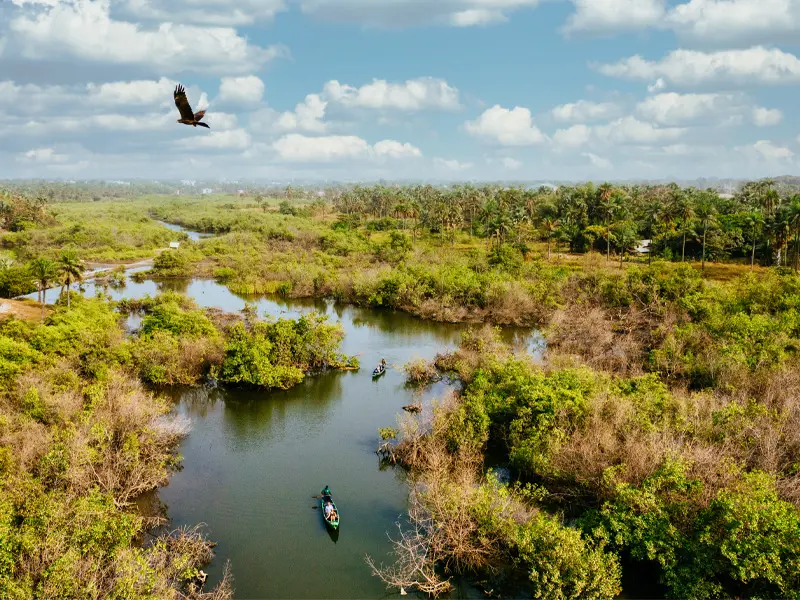
What Is a Lower Zambezi Canoe Safari?
A Lower Zambezi canoe safari is a guided multi-day or single-day experience where you paddle downstream through the Lower Zambezi National Park in a Canadian-style canoe, camping or returning to a lodge each night. The Zambezi River forms the border between Zambia and Zimbabwe here, and the national park on the Zambian bank is one of the least-visited and most pristine wilderness areas in southern Africa.
The canoe changes everything about how you experience wildlife. You’re low, quiet, and moving at the pace of the current. Animals that would react to a vehicle engine don’t register a canoe the same way. You drift to within meters of elephants drinking on the bank. Hippo pods part around you. Fish eagles call from dead trees directly overhead.
It’s a safari from a completely different angle – and once you’ve done it, game drives feel slightly less alive by comparison.
Is Canoeing the Zambezi Safe?
Is canoeing the Zambezi safe? It’s the first question everyone asks, and it deserves a direct answer: yes, with the right operator and guide, it is safe – but it requires respect for the environment and clear briefing before you get in the water.
Here’s what actually keeps you safe:
- Experienced guides lead every trip – professional canoe guides on the Zambezi have years of river experience and read hippo and crocodile behavior with a precision that comes from thousands of hours on the water
- Canoes travel in formation – groups paddle together, with the lead guide setting pace and route to navigate around hippo pods and shallow banks
- Clear safety briefings – before departure, guides explain exactly what to do if a hippo surfaces near the canoe (paddle hard to the bank, stay calm, follow the guide)
- Route selection – guides choose lines through the river that minimize exposure to territorial hippos, using channels and side streams where possible
The risks are real but manageable. Hippos are the primary concern – they’re territorial and unpredictable in water. Crocodiles are present but rarely a threat to canoes. Experienced operators have strong safety records built over decades on this river.
What you should avoid: booking a canoe trip with an operator who can’t tell you about their guides’ specific river experience. The river is safe. Inexperienced guiding is not.
What the Best Canoe Safari in Zambia Actually Feels Like
The experience starts before you even get in the canoe. The morning launch from camp – cool air, mist on the water, the sound of hippos calling somewhere downstream – sets a tone that’s hard to match anywhere in Africa.
On the water, the pace is unhurried. You paddle when the current needs help, drift when it doesn’t. The banks alternate between dense riverine forest and open floodplain, and the wildlife changes with the habitat.
The moments that stay with you:
The elephant crossing – a breeding herd of 30 elephants crossing the river 100 meters upstream, calves swimming with trunks raised, matriarch watching your canoe with calm assessment before leading the group onto the far bank.
The hippo pod – your guide signals to stop paddling. You drift in silence as the canoe passes within 20 meters of a pod of 15 hippos. One surfaces. Looks at you. Submerges. Your heart rate takes a while to return to normal.
The silence – no engine, no road noise, no other vehicles. Just the river, the birds, and the sound of your paddle entering the water. For people who live and work in constant noise, this particular silence lands differently.
Best Canoe Safari Zambia: Which Route to Choose
The best canoe safari in Zambia runs through the lower section of the Lower Zambezi National Park, roughly between Chiawa and the Rufunsa area. This stretch offers the highest wildlife density and the most dramatic river scenery.
Options range from a single afternoon paddle to a five-day fully supported canoe trail:
| Format | Duration | Best For |
| Half-day paddle | 3-4 hours | First-timers, add-on to lodge stay |
| Full-day canoe | 6-8 hours | Serious wildlife experience without camping |
| 2-3 day trail | Overnight camping on islands | Adventure travelers, full immersion |
| 4-5 day trail | Multi-night island camping | The definitive Lower Zambezi experience |
For travelers staying at a lodge, a half or full day on the canoe is the standard addition. For those who want the full experience, a multi-day trail with island camping – waking up on a sandbar in the middle of the Zambezi with hippos calling in the dark – is one of the most extraordinary things you can do in Africa.
Lower Zambezi Luxury Camps: Where to Stay
The Lower Zambezi luxury camps sit on the Zambian bank inside or adjacent to the national park, each offering canoe activities as part of their activity menu.
Chiawa Camp – one of the original and best camps on the river, with exceptional guiding and a location in the heart of the park. Chiawa’s canoe guides are among the most experienced on the Zambezi. The camp itself is intimate – eight tents maximum – and the game viewing on both land and water is consistently outstanding.
Old Mondoro – a smaller, more remote bush camp run by the same operator as Chiawa. Fewer guests, deeper wilderness, and a rawness to the experience that more polished camps can’t replicate. Canoe trips from here feel genuinely off the map.
Sausage Tree Camp – named after the indigenous sausage tree (Kigelia africana) that shades the camp, this is one of the most stylish camps on the river. Large tents, excellent food, and a strong activity program including canoe, game drive, and fishing.
Anabezi Luxury Tented Camp – newer and more contemporary in style, with a strong reputation for guiding and a location that gives good access to both the river and the game-rich floodplains.
FAQ
Is canoeing the Zambezi safe for first-timers? – Yes, provided you go with a reputable operator and experienced river guides. No prior paddling experience is needed – the canoes are stable and the guides handle navigation. The safety briefing before departure covers everything you need to know, and guides manage all wildlife encounters on the water.
What is the best time for a canoe safari on the Lower Zambezi? – May through October is the dry season and the best time for both wildlife density and river conditions. Water levels drop, concentrating animals along the riverbanks. April and November can work but water levels may be higher and some camps close during the peak rainy season (December through March).
What wildlife can you see on a Lower Zambezi canoe safari? – Hippos, crocodiles, elephants, buffalo, and a huge variety of waterbirds are reliably seen from the canoe. Lion and leopard are present in the park and occasionally seen from the water or on bank stops. The birdlife on the river – carmine bee-eaters, African skimmers, Pel’s fishing owl – is exceptional.
How fit do you need to be for a canoe safari? – A half or full day paddle requires only a moderate level of fitness. Multi-day trails involve more continuous paddling and basic camping conditions – a reasonable fitness level and comfort with outdoor sleeping makes the experience more enjoyable.
The Lower Zambezi canoe safari doesn’t just show you wildlife – it puts you inside the ecosystem in a way that no game drive can replicate. The river is the road, the current sets the pace, and the animals decide how close you get.
- Safe with experienced guides – hippos and crocs are managed, not avoided
- Half-day to five-day options depending on your appetite for adventure
- Chiawa, Old Mondoro, and Sausage Tree are the benchmark Lower Zambezi luxury camps
- Best combined with game drives for a complete Lower Zambezi experience
If the Lower Zambezi is on your radar – or if it just got there – we’ve paddled this river ourselves and we know which camps, which guides, and which format of canoe experience delivers the most for your specific trip.
Let’s put it together.