What Makes Etosha Different
Etosha National Park covers 22,000 square kilometers in northern Namibia, anchored by the vast Etosha Pan – a salt flat so large it’s visible from space. For most of the year the pan is bone dry, which means every animal in the park depends on a network of natural springs and artificial waterholes to survive.
That dependency is what makes the Etosha waterhole safari unlike anything else on the continent.
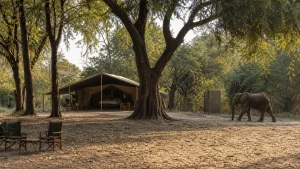
At Kruger, you drive until you find something. In the Mara, you follow the herds. In Etosha, you pick a waterhole, cut the engine, and wait. Within an hour – sometimes within minutes – elephants arrive. Then zebra. Then a black rhino materializing out of the heat haze at dusk. Then lions appearing at the far edge of the water just as the light drops.
You don’t go looking for wildlife viewing in Namibia. In Etosha, it comes to you.
The Geology of the Pan: Why the Waterholes Work
The Etosha Pan was once a vast lake fed by the Kunene River. Geological shifts redirected the river thousands of years ago, and the lake dried out – leaving behind a flat, alkaline salt crust that stretches 130 kilometers from east to west.
The pan itself is largely barren. But around its edges, natural springs push water to the surface, and the park’s management has supplemented these with artificial pumped waterholes, creating a ring of water sources around the pan’s perimeter.
The result: every animal that lives in the park must visit one of these points to drink. The waterholes aren’t just viewing spots – they’re the entire organizing logic of how wildlife moves through Etosha. Understanding this turns a waterhole visit from passive waiting into active reading of the landscape.
Best Waterholes in Etosha: Where to Sit
Not all waterholes are equal. The best waterholes in Etosha depend on what you’re hoping to see and which rest camp you’re based at.
| Waterhole | Location | Best For |
|---|---|---|
| Okaukuejo | Inside Okaukuejo Camp | Black rhino – one of the most reliable rhino spots in Africa |
| Halali | Inside Halali Camp | Mixed game, elephants, lions after dark |
| Chudob | Between Namutoni and Halali | Daytime game – large elephant herds |
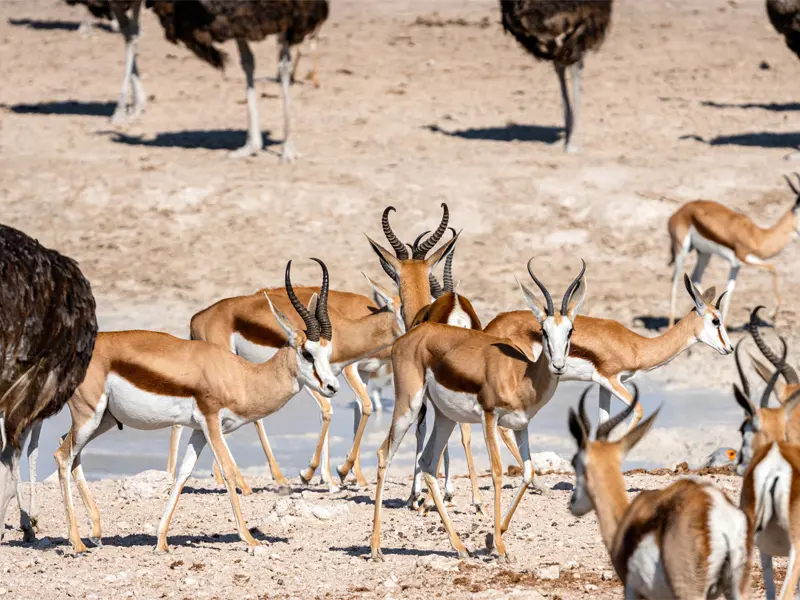
| Klein Namutoni | Near Namutoni Camp | Giraffe, zebra, springbok in large numbers |
| Gemsbokvlakte | Eastern Etosha | Gemsbok, roan antelope, quieter crowds |
| Nebrowni | Central area | Large predator activity, less visited |
Okaukuejo at night is the experience that defines Etosha for most visitors. The camp’s floodlit waterhole is open 24 hours, with bench seating right at the water’s edge. Black rhino – notoriously difficult to see elsewhere in Africa – come to drink here with a regularity that’s almost hard to believe. Sitting in silence at 10 PM while a rhino drinks three meters away, with lions calling somewhere in the darkness behind you, is not something you forget easily.
Etosha Self Drive Tips: How to Do It Right
Etosha is one of the few African national parks where self-driving is not just permitted but genuinely excellent. The road network is well-maintained, clearly signposted, and navigable in a standard 2WD vehicle for most of the year.
Here are the Etosha self drive tips that actually matter:
- Start early, end late. Gates open at sunrise and close at sunset. The first and last 90 minutes of light are when predators are most active and the waterholes are busiest. Don’t waste these windows driving between camps.
- Pick a waterhole and commit. The temptation is to keep moving to the next spot. Resist it. The visitors who sit at a single waterhole for two hours consistently see more than the ones doing drive-bys of six different spots.
- Drive slowly between waterholes. The road itself is part of the experience. Cheetahs rest on the gravel verges. Leopards cross between bush. Don’t treat the drive as transit.
- Plan your route around camp gates. You must be inside a rest camp by sunset. Map your afternoon drive so you’re not rushing the last stretch in fading light.
- Bring binoculars for the pan edge. The open pan attracts flamingos, pelicans, and raptors that are easy to miss without optics.
Staying Inside the Park vs Outside
This is the decision that most affects your Etosha experience.
Inside the park – Namibia Wildlife Resorts operates three rest camps: Okaukuejo, Halali, and Namutoni. Staying inside means floodlit waterholes at your doorstep, no gate curfew stress, and the ability to be at a waterhole at dawn without driving anywhere. The camps are functional rather than luxurious, but the access they provide is unmatched.
Outside the park – A growing number of private lodges sit on the park’s borders, particularly around the Anderson Gate in the south and the Von Lindequist Gate in the east. These offer a significantly higher standard of accommodation and often include guided game drives inside the park. If comfort is a priority and you’re happy to drive to the gate each morning, an outside lodge is a strong option.
The honest recommendation: spend at least two nights inside, specifically at Okaukuejo for the rhino waterhole, and use an outside lodge for the first or last night of your Etosha leg when logistics make it easier.
FAQ
What are the best waterholes in Etosha for black rhino?
Okaukuejo’s floodlit waterhole is the most reliable black rhino sighting in Namibia, and arguably one of the best in Africa. The rhino come to drink almost every night, with peak activity between 9 PM and midnight. Sitting here after dark is one of the defining Etosha experiences.
Is Etosha good for self-driving?
Yes – Etosha is one of Africa’s best self-drive safari destinations. Roads are well-maintained, the park is safe, and the waterhole model means you don’t need a tracker or guide to find game. A standard sedan works on most routes in the dry season.
What is the best time for wildlife viewing in Namibia’s Etosha?
The dry season from May to October is peak time. Water sources outside the park dry up, pushing all wildlife to the park’s waterholes. June through September offers the most concentrated game viewing. The green season (November to April) brings migratory birds and newborn animals but thinner wildlife visibility.
How many days do you need in Etosha?
Three nights is the minimum to cover the park’s main waterhole zones and spend proper time at Okaukuejo after dark. Four to five nights lets you explore the eastern and central sections at a pace that doesn’t feel rushed.
Welcome to Etosha!
Etosha teaches you a different kind of patience – not the anxious waiting of wondering if something will show up, but the settled, present stillness of knowing it will. The rhino will come. The elephants will come. You just have to be there when they do.
- Sit at the waterhole – the animals come to you
- Okaukuejo’s floodlit waterhole is the best black rhino spot in Namibia
- Self-driving is excellent – one of the few parks where it’s genuinely recommended
- Stay inside the park for at least two nights to maximize waterhole access
If Namibia is on your list and you want Etosha built into an itinerary that makes the most of the waterhole experience – combined with the right outside lodges and the rest of what Namibia offers – we’ve done this route ourselves and we know exactly how to put it together.
Reach out and let’s plan it.