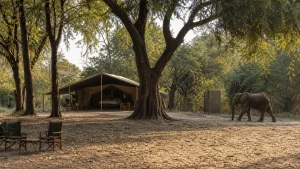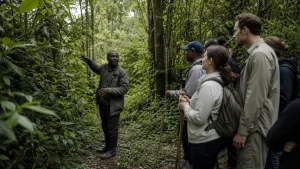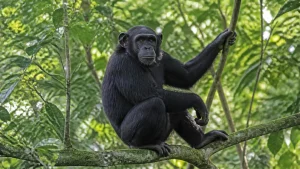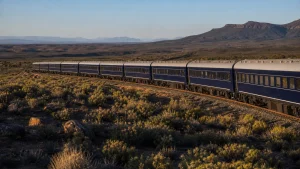
Picture this: it’s just before dawn somewhere in the Serengeti. The air carries that particular smell — dry grass, distant rain, something ancient and alive beneath it all. Your game vehicle rumbles to a stop. Your ranger raises a hand, leans in quietly, and whispers, “Tembo. Big bull. Moving through the thicket.” You scan the treeline, heart already hammering. And in that moment, if you know the language — if you understand what’s being said and why — everything shifts. You’re not just watching. You’re in it.
The word “safari” itself sets the tone. It comes from Swahili, derived from the Arabic safar — meaning journey, travel, voyage. When you say you’re going on safari, you’re speaking a language that stretches back centuries across trade routes and migration paths, across cultures and continents. These words carry history.
This glossary exists to give you that language before you arrive. We cover the Big 5 (and the misconception most people carry about them), the charming Little 5, the region-specific Special 5, plus dozens of essential terms spanning animal behaviour, landscape features, accommodation vocabulary, and the unwritten rituals of life in the African bush. Whether you’re planning a safari in Tanzania, dreaming of Kenya, eyeing Botswana’s waterways, or drawn to Zimbabwe’s wild corners — this is your decoder ring.
- The word “safari” is Swahili for journey, rooted in Arabic — the vocabulary of the bush carries genuine cultural depth.
- The Big 5 were named for danger and hunting difficulty, not size — a common misconception corrected here.
- The Little 5 and Special 5 are region-specific groupings that add richness and discovery to any game drive.
- Knowing safari terminology transforms you from passive observer into an engaged, questioning, fully present traveller.
- This glossary covers animals, habitats, behaviour, accommodation, rituals, and collective nouns — everything you need before arrival.
Where the Language of Safari Begins — and Why It Matters
Language shapes experience. When a ranger points to a depression in the mud and says “spoor,” you’re not just looking at footprints — you’re reading a story written hours or minutes ago, a narrative of movement and intention pressed into the earth. When they whisper “on foot approach,” every nerve in your body understands immediately that something significant is about to happen. These words do more than communicate. They transmit feeling.
Knowing the vocabulary of safari changes how you engage with the environment. You start asking better questions. You notice the things your guides are noticing. You decode the shorthand between trackers and rangers, the subtle shift in a driver’s posture when something has been spotted. You move from tourist to traveller — and ultimately, to someone who genuinely belongs in this landscape, even if only for a few days.
This glossary is structured to give you exactly that. We start with the famous groupings — Big 5, Little 5, Special 5 — then move through animal behaviour, landscape vocabulary, accommodation terms, and the beautiful rituals that make an African safari unlike anything else on earth. Read it before you go. Return to it when you’re back. And in between, let it fuel the anticipation of what’s coming.
—
The Big 5 — Icons Born From Danger, Celebrated in Wonder
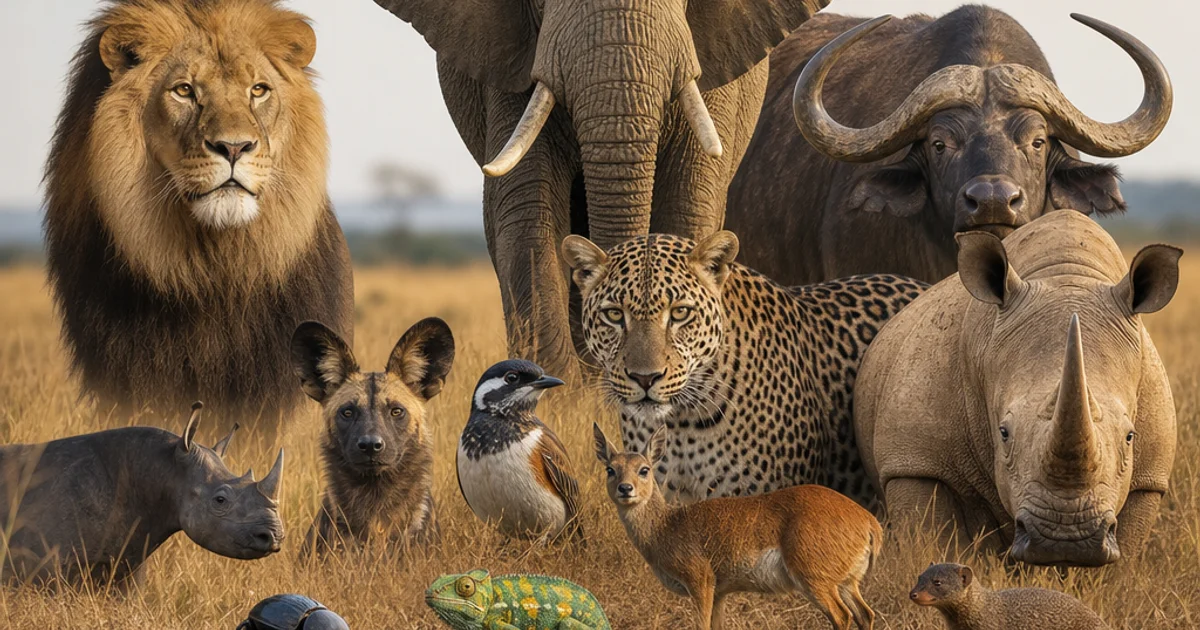
Here’s the misconception worth clearing up immediately: the Big 5 were not named for their size. The term was coined by 19th and early 20th century big-game hunters to describe the five animals considered most dangerous and difficult to hunt on foot. A charging buffalo or an unseen leopard in a thicket posed a greater threat than sheer size alone would suggest. Today, thankfully, the term has been entirely reclaimed by conservation and wildlife tourism — and spotting all five in the wild is one of the most sought-after experiences in all of African travel.
The Lion — Apex Predator of the Savannah
The lion is the emotional anchor of any African safari. Few sounds on earth match the depth of a lion’s roar rolling across the savannah at night — a sound that seems to resonate in your chest as much as your ears. Lions are the only truly social big cats, living in prides of related females, their cubs, and a coalition of males. They are found across East and Southern Africa — in Kenya’s Masai Mara, Tanzania’s Serengeti, Botswana’s Okavango Delta, Zimbabwe’s Hwange National Park, and South Africa’s Kruger National Park, among others.
Why it matters: A lion sighting is never routine. Even experienced rangers pause. There’s something about the combination of absolute power and absolute stillness that commands everything.
The Leopard — The Most Elusive of the Five
Spotting a leopard is often described as the hardest of the Big 5 to achieve — and the most electrifying when you do. Nocturnal, solitary, and masters of concealment, leopards are often draped in trees, their spotted coats dissolving perfectly into dappled light and leaf shadow. They are remarkably adaptable, found in habitats ranging from dense forest to semi-arid scrubland. South Africa’s Sabi Sands region is famed for its habituated leopards, while Zambia’s South Luangwa offers extraordinary sightings in wild, untracked territory.
Why it matters: A leopard in a tree, a kill cached in the fork of a branch above your eye level — it is one of the most cinematic moments the African bush can offer.
The African Elephant — Memory, Intelligence, and Presence
The largest land mammal on Earth, the African elephant is a creature of profound intelligence and complex social structure. Herds are matriarchal, led by the oldest female whose decades of memory guide the group to water, food, and safety. Unlike their Asian counterparts, both male and female African elephants typically carry tusks. Elephants are found across a remarkable range of countries — Kenya, Tanzania, Botswana (home to the world’s largest elephant population), Zimbabwe, Namibia, and South Africa.
Why it matters: Standing thirty metres from a breeding herd as they move silently through golden grass, the calves tucked between the legs of the adults — it reframes your understanding of family, community, and intelligence.
The Rhinoceros — A Sighting That Carries Weight
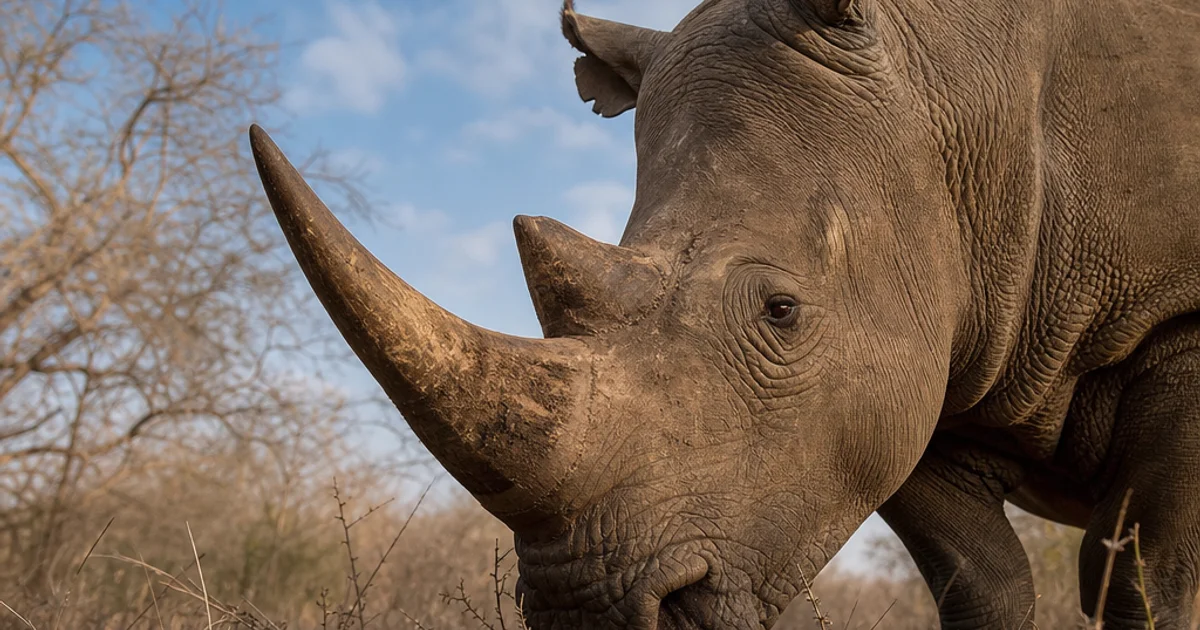
Two species roam Africa: the White Rhino and the Black Rhino. The distinction has nothing to do with colour — both are grey. “White” is believed to derive from the Afrikaans word wyd, meaning wide, describing the White Rhino’s broad, flat lip suited to grazing grass. The Black Rhino has a pointed, hooked lip for browsing on leaves and shrubs. Both species are critically endangered, making any encounter profoundly significant. Key populations exist in South Africa, Zimbabwe, Kenya, and Namibia.
Why it matters: Seeing a rhino in the wild today is not guaranteed. It is not casual. It is an encounter that reminds you of everything we stand to lose — and everything still worth fighting for.
The African Buffalo (Cape Buffalo) — Deceptively, Dangerously Capable
Of all the Big 5, the Cape Buffalo is perhaps the most underestimated by first-time visitors. They move in large herds and appear almost cattle-like from a distance. But old bulls, known as “dagga boys,” are notoriously unpredictable, and buffalo account for a significant number of dangerous wildlife encounters in Africa. They are found in abundance in Botswana’s Chobe National Park, Tanzania’s Selous (now Nyerere National Park), and Zimbabwe’s vast wilderness areas.
Why it matters: There is something in the buffalo’s heavy stare — steady, measuring — that makes you very aware of exactly where you are. Which is exactly where you want to be.
—
The Little 5 — Small in Stature, Mighty in Character
The Little 5 were conceived as a playful but genuinely meaningful counterpoint to their larger namesakes — a celebration of Africa’s smaller creatures, each sharing part of its name with one of the Big 5. Spotting all five adds a wonderful scavenger-hunt dimension to any game drive and reveals the intricate, extraordinary detail of the bush that exists beneath the headline spectacle. Ask your ranger to help you find them — it’s a challenge seasoned guides genuinely enjoy.
The Antlion — Sharing a Name With the Lion
The antlion is the larva of a winged insect, and it is a miniature predator of extraordinary cunning. It excavates a small funnel-shaped pit in loose sand and buries itself at the bottom, waiting for ants or other small insects to slide in. When prey appears at the edge, the antlion flicks sand to destabilise the walls, tumbling the victim to its doom. An entire drama, played out in a cup of dust. Found across sandy soils in South Africa, Botswana, Kenya, Tanzania, and Namibia.
The Rhino Beetle — Sharing a Name With the Rhinoceros
The Rhino Beetle is among the strongest animals on Earth relative to its body weight — capable of carrying up to 850 times its own mass. Its distinctive horn-like protrusion is used primarily in combat with rival males over territory and mates. Large, glossy, and entirely harmless to humans, these beetles are found across sub-Saharan Africa and are a genuinely thrilling find for anyone willing to look closely at bark and leaf litter.
The Elephant Shrew — Sharing a Name With the Elephant
Don’t be misled by the name or the size. The elephant shrew — also called a sengi — is not closely related to shrews at all. Genetic analysis has placed them in a group far more closely aligned with elephants, aardvarks, and manatees. They’re small, lightning-fast, and wonderfully comical to watch, darting along pre-mapped trails through leaf litter. Their elongated, trunk-like snout is the giveaway — and the reason for the name. Found across Eastern and Southern Africa.
The Leopard Tortoise — Sharing a Name With the Leopard
Named for the beautiful black-and-yellow spotted pattern on its shell, the Leopard Tortoise is the largest tortoise in Southern Africa and the fourth largest in the world. They can live for over a century and carry that sense of ancient, unhurried permanence that makes them oddly compelling to observe. On a game drive, spotting a Leopard Tortoise making its steady way across an open plain is a small, perfect moment — slow life moving through a fast world.
The Buffalo Weaver — Sharing a Name With the Buffalo
The most commonly encountered species are the Red-billed Buffalo Weaver and the White-headed Buffalo Weaver. These industrious birds build large, untidy communal nests in acacia and baobab trees — often noisy, always busy. Their association with buffalo herds (they sometimes feed near them) and their characteristic bustle make them easy characters to warm to. Found widely across East Africa, particularly in Kenya and Tanzania, as well as through Zimbabwe and Botswana.
—
The Special 5 — Rare Encounters in East Africa’s Wild North
The safari world extends well beyond the universally known groupings. Regional wildlife lists celebrate the extraordinary species found in specific ecosystems — and the Special 5 is one of the most exciting of these. Also known as the Samburu Special 5 (or Northern Special 5), these are five animals uniquely associated with the semi-arid habitats of northern Kenya, particularly Samburu National Reserve. These are animals you won’t encounter in many other places on the continent, which makes spotting them feel genuinely exclusive.
The Reticulated Giraffe
Distinct from the more commonly seen Masai Giraffe, the Reticulated Giraffe has a strikingly geometric coat pattern — large, sharply defined polygonal patches separated by white lines, like a mosaic. It is one of the most visually arresting animals in Africa, and it is found almost exclusively in northern Kenya and parts of Ethiopia and Somalia.
The Grevy’s Zebra
The largest wild equid on earth, the Grevy’s Zebra is immediately distinguishable from the Plains (Burchell’s) Zebra by its narrower stripes, larger rounded ears, and white belly. Critically endangered, with fewer than 3,000 remaining in the wild, a sighting in Samburu carries real weight.
The Somali Ostrich (Blue-Necked Ostrich)
Distinguished from the common Masai Ostrich by the male’s striking blue neck and thighs during breeding season (the Masai Ostrich male has a pink-red neck), the Somali Ostrich is endemic to the Horn of Africa and found in northern Kenya.
The Gerenuk
One of Africa’s most elegant and unusual antelopes, the Gerenuk — whose name means “giraffe-necked” in Somali — feeds by standing upright on its hind legs to browse from branches that other antelopes can’t reach. To see a Gerenuk standing vertical against an acacia in golden afternoon light is one of those images that stays with you forever.
The Beisa Oryx
A large, powerfully built antelope with dramatic straight horns and a striking black-and-white facial pattern, the Beisa Oryx is built for survival in arid conditions. It can survive without water for extended periods and is a defining species of northern Kenya’s dry savannah landscape.
If you’re weighing up East Africa itineraries, our detailed comparison of Tanzania vs Kenya safari covers exactly what each country offers and how to decide between them.
—
Animal Behaviour Terms Every Safari-Goer Should Know
Understanding what you’re watching — not just that you’re watching it — is what elevates a game drive from a remarkable experience to an unforgettable one.
- Musth: A periodic condition in bull elephants characterised by elevated testosterone, secretions from the temporal glands, and heightened aggression. A bull in musth is unpredictable — and recognisable by the dark wet streaking on the side of his face.
- Flehmen Response: The curled-lip, head-raised posture you’ll see in lions, zebra, and wildebeest — used to direct scent molecules to the Jacobson’s organ (a sensory organ in the roof of the mouth), essentially “tasting” a scent for information about other animals’ reproductive status.
- Crepuscular: Animals most active at dawn and dusk — the golden hours of any game drive. Leopards and many antelope species fall into this category.
- Nocturnal: Active primarily at night. Leopards, hyenas, civets, genets, and aardvarks are among the species most active after dark — a strong argument for a night game drive on any itinerary.
- Diurnal: Active during daylight hours. Most of the African savannah’s large herbivores and their predators are primarily diurnal.
- Territorial marking / Scent marking: The process by which animals — lions, leopards, rhinos, and others — define their range using urine, dung, or secretions from glands, communicating occupancy to rivals.
- Alarm call: The warning vocalisations made by prey species like impala, baboons, and guinea fowl when a predator is detected. A skilled ranger reads these calls like a map — they can tell you not just that something is out there, but roughly where it’s moving.
- Kill: In safari terminology, refers to a predator’s prey animal, usually found fresh or being fed upon. A lion kill, a leopard kill — witnessing a predator at a kill is confronting and extraordinary in equal measure.
- Predator-prey dynamics: The ecological relationship between hunters and hunted — a living system of balance that shapes everything about the landscape you’re moving through.
—
Landscape and Habitat Terms
Africa’s wildlife cannot be understood apart from its landscapes. These are the words that describe the terrain you’ll cross — each one carrying its own ecosystem logic.
- Savannah: Open grassland with scattered trees — the quintessential African landscape. The Serengeti and Masai Mara are the most famous examples on earth.
- Bush: A general term for wild, undeveloped African landscape — used conversationally by rangers and guides across the continent. “Into the bush” means into wilderness.
- Kopje (or Koppie): A small isolated hill or rocky outcrop rising from the savannah floor. Pronounced “copy.” Lions use kopjes as vantage points; hyraxes colonise their crevices.
- Vlei: A shallow natural depression or seasonal wetland, often holding water during or after rains. Pronounced “flay.” Critical water sources in dry landscapes.
- Pan: A flat, shallow basin that holds rainwater seasonally. In Botswana’s Makgadikgadi Pans or Zimbabwe’s Hwange, these become extraordinary gathering points for wildlife during dry season.
- Riverine forest / Riparian zone: Dense vegetation along the banks of rivers and water sources. Some of the richest wildlife corridors on the continent follow these green threads through drier terrain.
- Miombo woodland: A vast woodland ecosystem of Central and Southern Africa dominated by Brachystegia trees — critical habitat in Zambia, Zimbabwe, and Tanzania.
- Drainage line: A low-lying channel that carries water after rainfall, often lined with trees and dense vegetation. Animals track these lines during dry periods.
- Great Rift Valley: The vast geological trench running from the Middle East through East Africa — shaping the lakes, escarpments, and unique ecosystems of Kenya, Tanzania, and beyond.
—
Safari Accommodation Glossary
Where you sleep on safari shapes the entire experience — and the terminology can feel overwhelming at first. Here’s exactly what each category means.
- Safari Camp: A term broadly used for any accommodation in a game reserve or national park, but most specifically associated with tented camps — from basic to extraordinarily luxurious.
- Tented Camp: Accommodation in large canvas tents, typically on raised timber platforms. Can range from rustic to ultra-luxury. The canvas walls mean you hear every sound of the bush at night — which is entirely the point.
- Lodge: More permanent structures — brick, stone, timber — often with greater amenities. May be inside or on the borders of a reserve.
- Mobile Camp: A camp that moves location to follow wildlife or seasons. Often offers access to remote areas that fixed camps can’t reach — an increasingly popular option for travellers seeking genuine exclusivity.
- Fly Camp: An ultra-minimal overnight set-up in the wild — a bedroll, a campfire, a guide, and nothing between you and the sky. Reserved for those who want the most immersive possible experience.
- Full Board / All Inclusive: Accommodation where all meals and most activities are included. The standard model for most safari camps.
- Game Drive: A vehicle-based wildlife-viewing excursion, typically in an open 4×4. The cornerstone activity of any safari.
- Bush Walk / Walking Safari: An on-foot guided excursion into the bush. A fundamentally different experience to game drives — slower, more intimate, more connected to the ground beneath you.
- Hide / Blind: A concealed structure, often at a waterhole, allowing wildlife observation without disturbance. Some of the most extraordinary photography opportunities happen from a hide.
If you’re weighing up the relative merits of different safari styles, our guide on private vs group safari breaks down the experience and value differences in detail. And when you’re ready to think about how long to stay, this guide on ideal trip duration by destination is an invaluable planning resource.
—
Safari Rituals, Traditions, and Time-of-Day Terms
An African safari has its own rhythm — its own structure of time that has evolved over generations of bush life. Understanding this rhythm helps you arrive already in step with it.
- Sundowner: The ritual of stopping in the bush at sunset for drinks — gin and tonic, wine, juice — as the light turns amber and then rose and then fades to indigo. It is one of the most cherished traditions of safari life. There is a particular quality to a Kenyan or Zimbabwean dusk that sundowners were invented to celebrate, and a cold drink in hand as the sky performs — it never gets old.
- Bush Breakfast / Bush Dinner: A meal taken outdoors in the bush, often at a scenic location or a cleared area in the veld. Some of the finest meals you’ll ever have will be eaten with the sound of the wild around you and a million stars above.
- Morning Drive: The game drive that begins before or at first light — typically the most productive for wildlife activity and the most atmospheric for photography and atmosphere.
- Afternoon / Evening Drive: Begins in the mid-to-late afternoon and continues after dark (using a spotlight), allowing sightings of nocturnal species.
- Bush walk: See accommodation glossary above — but culturally, a bush walk is also a meditative act. Moving slowly and quietly through landscape that most visitors see from a vehicle is transformative.
- Siesta / Midday Rest: The hottest hours of the African day (roughly 11am–3pm) when wildlife rests and camps typically offer time for lunch, relaxation, and a swim if one is available. Fighting the rhythm of the bush is futile — and unnecessary.
- Tracker: A specialist who reads the landscape — spoor, broken vegetation, dung, territorial marks — to locate wildlife. The partnership between tracker and ranger is one of the great professional relationships in all of travel.
- Ranger / Guide: The qualified professional responsible for your safety and experience in the bush. In the best camps, your ranger becomes the most interesting person you’ve ever met.
- Spoor: Tracks, footprints, and other physical signs left by animals. Reading spoor is both science and art.
- Habituated: Describes wildlife that has become accustomed to the presence of vehicles and humans over time, allowing for close observation without stress or disturbance to the animal.
—
Collective Nouns: What Do You Call a Group of…?
One of the quiet pleasures of learning safari vocabulary is discovering the collective nouns assigned to Africa’s animals — many of them eerily precise in capturing the character of the species.
| Animal | Collective Noun |
|---|---|
| Lions | Pride |
| Leopards | Leap |
| Elephants | Herd |
| Buffalo | Herd or Obstinacy |
| Rhinos | Crash |
| Cheetahs | Coalition |
| Hyenas | Clan |
| Wild Dogs | Pack |
| Giraffes | Tower |
| Zebra | Dazzle |
| Flamingos | Flamboyance |
| Vultures | Committee (or Wake, when feeding) |
| Crocodiles | Float |
| Hippos | Bloat |
| Meerkats | Mob or Gang |
| Baboons | Troop |
Frequently Asked Questions
Why is it important to learn safari terminology before my trip?
Knowing safari terminology transforms your experience from a passive observation into an active engagement with the environment. It allows you to understand your guides better, ask more insightful questions, and decode the subtle communications of the bush. This deeper understanding helps you feel more connected to the landscape and the wildlife.
What is the origin and meaning of the word “safari”?
The word “safari” originates from Swahili, where it means journey, travel, or voyage. It is derived from the Arabic word “safar,” which also signifies travel. This term carries centuries of history, reflecting trade routes and migration paths across various cultures and continents.
Could you explain what the Big 5 are, and clarify the common misconception about them?
The Big 5 consist of the lion, leopard, elephant, rhino, and buffalo. A common misconception is that they were named for their size; however, the term was coined by 19th and early 20th-century big-game hunters. They were considered the five most dangerous and difficult animals to hunt on foot.
What are the Little 5 and the Special 5, and why should I know about them?
The Little 5 are charming smaller creatures that offer unique discoveries during game drives, complementing the larger well-known animals. The Special 5 are region-specific groupings, particularly found in East Africa’s wild north, which highlight rare and specific encounters. Knowing these categories enriches your safari experience by expanding your focus beyond only the Big 5.
What types of terms are included in this safari glossary?
This comprehensive glossary covers a wide range of essential terms to prepare travelers for their safari adventure. It includes vocabulary related to animal behaviour, distinct landscape features, safari accommodation, and the unwritten rituals and traditions of life in the African bush. Additionally, it features collective nouns for various animal groups.
How does understanding safari language truly change my experience during a trip?
Understanding safari language allows you to decode the subtle shorthand between trackers and rangers, grasp the significance of a whispered word like “spoor,” and notice details your guides observe. This deeper comprehension transforms you from a casual tourist into an engaged, questioning traveler. Ultimately, it helps you feel a genuine sense of belonging in the wilderness, even for a short visit.