Pack Light, Fly High: The 15kg Challenge
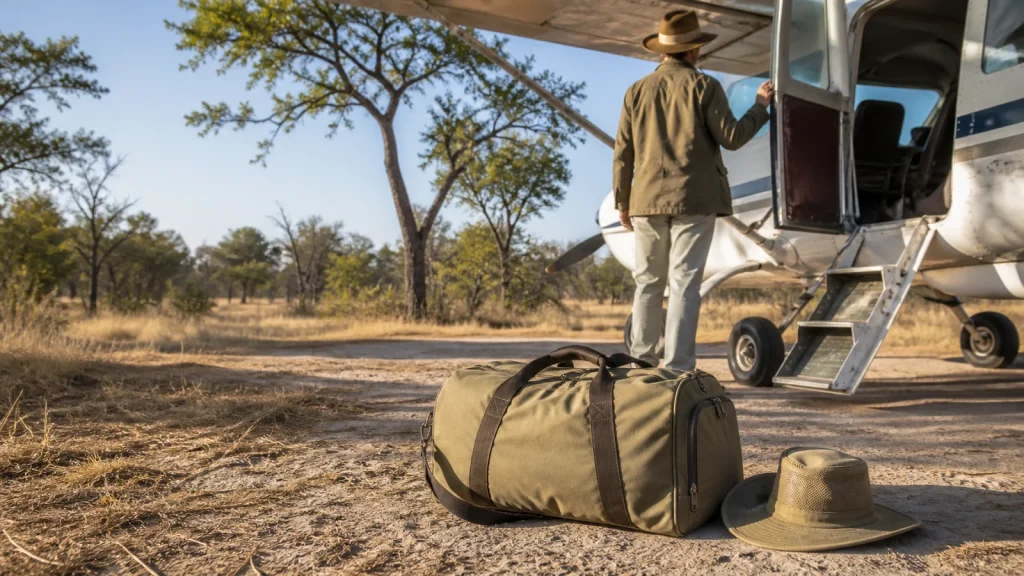
Botswana’s safari camps are connected by small light aircraft with strict luggage limits – typically 15kg in a soft-sided bag, no hard cases. For most travelers, this is the most stressful logistical detail of the entire trip. It doesn’t need to be.
Birding for Non-Birders: Carmine Bee-eaters
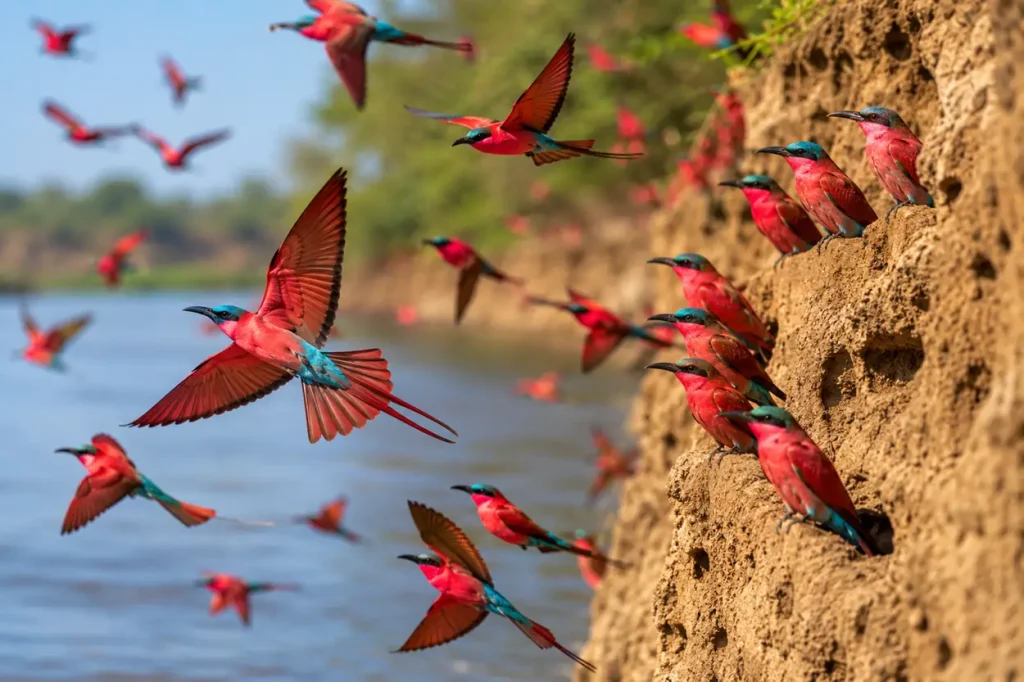
TL;DR – Every year between September and November, southern carmine bee-eaters arrive in the Okavango and the Chobe in flocks of thousands. They are crimson and turquoise and they follow elephants and game drive vehicles through the bush to catch the insects the large animals disturb. You do not need to be a birder to find this completely extraordinary.
Chief’s Island: The Predator Capital
TL;DR – Chief’s Island is the largest island in the Okavango Delta and holds the highest concentration of predators in Botswana. If lions, leopards, wild dogs, and cheetahs on the same game drive is what you’re after, this is where you go. Here’s why it works and how to plan it right.
Mokoro vs. Motorboat: The Delta Explained
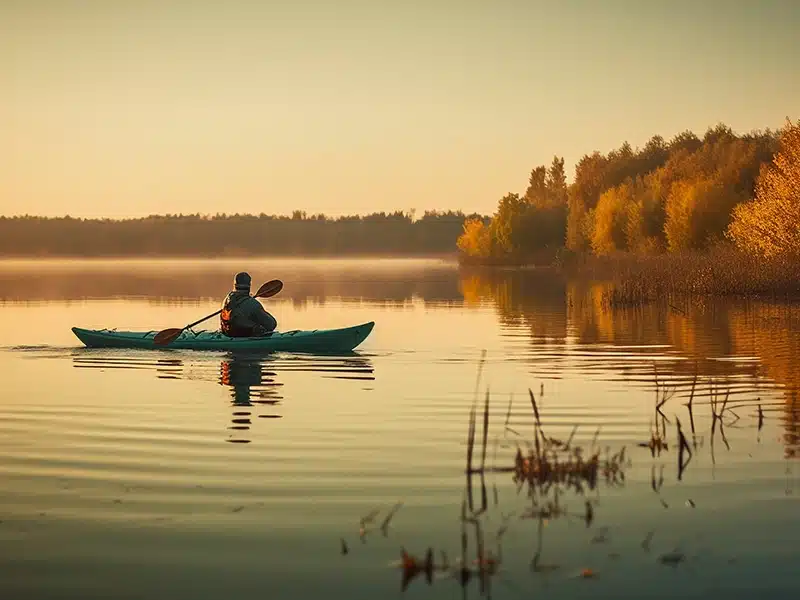
TL;DR – Gliding through the Okavango Delta is the ultimate safari reset, but the experience depends on your choice of craft. While motorboats cover distance and find big game, the mokoro offers a silent, eye-level connection with nature. Understanding the seasonal water levels is the key to choosing the right camp for your journey.
The Green Season Secret: Why Nov-Mar is the Best Value
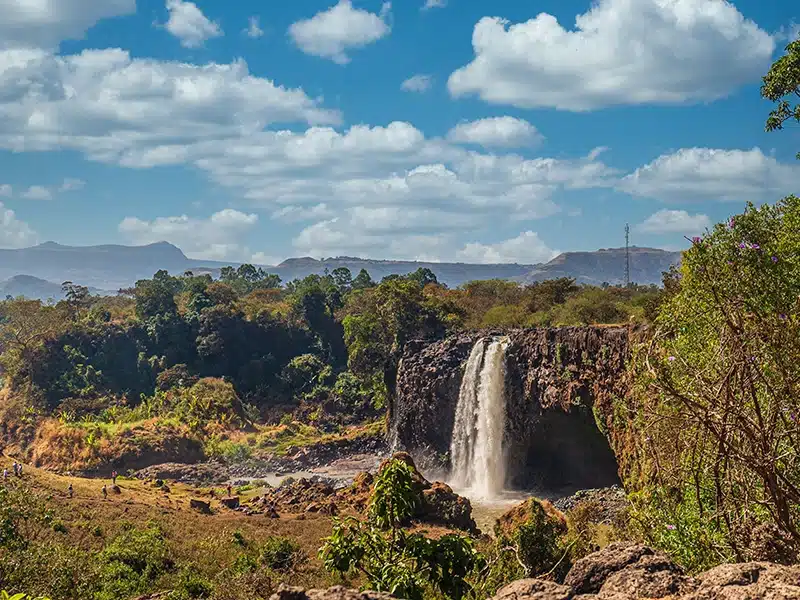
TL;DR – Most travelers think the dry winter is the only time for a safari, but the “Green Season” (November to March) is Botswana’s hidden gem. You get fewer crowds, lower prices, and a front-row seat to wildlife births and vibrant landscapes. It is the ultimate way to disconnect and reset without the peak-season rush.