This guide answers 45 of the most commonly asked questions about planning an African safari — covering timing, destinations, visas, packing, safety, wildlife, accommodation, and everything in between. Whether you are planning your first safari or your fifth, every answer you need is here.
Key Takeaways
- Africa is a continent of extraordinary diversity — Kenya, Tanzania, Botswana, South Africa, Namibia, Zimbabwe, Uganda, Rwanda, and Zambia each offer a genuinely different safari experience.
- There is no single “best time” to go on safari — every season delivers something spectacular, from the Great Migration river crossings to lush green landscapes filled with newborns.
- Safari safety is well-managed when you travel with experienced operators — wildlife encounters in properly run reserves follow clear, tested protocols.
- Packing for a safari is simpler than most people expect — neutral colours, layers, and good footwear cover almost everything.
- Every question standing between you and your dream trip has a clear, practical answer — and this guide covers all of them.
Why Planning an African Safari Feels Overwhelming (And Why It Doesn’t Have to Be)
Close your eyes for a moment and picture it: a vast golden plain stretching to the horizon, the air warm and electric, the silence broken only by the deep, resonant call of a lion somewhere in the amber grass. That image — vivid, alive, almost mythological — is what draws millions of travellers toward Africa every year. And then reality arrives. Suddenly there are nine countries to choose from, two dozen national parks, conflicting advice about seasons, questions about visas and vaccinations, panic about what to pack, and a creeping suspicion that you might be doing it all wrong.
You are not doing it wrong. You are just at the beginning.
Planning an African safari is genuinely complex — not because it is dangerous or impenetrable, but because Africa itself is so astonishingly rich. It is not one experience. It is many. A walking safari along the Zambezi River in Zambia is an entirely different world from watching wildebeest thunder across a Kenyan river. A candlelit dinner in a luxury Botswana delta camp is a different kind of magic from tracking mountain gorillas through misty Ugandan forest. That breadth is not a problem to be solved. It is the extraordinary point.
This guide is your complete planning companion. It answers 45 of the most commonly asked questions about African safaris — covering destination choice, timing, visa requirements, what to pack, safety, wildlife, accommodation, and the practical logistics of getting there and back. The countries in play: Kenya, Tanzania, South Africa, Botswana, Namibia, Zambia, Zimbabwe, Uganda, and Rwanda.
Let’s answer every question standing between you and the trip of a lifetime.
Choosing Your Safari Destination — Country by Country
Africa is a continent, not a country — and choosing where to go is one of the most exciting decisions you will make. Here is what each major safari destination genuinely offers.
Kenya
Kenya is where the safari dream was born, and the Maasai Mara National Reserve remains one of the greatest wildlife spectacles on Earth. The Mara delivers drama on an almost theatrical scale: lions hunting in golden grass, cheetahs sprinting across open plains, and the extraordinary annual Great Migration — hundreds of thousands of wildebeest and zebra crossing the crocodile-thick Mara River in a churning, chaotic surge of survival. Kenya also offers deep cultural encounters with the Maasai people, whose history and presence are woven into the landscape itself. If you want your first safari to hit you square in the chest, Kenya delivers.
Trying to decide between Kenya and Tanzania? Our detailed comparison — Tanzania vs Kenya Safari: Which Country Should You Choose for Your First Safari? — walks through every key difference.
Tanzania
Tanzania holds two of Africa’s crown jewels: the Serengeti National Park and the Ngorongoro Crater. The Serengeti is an ancient, unbroken wilderness — 30,000 square kilometres of savannah where the Migration plays out across an entire year. The Ngorongoro Crater is genuinely unlike anywhere else on Earth: a collapsed volcanic caldera sheltering an astonishing density of wildlife in a self-contained ecosystem. Add the silhouette of Mount Kilimanjaro glowing on the horizon, the spice-scented lanes of Zanzibar as a post-safari escape, and Tanzania becomes not just a destination but an experience that rewires how you see the world.
South Africa
South Africa makes safari accessible without sacrificing any of its power. Kruger National Park is one of the largest game reserves in Africa and one of the best-managed — Big Five sightings (lion, leopard, elephant, rhino, buffalo) are genuinely reliable, and the infrastructure makes it ideal for first-timers. The added advantage: pair a Kruger safari with the Cape Winelands, the dramatic coastline of the Garden Route, or the cultural depth of Cape Town, and South Africa becomes a multi-layered journey that is almost unfair in its generosity.
Botswana
Botswana chose a different path — deliberately low-volume, high-exclusivity tourism that protects its ecosystems while creating an almost private Africa. The Okavango Delta is otherworldly: a vast inland river system that floods seasonally, creating a water-based safari experience unlike anywhere else. Drift silently through lily-covered channels in a traditional mokoro canoe. Watch elephants wade through crystalline waters. Botswana is for travellers who want to feel like they have Africa entirely to themselves — because here, they often do.
Namibia
Namibia is the road less travelled, and that is precisely its power. Etosha National Park centres on a vast salt pan that draws extraordinary concentrations of wildlife to its edges — especially during dry season, when floodlit waterholes become nature’s cinema. But it is the wider Namibian landscape that lingers: towering red dunes at Sossusvlei, the ghost town of Kolmanskop half-swallowed by sand, the Skeleton Coast where desert meets Atlantic. Namibia rewards the curious and the adventurous.
Zimbabwe
Zimbabwe’s Hwange National Park hosts one of Africa’s largest elephant populations — herds of hundreds moving across open pans in formations that are genuinely humbling. And then there is Victoria Falls. One of the seven natural wonders of the world, the Falls thunder with a force that you feel in your chest before you ever see the water. Combine them for a safari that moves between quiet, breathtaking wildlife and one of the planet’s most visceral natural spectacles.
Uganda and Rwanda
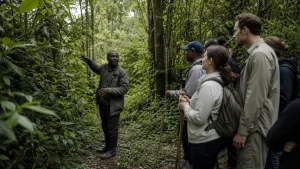
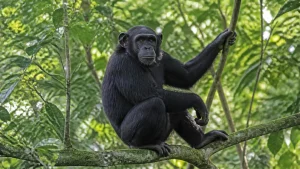
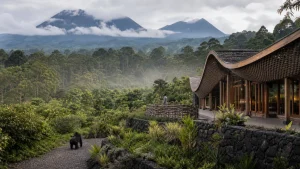
Mountain gorilla trekking in Bwindi Impenetrable National Park in Uganda or Volcanoes National Park in Rwanda is a profoundly different kind of safari — intimate, slow, deeply personal. You move through dense montane forest with a small group and experienced trackers, and then suddenly, there they are: a gorilla family, entirely unbothered by your presence, going about their morning. It is one of the most moving wildlife encounters available anywhere on Earth. Uganda also offers exceptional chimpanzee tracking in Kibale Forest and game drives in Queen Elizabeth National Park.
Zambia
Zambia is a walking safari destination above all others. The South Luangwa National Park is widely considered the birthplace of the walking safari, and experiencing the African bush at ground level — with a trained guide and no engine noise — is transformative. Add Victoria Falls from the Zambian side, the remote Liuwa Plain, and the remote beauty of Lake Tanganyika, and Zambia offers a safari experience defined by depth, authenticity, and a sense of genuine discovery.
When Should You Go? Timing, Seasons, and the Great Migration Explained
Q: What is the best time of year for an African safari?
The honest answer: it depends entirely on what you want to experience. Every season in Africa delivers something extraordinary. Here is how to think about it.
Dry Season (June–October in East Africa; May–October in Southern Africa)
- Vegetation thins dramatically, making wildlife far easier to spot against open landscapes.
- Animals concentrate around shrinking water sources, creating multi-species sightings of extraordinary density.
- The Mara River crossings of the Great Migration (July–October) rank among the most spectacular wildlife events on Earth.
- Cooler temperatures make game drives and walks more comfortable.
- This is peak season — book well in advance, particularly for high-demand camps and lodges.
Green Season / Wet Season (November–April in Southern Africa; November–June in East Africa)
- Africa transforms into a lush, deeply saturated landscape — visually stunning and dramatically different from the dry season aesthetic.
- Fewer tourists mean more intimate, quieter experiences and more personal attention from guides.
- Newborn animals appear in abundance — and where there are young prey animals, predator activity surges.
- Birdlife explodes, with migratory species swelling resident populations to spectacular numbers.
- Generally a more accessible entry point from a budget perspective.
The Great Migration: A Year-Round Event
The Great Migration is not a single event — it is a continuous, circular journey driven by rainfall and grass. Roughly 1.5 million wildebeest, joined by hundreds of thousands of zebra and gazelle, move in a perpetual clockwise loop through Tanzania and Kenya. Calving season in the southern Serengeti (January–March) brings thousands of new animals into the world — and draws every predator in the area. The herds push north through the Serengeti as the dry season advances, reach the Maasai Mara by July, and the legendary river crossings begin. By November, the migration turns south again. There is no wrong place to join the story.
Gorilla Trekking Timing
Mountain gorilla trekking in Uganda and Rwanda is possible year-round, but the two drier windows — June through September and December through February — offer easier trekking conditions underfoot and clearer light for photography.
For a detailed breakdown of how long to spend in each destination, see: How Long Should Your African Safari Be? Ideal Trip Duration by Destination.
Safari Costs and Budgeting Questions Answered
Q: Why do safari costs vary so dramatically?
The range reflects genuine differences in what is included. A fully catered, fly-in luxury camp in the Okavango Delta with a private guide and exclusive vehicle is a fundamentally different product from a self-drive safari in a national park with budget accommodation. Both are real safaris. Both offer genuine wildlife encounters. The difference is the level of immersion, exclusivity, and service.
Q: What is included in most safari packages?
Quality safari packages typically include accommodation, meals, game drives, park fees, and sometimes internal flights. Always confirm exactly what is and is not included before booking — transfers, laundry, beverages, and gratuities are common exclusions.
Q: Is a private safari significantly better than a group safari?
Private safaris offer flexibility, personalisation, and the ability to spend extra time at a sighting without being driven by a schedule. Group safaris introduce you to fellow travellers and can create unexpectedly rich social experiences. The right choice depends on your travel style. For a detailed comparison, read: Private vs Group Safari: Which Option Offers Better Value and Experience?
Q: What drives the cost difference between African safari destinations?
Botswana’s deliberately low-volume tourism policy means fewer camps and higher nightly investment. Tanzania and Kenya offer a wider range across all levels. South Africa’s Kruger region has the broadest budget range on the continent. Namibia and Zambia sit in the mid-to-upper range due to remoteness and small-camp infrastructure.
For a full breakdown by destination and experience level, read: How Much Does an African Safari Really Cost: Complete Price Breakdown by Country and Experience Level.
Q: When is the most accessible time to book a safari from a budget perspective?
The green season (broadly November–April depending on destination) is typically more accessible, with comparable wildlife experiences and fewer crowds. The trade-off is occasional afternoon rain and lusher, denser vegetation.
Visas, Entry Requirements, and Travel Documents
Q: Do I need a visa for Kenya?
Kenya operates an Electronic Travel Authorisation (eTA) system. Most visitors apply online before travel. Processing is typically within three business days. Always check current requirements with the official Kenyan government portal or your safari operator before booking.
Q: Do I need a visa for Tanzania?
Tanzania requires a visa for most nationalities. These can be obtained on arrival at major entry points or, increasingly, through an online e-visa system in advance. Applying in advance is strongly recommended to avoid queues.
Q: Do I need a visa for South Africa?
Many nationalities, including UK, US, EU, and Australian passport holders, receive visa-free entry for tourism stays up to 90 days. Always verify current arrangements as policies change.
Q: Do I need a visa for Botswana?
Citizens of most Western nations receive visa-free entry for stays up to 90 days. Confirm current policy with your safari operator or the Botswana Department of Immigration.
Q: Do I need a visa for Uganda and Rwanda?
Both Uganda and Rwanda offer e-visa applications online. Rwanda notably offers a 30-day tourist visa on arrival for most nationalities, while Uganda’s e-visa system is straightforward. Both countries participate in an East African Tourist Visa that also covers Kenya — a single visa valid for multiple-country travel within the region, ideal for combination itineraries.
Q: Do I need a visa for Namibia, Zimbabwe, or Zambia?
Namibia grants visa-free entry to most Western nationalities. Zimbabwe and Zambia both offer visas on arrival as well as online options. The KAZA UniVisa covers both Zimbabwe and Zambia simultaneously — excellent for Victoria Falls visits that cross the border.
Q: What documents should I carry on safari?
Passport (valid for at least six months beyond your return date), visa documentation, travel insurance certificate, emergency contact details, any required health documentation, and copies of your booking confirmations. Keep digital copies in a secure cloud location.
Q: What health documentation might be required?
Requirements vary by destination and departure country. Your safari operator and a travel health clinic will advise you on current entry requirements and recommended health precautions well in advance of departure.
What to Pack for an African Safari
Q: What colours should I wear on safari?
Neutral, earthy tones — khaki, olive, tan, brown, and muted greens — are standard safari clothing for good reason. They do not startle wildlife, they blend into the environment, and they photograph beautifully. Avoid white (highly visible and impractical in the bush), black (attracts heat and certain insects), and bright colours.
Q: Do I need specialist safari clothing?
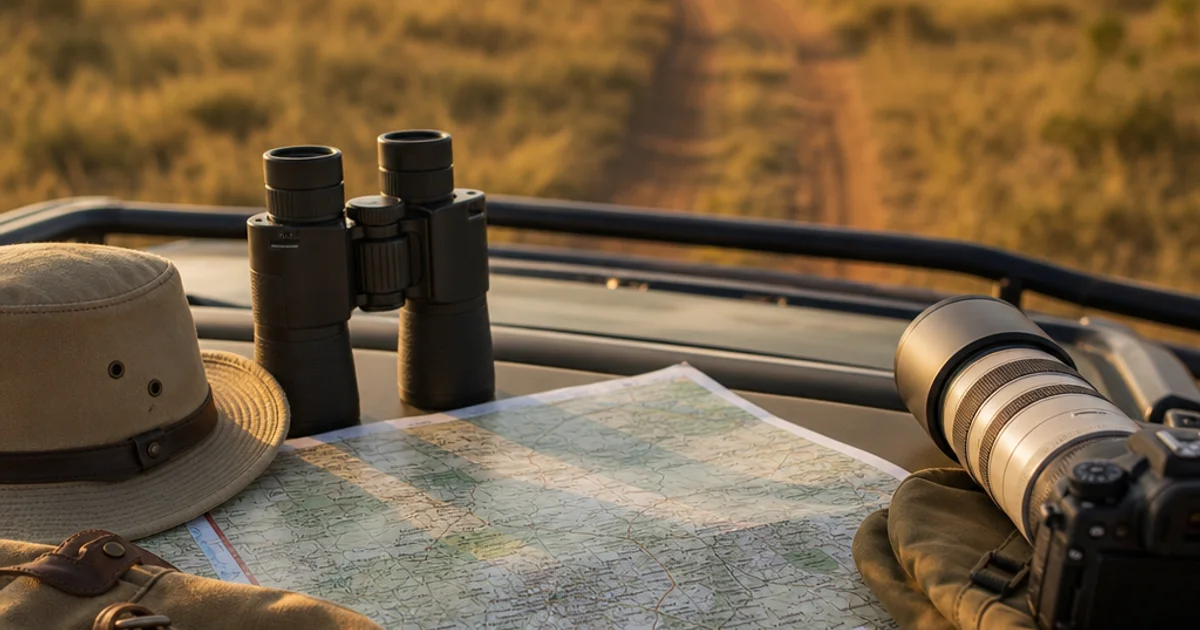
Dedicated safari clothing brands make excellent, purpose-built gear, but you do not need to buy an entirely new wardrobe. Comfortable, breathable, quick-dry clothing in neutral tones works perfectly. Key practical items: a wide-brimmed hat, a fleece or light down jacket for cold early morning drives, sturdy walking shoes, and sandals for camp.
Q: How should I pack for a safari?
Many safari camps and charter flights operate with strict luggage weight limits — typically 15kg per person in soft, collapsible bags (not hard-shell suitcases). Pack light, pack smart, and use a soft duffel. Check your specific camp and flight requirements when booking.
Q: What are the most important non-clothing items to pack?
- High-factor sunscreen and lip balm
- Quality insect repellent
- Binoculars (this is non-negotiable — 8×42 or 10×42 recommended)
- Camera with a telephoto lens if photography is important to you
- Power bank — remote camps may have limited charging
- Headlamp or torch
- Any personal medications in adequate supply
- A sense of wonder — Africa will do the rest
For a complete, item-by-item packing list, read: What to Pack for an African Safari: The Complete Clothing and Gear Checklist.
Safari Safety: What You Actually Need to Know
Q: Is an African safari safe?
Yes — when booked through reputable, experienced operators and undertaken in properly managed reserves and national parks. The safari industry has decades of safety protocols developed alongside rangers, guides, and ecologists who understand wildlife behaviour deeply. Millions of people travel safely on safari every year.
Q: Can animals approach the vehicle during a game drive?
Yes — and this is one of the most thrilling aspects of safari. Animals in well-established reserves are accustomed to safari vehicles and typically treat them as neutral objects. Your guide will always know when to stay, when to move, and how to read animal behaviour. Trust your guide completely.
Q: What are the rules when on a walking safari?
Walking safaris are led by armed, highly trained professional guides. You will receive a full safety briefing before every walk. The core rules: stay together, move quietly, follow your guide’s instructions without question, and never run. Walking safari guides are among the most skilled wildlife professionals in Africa — their expertise is your complete protection.
Q: Is it safe to travel to all safari destinations?
The major safari countries — Kenya, Tanzania, South Africa, Botswana, Namibia, Zimbabwe, Uganda, Rwanda, and Zambia — are all well-established, well-visited destinations with strong tourism infrastructure. As with any international travel, check your government’s travel advisory before departure and follow your operator’s guidance on current conditions in specific regions.
Q: What should I do at night in a safari camp?
Most camps operate a strict no-walking-unescorted-at-night policy — always call for a camp escort after dark. Animals move freely through and around unfenced camps, which is part of what makes the experience so alive. Follow camp rules, keep tent or lodge entrances zipped or closed, and enjoy the extraordinary sounds of African night — the hyenas calling, the nightjars, the frog chorus. It is not danger. It is magic.
Wildlife Questions Every Safari-Goer Asks
Q: What are the Big Five?
The Big Five — lion, leopard, elephant, rhinoceros, and Cape buffalo — is the most famous grouping in African wildlife. The term originated with big-game hunters who considered these the most challenging animals to hunt on foot. Today it describes the five most sought-after species for safari photography. Most major safari destinations offer reliable Big Five sightings. For a full breakdown of the Big Five, Special Five, Little Five, and over 50 essential safari wildlife terms, read the African Safari Wildlife Glossary.
Q: Is it guaranteed I will see the Big Five?
No responsible safari operator can guarantee specific sightings — wildlife is wild. What expert guides in well-managed ecosystems can do is maximise your chances through knowledge of animal behaviour, terrain, and seasonal patterns. Most guests on multi-day safaris in prime destinations do see all five. But Africa has a way of surprising you — sometimes the unexpected sighting becomes the one you can never stop talking about.
Q: What is the difference between a Big Five safari and a gorilla trekking experience?
A Big Five safari typically involves game drives in open savannah or bush environments, covering large areas in search of wildlife. Gorilla trekking involves hiking through dense montane forest with a small, permitted group to find and spend one structured hour with a specific habituated gorilla family. Both are profound. They are simply different categories of encounter — scale and openness versus intimacy and depth.
Q: What other wildlife can I expect beyond the Big Five?
Africa’s biodiversity is staggering. Cheetah, wild dog, hyena, giraffe, zebra, hippo, crocodile, a bewildering range of antelope species, over 1,000 species of birds across the continent — every game drive in every destination has the potential to surprise you. Predator interactions, bird behaviour, insect life, plant ecology — your guide will open layers of the bush that most visitors never notice.
Safari Accommodation: Lodges, Camps, and Tents Explained
Q: What is the difference between a lodge and a camp?
Lodges are permanent, fixed structures — typically stone, wood, or thatch — offering hotel-level facilities in a bush setting. Camps range from semi-permanent tented camps with solid bases and en-suite bathrooms to fully mobile fly camps that pack up and move with the wildlife. “Tented camp” in the safari world rarely means a basic camping experience — many of Africa’s finest, most luxurious properties are tented camps with beds, real linen, and private outdoor showers.
Q: What is a fly-in camp?
Remote camps in destinations like Botswana’s Okavango Delta or Zambia’s Luangwa Valley are accessed by small charter aircraft rather than road. Fly-in camps offer an extraordinary sense of arrival — stepping off a small plane onto a dirt airstrip surrounded by wilderness — and the added environmental benefit of minimising vehicle impact on fragile ecosystems.
Q: Should I book a fixed-itinerary safari or a custom itinerary?
Fixed itineraries work well for travellers who want a straightforward, clearly defined experience. Custom itineraries — built around your specific interests, travel dates, group size, and desired destinations — deliver a safari shaped entirely around you. If you have specific wildlife encounters in mind, or want to combine countries or experience types, a custom approach is almost always more satisfying.
Q: How many nights do I need for a meaningful safari experience?
A minimum of three nights in any single location is generally recommended to allow for rhythm, adjustment, and genuine immersion. Seven to ten nights across a destination or combination of destinations gives the experience genuine depth. See our detailed guide: How Long Should Your African Safari Be? Ideal Trip Duration by Destination.
Practical Logistics: Getting There, Getting Around
Q: Which international airports serve the major safari destinations?
Nairobi’s Jomo Kenyatta International Airport (Kenya), Julius Nyerere International Airport in Dar es Salaam and Kilimanjaro International Airport (Tanzania), OR Tambo in Johannesburg (South Africa), Sir Seretse Khama International Airport in Gaborone and Maun Airport (Botswana), Hosea Kutako International Airport in Windhoek (Namibia), and Entebbe International Airport (Uganda) and Kigali International Airport (Rwanda) are the primary international entry points.
Q: Do I need internal flights?
For many safari itineraries — particularly in Botswana, Zambia, and Tanzania — internal charter flights between camps or from gateway cities to remote airstrips are a standard part of the journey. They are not an inconvenience; a low-level charter flight over the Okavango Delta or the Serengeti is one of the most breathtaking experiences of any safari trip.
Q: Can I self-drive on safari?
Self-drive safaris are popular and well-established in South Africa (particularly Kruger), Namibia, and parts of Zimbabwe. In East Africa and Botswana, guided safaris are strongly recommended — the terrain is more challenging, wildlife is more unpredictable in unfenced areas, and the depth of knowledge a professional guide brings is genuinely irreplaceable.
Q: What currency should I carry?
US dollars are widely accepted across East and Southern Africa as a hard currency for tips and small purchases. Carry clean, undamaged notes. Local currency is useful for markets and local shops. Most mid-to-upper camps are fully cashless — all transactions billed to your room account and settled on departure.
Q: Do I need travel insurance for a safari?
Yes — comprehensive travel insurance including medical evacuation cover is essential. Medical facilities in remote safari areas are limited, and emergency air evacuation to a major city or home country is the standard protocol for serious medical situations. Ensure your policy explicitly covers safari activities including game drives, walking safaris, and any adventure activities planned.
Your Safari Is Waiting
Every question in this guide has one answer underneath it: Africa rewards the people who show up. The golden plains, the elephant herds, the impossibly starlit nights, the moment a leopard drops silently from a tree twenty metres from your vehicle — none of it is as complicated to reach as it might initially seem. It simply requires good information, the right guidance, and a willingness to let an extraordinary continent do what it does best.
The 45 questions answered here cover the terrain between where you are now and where you want to be. The planning is the beginning of the experience, not the obstacle to it. Every question you answer brings you one step closer to standing on African soil, breathing African air, and understanding — as every traveller before you has understood — that nothing quite prepares you for how alive it makes you feel.
Africa is not waiting patiently. It is out there right now, extraordinary and unhurried, living at full volume. The only thing left to decide is when you are ready to join it.
Frequently Asked Questions
Why does planning an African safari often feel overwhelming?
Planning an African safari can feel overwhelming because the continent offers such astonishing richness and diversity, rather than a single experience. With numerous countries, national parks, varying seasons, visa requirements, and packing considerations, it can seem complex. This guide aims to simplify the process by addressing 45 commonly asked questions.
What are some essential things to know before planning an African safari?
It’s important to know that Africa offers extraordinary diversity, with each country providing a unique safari experience. There is no single “best time” to go, as every season presents spectacular wildlife viewing opportunities. Safari safety is well-managed by experienced operators following tested protocols, and packing is simpler than expected, focusing on neutral colors, layers, and good footwear.
Is there a specific “best time” to experience an African safari?
No, there is no single “best time” to go on an African safari, as every season delivers something spectacular. Whether you prefer the dramatic Great Migration river crossings or the lush green landscapes filled with newborns, each period offers a unique and memorable experience. The ideal timing often depends on specific interests and desired wildlife sightings.
How is safety managed during an African safari, especially with wildlife?
Safari safety is well-managed when you travel with experienced operators who adhere to clear, tested protocols. Wildlife encounters in properly run reserves follow established guidelines to ensure the safety of all participants. These measures allow for enjoyable and secure interactions with Africa’s diverse wildlife.
What makes Kenya a popular choice for an African safari?
Kenya is often considered the birthplace of the safari dream, primarily known for the dramatic wildlife spectacles in the Maasai Mara National Reserve. Here, visitors can witness lions hunting, cheetahs sprinting, and the extraordinary annual Great Migration river crossings. Kenya also offers deep cultural encounters with the Maasai people, making it an impactful choice for a first safari.
What unique experiences does Tanzania offer for safari-goers?
Tanzania boasts iconic destinations like the Serengeti National Park, where the Great Migration unfolds across an entire year, and the Ngorongoro Crater, a unique caldera with an astonishing density of wildlife. Combined with the majestic Mount Kilimanjaro and the option of a post-safari escape to Zanzibar, Tanzania provides an experience that can profoundly alter one’s perspective of the world.
What kind of clothing should I pack for an African safari?
Packing for a safari is generally simpler than most people anticipate, with the key items being neutral colors, layers, and good footwear. Neutral tones help you blend into the environment and avoid attracting unwanted attention. Layers are crucial for adapting to the fluctuating temperatures between cool mornings and warm afternoons, while comfortable and sturdy footwear is essential for various activities.