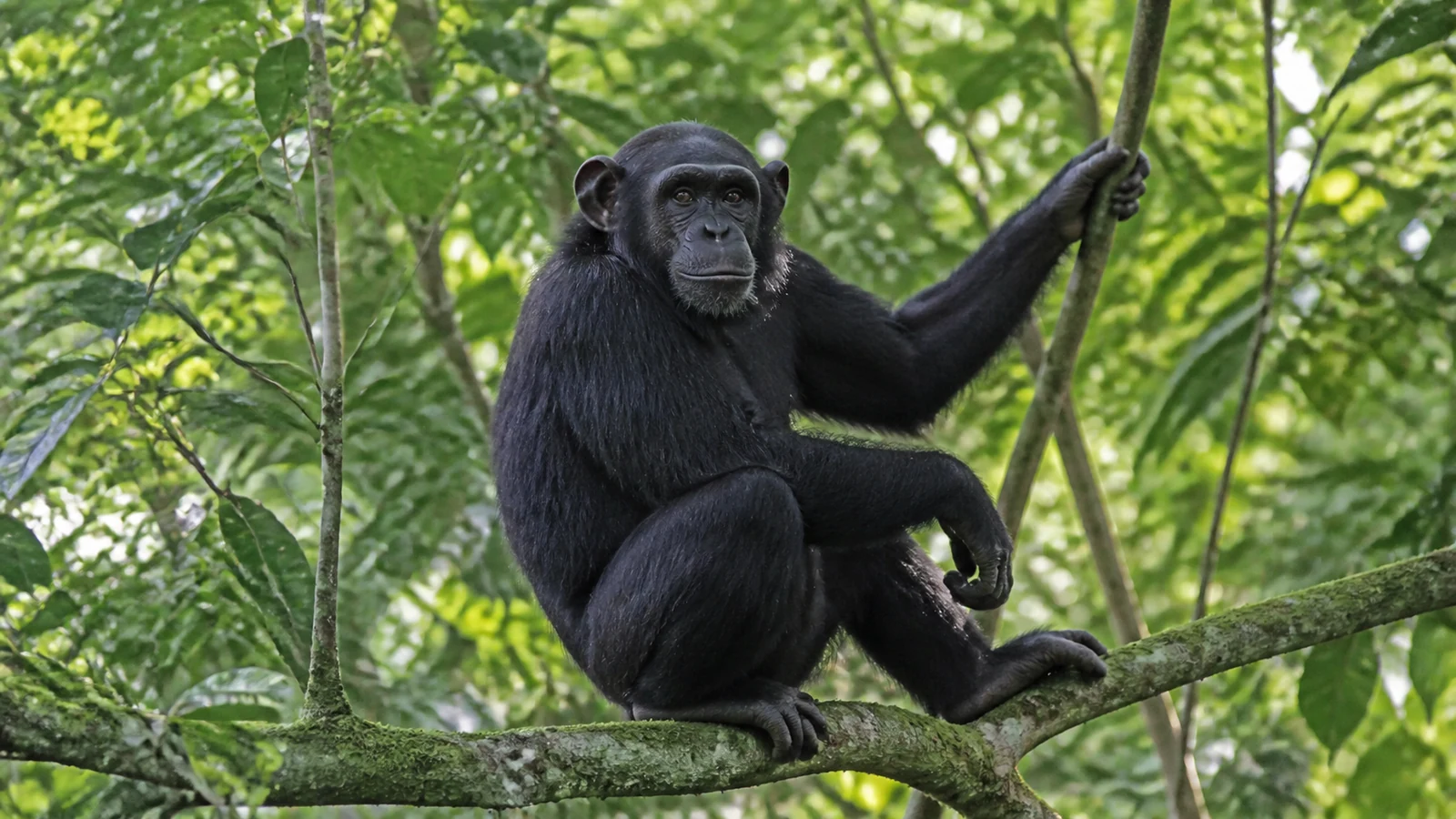
TL;DR – Mahale Mountains National Park sits on the eastern shore of Lake Tanganyika in western Tanzania, accessible only by light aircraft and boat, with no roads and no vehicles inside the park. The chimpanzees here are among the most habituated in Africa. The lodge is extraordinary. Getting there is the challenge – and entirely worth it.
- Most habituated chimp community in Tanzania – M-group observed continuously since 1965
- Greystoke Mahale is one of East Africa’s most distinctive and beautiful lodges
- No roads, no vehicles – the remoteness is part of what makes it extraordinary
- Three nights minimum – the journey demands it and the experience rewards it
What Is Mahale Mountains National Park?
Mahale Mountains National Park covers 1,613 square kilometers of montane forest, miombo woodland, and lake shoreline on the eastern edge of Lake Tanganyika in western Tanzania. It is one of the most remote national parks in Africa – there are no roads into the park, no vehicles inside it, and the nearest significant town is several hours away by boat.
The park was established specifically to protect the chimpanzee population of the Mahale Mountains – a community of approximately 60 habituated individuals that have been the subject of ongoing scientific research since the 1960s, when Japanese primatologist Toshisada Nishida began the field studies that would eventually make Mahale one of the longest-running chimpanzee research sites in the world.
What makes Mahale different from every other chimp trekking destination in Africa is the combination: the remoteness, the forest quality, the lake, and the depth of habituation of the M-group community. These chimpanzees have been observed continuously for over 50 years. They know humans are present and have no particular interest in the fact.
Best Place to See Chimps in Tanzania
The best place to see chimps in Tanzania is Mahale – and it’s not particularly close.
Tanzania has two primary chimp trekking destinations:
| Mahale Mountains | Gombe Stream | |
|---|---|---|
| Location | Western Tanzania, Lake Tanganyika | Northwest Tanzania, Lake Tanganyika |
| Access | Charter flight + boat | Boat from Kigoma |
| Habituated chimps | M-group, ~60 individuals | Kasekela community |
| Research history | Since 1965 (Nishida) | Since 1960 (Goodall) |
| Lodge quality | Greystoke Mahale – exceptional | Basic |
| Forest quality | Pristine montane forest | Good but more disturbed |
| Overall experience | Best in Tanzania | More accessible, less polished |
Gombe Stream is where Jane Goodall conducted her foundational chimpanzee research and carries enormous historical significance. But for the quality of the trekking experience, the forest, and the accommodation, Mahale is the stronger destination by a significant margin.
Outside Tanzania, Uganda’s Kibale Forest – with its Kanyanchu community of over 120 habituated chimpanzees – offers a more accessible alternative for travelers who want a high-quality chimp experience without Mahale’s logistical complexity.
Greystoke Mahale Review: The Lodge on the Lake
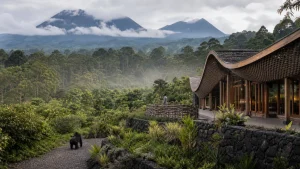
Greystoke Mahale is the only permanent luxury lodge in the park and one of the most architecturally distinctive camps in East Africa. A Greystoke Mahale review needs to start with what it looks like – because the visual of the camp is the first thing that registers when you arrive by boat.
Six bandas – open-fronted sleeping structures built from driftwood and natural materials sourced from the lake shore – sit in a line facing Lake Tanganyika. Each banda has a bed, a sitting area, and a full-length open front that frames the lake like a living painting. There are no glass windows. There are no walls on the lake-facing side. The lake is your view, your ventilation, and your constant companion.
The main area – dining, lounge, and the deck that extends over the water – is built in the same driftwood aesthetic. Meals are served on the deck with the lake directly below. Sundowners happen in the water – the lake is bilharzia-free at Mahale, and swimming off the jetty and from the beach is a daily ritual.
What makes Greystoke specifically excellent:
- The design – driftwood construction that sits in the landscape rather than on it, with a visual quality that rewards spending time in camp as much as in the forest
- The food – exceptional for a camp this remote, sourced creatively from local suppliers and the lake itself
- The guiding – Greystoke’s guides have tracked the M-group for years and know individual chimpanzees by name, face, and behavioral history
- The lake activities – kayaking, snorkeling for cichlid fish, sunset dhow cruises, and beach time alongside the chimp trekking
Luxury Chimp Safari: The Trekking Experience Itself
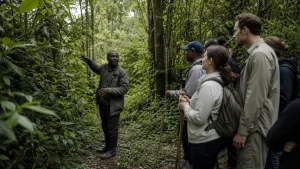
A luxury chimp safari at Mahale operates differently from gorilla trekking. There are no vehicle roads, which means you walk from camp into the forest each morning – the trek itself is part of the experience rather than just the approach to it.
The forest rises steeply from the lakeshore. Treks range from 30 minutes to four hours depending on where the M-group has moved overnight, and the terrain covers everything from flat beach forest to steep montane slopes. Fitness level matters more here than at Mahale’s primate competitors – this is real forest hiking, not a managed path.
When you find the chimpanzees – and the guides’ success rate at Mahale is very high – the encounter is different from gorilla trekking in a fundamental way. Chimpanzees move. Constantly, quickly, and in multiple directions simultaneously. They’re in the trees, on the ground, chasing each other, grooming, vocalizing. You have one hour with the M-group, and that hour rarely involves standing still.
The moments that people describe afterward:
The pant-hoot – when a dominant male begins calling and the rest of the community responds, the sound builds across the forest canopy in a wave that seems to come from everywhere at once. It’s the loudest, most primal sound in the African forest and it arrives without warning.
Eye contact – a juvenile chimp drops from a branch, lands two meters from you, looks directly at your face with an expression of frank assessment, and moves on. The intelligence behind that look is uncomfortable in the best possible way.
The drumming – chimpanzees drum on buttress roots to communicate – a low, resonant boom that carries through the forest floor as much as through the air. Hearing it before you’ve located the group is one of the more disorienting sensory experiences in African wildlife.
The Logistics of Getting to Mahale
The logistics of getting to Mahale are what keep visitor numbers low – and what make the experience feel so genuinely remote once you’re there.
There is no direct commercial flight to Mahale. The route works as follows:
Step 1 – fly from Dar es Salaam, Arusha, or another Tanzania hub to Kigoma on the western shore of Lake Tanganyika. This is either a charter flight (approximately 2.5 hours) or a commercial connection via Dar.
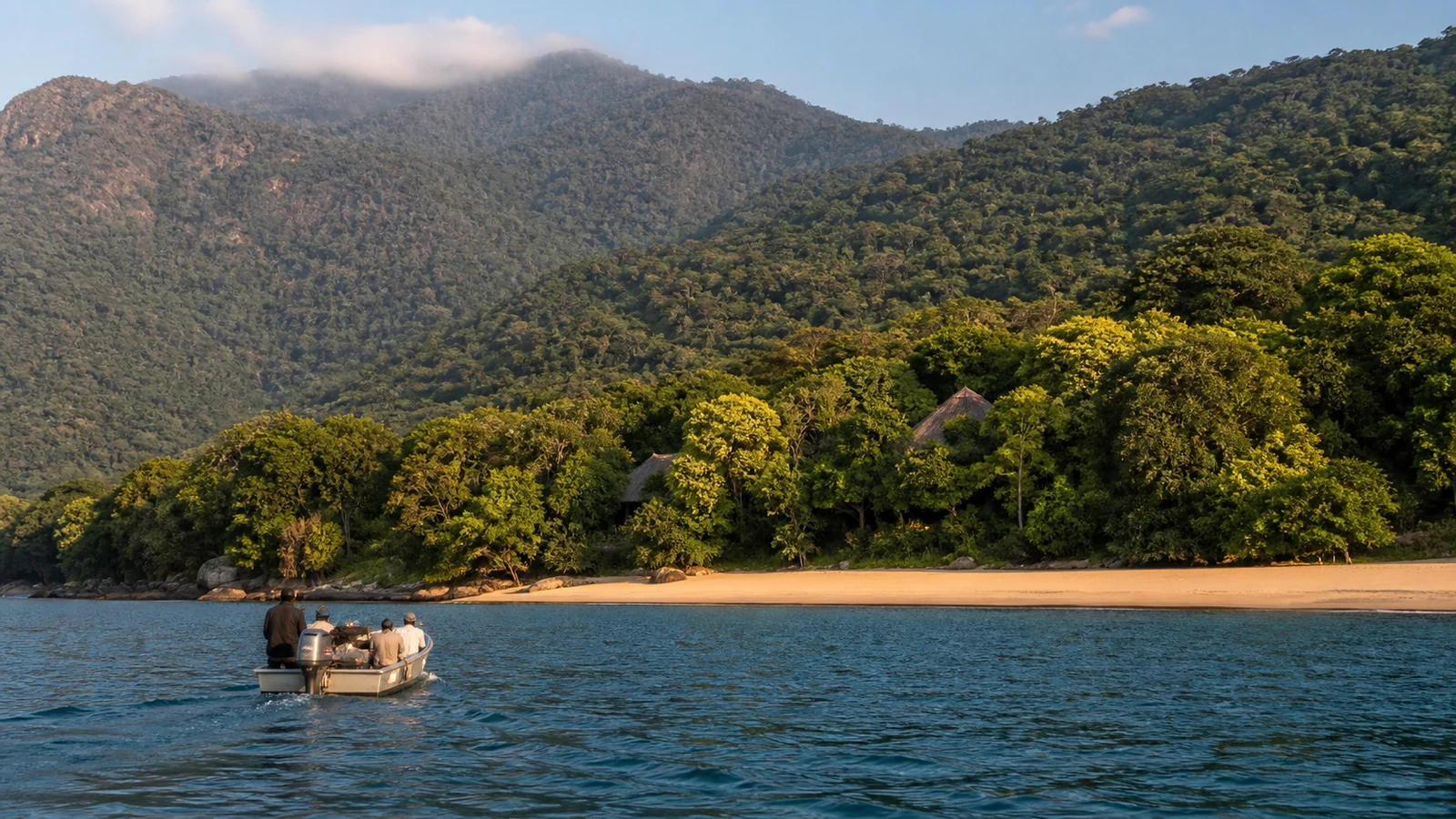
Step 2 – boat transfer from Kigoma to the park. Greystoke operates its own boat for this transfer – approximately four hours along the lake shore, passing fishing villages and the forested escarpment of the Mahale Mountains coming into view from the water.
Step 3 – arrive at the camp’s beach jetty. There are no roads. No vehicles. You have arrived.
The total journey from Arusha or Dar es Salaam takes a full day, which is why Mahale works best as a standalone destination with a minimum of three nights – not a single-night add-on to a northern circuit itinerary.
The boat ride itself deserves mention. Lake Tanganyika is one of the world’s oldest and deepest lakes – 650 kilometers long, 1,470 meters deep, and containing 15% of the world’s fresh surface water. The four-hour approach to Mahale along this lake, watching the forested mountains rise from the water, is a journey that sets the tone for everything that follows.
The Logistics of Mahale, Handled by Only One Safaris
Mahale is the kind of destination that requires commitment – to the journey, to the logistics, to clearing enough days to do it justice. What it gives back is a wildlife experience, a landscape, and a lodge that operate at a level very few places in Africa reach. The chimps are extraordinary. The lake is extraordinary. And the specific combination of forest, water, and remoteness produces something that stays with you in a way that more accessible destinations rarely do.
If Mahale is on your radar and you want the logistics handled properly – charter flights, boat transfers, the right number of nights, and the right combination with other Tanzania destinations – we’ve made this journey ourselves and we know exactly how to put it together.
Get in touch and let’s plan it.
Frequently Asked Questions: Chimp Trekking: Mahale Mountains
What is the best place to see chimps in Tanzania?
Mahale Mountains National Park offers the best overall chimp trekking experience in Tanzania – pristine forest, a highly habituated community of 60 individuals, and Greystoke Mahale as the base lodge. Gombe Stream has more historical significance as Jane Goodall’s research site but offers a significantly less polished visitor experience.
How difficult is the chimp trekking at Mahale Mountains?
More demanding than gorilla trekking. The forest rises steeply from the lake shore and treks can involve up to four hours of hiking on uneven terrain. A moderate to good fitness level is recommended. The reward for the effort is a forest and an experience that feels genuinely wild rather than managed.
What is a Greystoke Mahale review summary?
Greystoke Mahale is one of East Africa’s most distinctive lodges – six open-fronted driftwood bandas on the lake shore, exceptional food, strong guiding, and a design philosophy that treats the lake and forest as the primary amenity. It consistently ranks among the best small lodges in Tanzania and justifies the logistics of getting there entirely on its own merits.
Can I combine Mahale with other Tanzania destinations?
Yes, but Mahale works best as a dedicated leg rather than a rushed add-on. Three nights minimum at Greystoke, combined with either the Serengeti and northern circuit or the southern circuit through Ruaha and Selous, makes a complete Tanzania itinerary. The western Tanzania combination – Mahale plus Katavi National Park for buffalo and hippo – is one of the country’s best kept itinerary secrets.
{
“@context”: “https://schema.org”,
“@type”: “FAQPage”,
“mainEntity”: [
{
“@type”: “Question”,
“name”: “What is the best place to see chimps in Tanzania?”,
“acceptedAnswer”: {
“@type”: “Answer”,
“text”: “Mahale Mountains National Park offers the best overall chimp trekking experience in Tanzania – pristine forest, a highly habituated community of 60 individuals, and Greystoke Mahale as the base lodge. Gombe Stream has more historical significance as Jane Goodall’s research site but offers a significantly less polished visitor experience.”
}
},
{
“@type”: “Question”,
“name”: “How difficult is the chimp trekking at Mahale Mountains?”,
“acceptedAnswer”: {
“@type”: “Answer”,
“text”: “More demanding than gorilla trekking. The forest rises steeply from the lake shore and treks can involve up to four hours of hiking on uneven terrain. A moderate to good fitness level is recommended. The reward for the effort is a forest and an experience that feels genuinely wild rather than managed.”
}
},
{
“@type”: “Question”,
“name”: “What is a Greystoke Mahale review summary?”,
“acceptedAnswer”: {
“@type”: “Answer”,
“text”: “Greystoke Mahale is one of East Africa’s most distinctive lodges – six open-fronted driftwood bandas on the lake shore, exceptional food, strong guiding, and a design philosophy that treats the lake and forest as the primary amenity. It consistently ranks among the best small lodges in Tanzania and justifies the logistics of getting there entirely on its own merits.”
}
},
{
“@type”: “Question”,
“name”: “Can I combine Mahale with other Tanzania destinations?”,
“acceptedAnswer”: {
“@type”: “Answer”,
“text”: “Yes, but Mahale works best as a dedicated leg rather than a rushed add-on. Three nights minimum at Greystoke, combined with either the Serengeti and northern circuit or the southern circuit through Ruaha and Selous, makes a complete Tanzania itinerary. The western Tanzania combination – Mahale plus Katavi National Park for buffalo and hippo – is one of the country’s best kept itinerary secrets.”
}
}
]
}