TL;DR – The Batwa people lived inside the forests of southwestern Uganda for thousands of years, alongside the mountain gorillas, without destroying either. Then the national parks arrived and evicted them. The Batwa Trail is how their culture survives today – and one of the most quietly powerful experiences you can have in Uganda.
- The Batwa lived in Bwindi and Mgahinga forests for an estimated 60,000 years before displacement in 1991
- The Batwa trail Mgahinga runs inside the forest itself – the only version of the experience set in the Batwa’s actual home
- Combining gorilla trekking with the Batwa experience in a three-night stay is the itinerary we recommend consistently
- Visit fees fund community health, education, and cultural preservation directly
The People Who Lived in the Forest With Gorillas
Before Bwindi Impenetrable Forest was a national park, before the gorilla trekking permits and the ranger briefings and the conservation fees, the forest had people in it.
The Batwa – sometimes called pygmy tribes Uganda – lived as hunter-gatherers inside Bwindi and Mgahinga forests for an estimated 60,000 years. They knew every tree, every medicinal plant, every animal trail. They coexisted with the mountain gorillas not as observers but as neighbors. The forest was not a destination for the Batwa. It was home.
In 1991, when Uganda gazetted Bwindi and Mgahinga as national parks to protect the gorilla population, the Batwa were removed. No resettlement plan, no compensation, no consultation. An estimated 6,000 people were displaced from the only home their culture had ever known. They were not allowed to return, even for subsistence hunting or harvesting.
The eviction is one of conservation’s uncomfortable truths: the same impulse that saved the mountain gorillas removed the humans who had lived alongside them without threatening them for millennia.
Batwa Cultural Experience: What It Actually Is
The Batwa cultural experience exists because a community that lost its land still has its knowledge – and that knowledge is the last thing connecting younger Batwa generations to who they are.
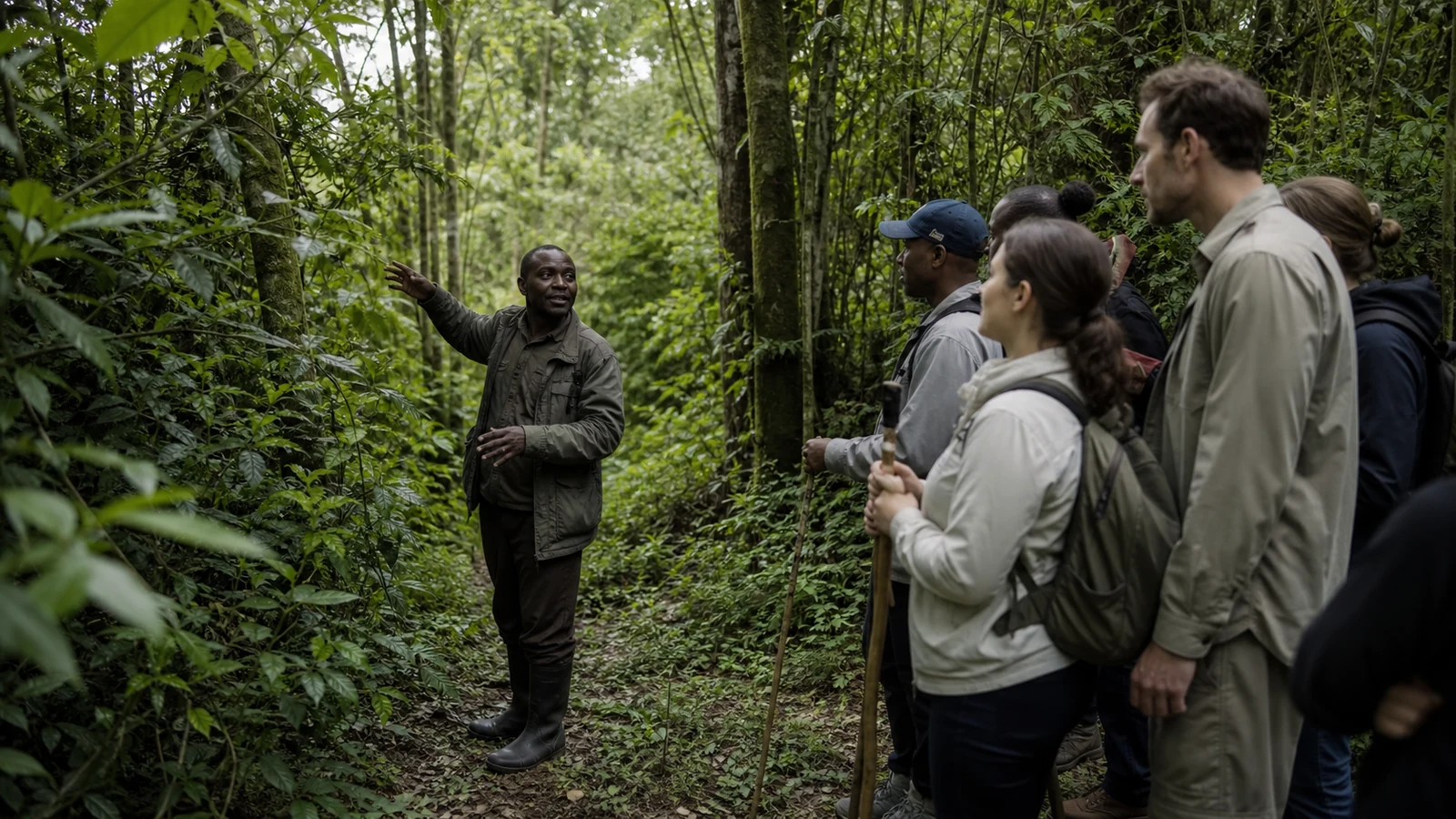
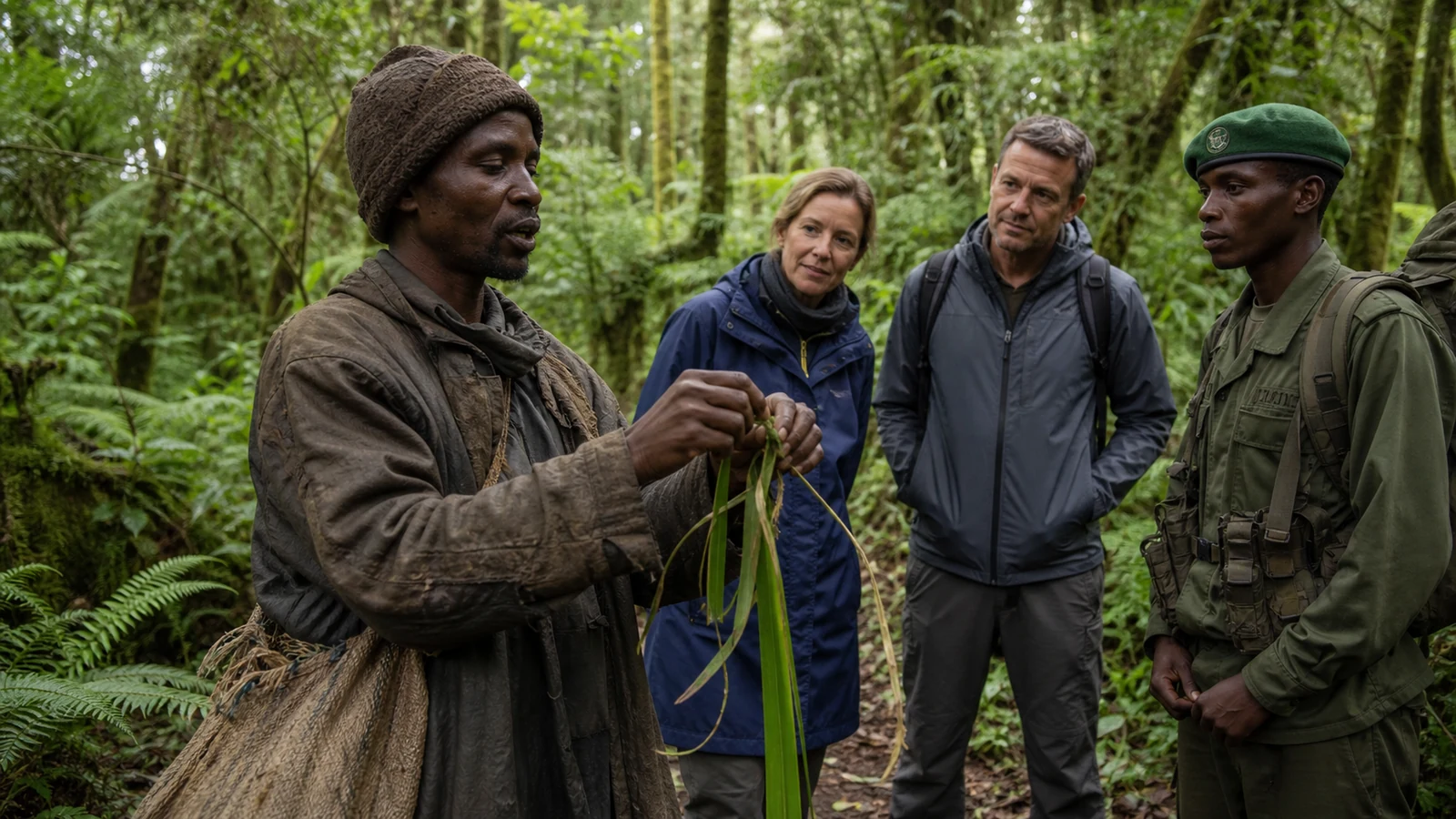
The experience is led by Batwa elders and community members, not outside guides. You enter the forest with people whose grandparents were born in it and spend two to three hours learning what forest life actually looked like.
What the experience covers:
- Fire-making – traditional friction methods using specific wood combinations that the Batwa selected over generations
- Hunting techniques – how traps and bows were built and used, demonstrated in the forest environment where they were developed
- Traditional medicine – plant identification and use; the Batwa pharmacopoeia covers dozens of species for everything from wound treatment to fever management
- Honey harvesting – Batwa beekeeping knowledge is highly specific and deeply embedded in their relationship with particular tree species
- Cultural performance – songs, dance, and storytelling that carry the history of forest life in a form that can be transmitted without the forest itself
This is not a performance designed for tourists. It is a community choosing to share its knowledge as a form of cultural survival, and the distinction matters when you’re standing in front of it.
Batwa Trail Mgahinga: The Forest Version
The Batwa trail Mgahinga runs inside Mgahinga Gorilla National Park – one of two parks from which the Batwa were displaced. This version of the experience is particularly significant because you are physically inside the forest the Batwa call home, retracing paths they walked for generations.
The Mgahinga trail runs for approximately three hours and combines the cultural elements above with a walk through montane forest that reaches the lower slopes of the Virunga volcanoes. The setting adds a layer that the roadside version of the experience cannot replicate – you understand the Batwa relationship with the forest differently when you’re inside it with them.
The trail is managed in partnership with the Uganda Wildlife Authority, with a portion of the fees going directly to the Batwa community. It operates in small groups – usually no more than eight to ten people – and runs at a pace set by the elders leading it. There is no rushing this experience.
Cultural Tourism Bwindi: Adding the Batwa to a Gorilla Itinerary
Most travelers come to southwestern Uganda for one reason: the mountain gorillas. The Batwa experience is the addition that most people don’t know to ask for and almost universally say was the highlight they didn’t expect.
Cultural tourism Bwindi has grown significantly over the past decade, with several operators and lodges now treating the Batwa trail as a core itinerary component rather than an optional extra. Buhoma Community Rest Camp and Clouds Mountain Gorilla Lodge both work directly with Batwa communities and can arrange the experience as part of a stay.
The logistics are straightforward: gorilla trekking takes a morning, the Batwa experience takes an afternoon, and a three-night stay in Bwindi gives you both without feeling rushed. We build it this way for almost every Uganda itinerary we put together.
The combination carries a weight that a gorilla trek alone doesn’t. You spend the morning watching one of evolution’s most remarkable animals. You spend the afternoon with the people who lived alongside that animal for longer than recorded history, now trying to keep their culture alive outside the forest that shaped it. Both experiences are about survival, just from very different angles.
Why This Experience Belongs in Every Uganda Itinerary
The Batwa trail is not difficult, not physically demanding, and not long. It is not an add-on for serious adventurers or cultural specialists. It is an hour of paying attention to people who have something genuinely worth sharing – and whose community benefits directly from the attention.
The fees paid for the Batwa cultural experience fund community health programs, school fees for Batwa children, and the preservation of the knowledge itself. Several Batwa elders who lead the trail are among the last people alive with direct, unbroken transmission of forest knowledge. When they’re gone, what they know goes with them unless it’s been shared and recorded.
Visiting is, in a small but real way, part of how that doesn’t happen.
How Only One Safaris Handles the Batwa Visit Responsibly
The Batwa have lived alongside mountain gorillas longer than any conservation program has existed. Their eviction kept the gorillas. The Batwa trail is what keeps the Batwa. Going on it is the least complicated good decision you can make in Uganda.
If you want a Uganda itinerary that includes gorilla trekking and the Batwa trail built in properly – with the right lodges, the right number of nights, and a flow that does justice to both – we’ve put this together many times.
Get in touch and let’s build it.
Frequently Asked Questions: Batwa Pygmies: The Forest Keepers
Who are the Batwa people of Uganda?
The Batwa are one of Africa’s oldest indigenous peoples, hunter-gatherers who lived in the montane forests of southwestern Uganda for tens of thousands of years. They were displaced when Bwindi and Mgahinga were gazetted as national parks in 1991 and have since lived in communities on the forest edges, largely dependent on conservation tourism for income.
What happens on the Batwa Trail in Mgahinga?
The Batwa trail Mgahinga runs for approximately three hours inside Mgahinga Gorilla National Park, led by Batwa elders. It covers traditional fire-making, hunting techniques, medicinal plant knowledge, honey harvesting, and cultural performance. Groups are kept small and the pace is set by the community members leading it.
Can I combine gorilla trekking with the Batwa cultural experience?
Yes, and we strongly recommend it. Gorilla trekking runs in the morning and the Batwa experience fits naturally into the afternoon. A three-night stay in Bwindi or Mgahinga gives you both without any scheduling pressure.
Does the Batwa experience fee go to the community?
A direct portion of entrance fees goes to the Batwa community through arrangements managed with the Uganda Wildlife Authority. Lodges and operators who work directly with Batwa communities – rather than through third-party cultural tourism operators – tend to have the most transparent community benefit structures.
{
“@context”: “https://schema.org”,
“@type”: “FAQPage”,
“mainEntity”: [
{
“@type”: “Question”,
“name”: “Who are the Batwa people of Uganda?”,
“acceptedAnswer”: {
“@type”: “Answer”,
“text”: “The Batwa are one of Africa’s oldest indigenous peoples, hunter-gatherers who lived in the montane forests of southwestern Uganda for tens of thousands of years. They were displaced when Bwindi and Mgahinga were gazetted as national parks in 1991 and have since lived in communities on the forest edges, largely dependent on conservation tourism for income.”
}
},
{
“@type”: “Question”,
“name”: “What happens on the Batwa Trail in Mgahinga?”,
“acceptedAnswer”: {
“@type”: “Answer”,
“text”: “The Batwa trail Mgahinga runs for approximately three hours inside Mgahinga Gorilla National Park, led by Batwa elders. It covers traditional fire-making, hunting techniques, medicinal plant knowledge, honey harvesting, and cultural performance. Groups are kept small and the pace is set by the community members leading it.”
}
},
{
“@type”: “Question”,
“name”: “Can I combine gorilla trekking with the Batwa cultural experience?”,
“acceptedAnswer”: {
“@type”: “Answer”,
“text”: “Yes, and we strongly recommend it. Gorilla trekking runs in the morning and the Batwa experience fits naturally into the afternoon. A three-night stay in Bwindi or Mgahinga gives you both without any scheduling pressure.”
}
},
{
“@type”: “Question”,
“name”: “Does the Batwa experience fee go to the community?”,
“acceptedAnswer”: {
“@type”: “Answer”,
“text”: “A direct portion of entrance fees goes to the Batwa community through arrangements managed with the Uganda Wildlife Authority. Lodges and operators who work directly with Batwa communities – rather than through third-party cultural tourism operators – tend to have the most transparent community benefit structures.”
}
}
]
}