Key Takeaways
- Choose neutral-colored, breathable clothing in layers to adapt to temperature variations from cool mornings to warm afternoons
- Pack in soft-sided duffel bags rather than hard suitcases due to weight and space restrictions on bush planes
- Invest in quality optics and sun protection — these items directly impact your safari experience and comfort
- Prioritize versatile, quick-dry fabrics to minimize luggage while maximizing outfit options through laundry services
- Bring essential documents including passport, visa, vaccination certificates, and comprehensive travel insurance
Packing for an African safari requires strategic planning that balances practical needs with weight restrictions, climate considerations, and activity requirements. The right gear enhances your wildlife viewing experience while keeping you comfortable across varying conditions. This comprehensive guide provides specific recommendations for clothing, equipment, and essentials that experienced safari-goers rely on.
Understanding African Safari Climates and Seasons
African safari destinations experience distinct climate patterns that directly affect what you should pack. Temperature fluctuations throughout a single day can range from 10°C (50°F) at dawn to 30°C (86°F) by afternoon, making layering essential rather than optional.
East African destinations including Tanzania and Kenya maintain relatively consistent temperatures year-round due to their equatorial location, with variations driven primarily by altitude rather than season. The Serengeti and Maasai Mara sit at elevations between 1,500 and 1,800 meters, creating cooler mornings and evenings regardless of the month.
Southern African countries experience more pronounced seasonal variation. Botswana, Zimbabwe, and South Africa have distinct winter months from May through August when morning temperatures can drop to near freezing, particularly in the Kalahari and highveld regions.
Climate Considerations by Region
- East Africa (Tanzania, Kenya): Moderate temperatures year-round, two rainy seasons (March-May and November-December), cooler at higher elevations
- Southern Africa (Botswana, Zimbabwe, South Africa): Hot summers (November-March), cool to cold winters (May-August), minimal rainfall during winter months
- Coastal areas: Higher humidity, warmer temperatures, coastal breezes in the evening
- High-altitude regions: Significantly cooler mornings and evenings, stronger sun exposure due to elevation
The Layering System
Effective layering allows you to regulate body temperature throughout the day without overpacking. The three-layer system consists of:
- Base layer: Moisture-wicking materials that sit against your skin
- Mid layer: Insulating fleece or light down for warmth retention
- Outer layer: Wind-resistant and water-resistant jacket for protection
Game drives begin before sunrise when temperatures are lowest, requiring all three layers. As the sun rises, you progressively remove layers, typically ending with just the base layer by mid-morning.
The Safari Wardrobe: Clothing Essentials
Safari clothing serves functional purposes beyond basic coverage. The right garments protect against sun exposure, insect bites, and scratching vegetation while maintaining comfort in heat and providing warmth when temperatures drop.
Color Selection
Neutral earth tones including khaki, beige, olive green, and brown serve two purposes: they minimize visibility to wildlife and reduce heat absorption. White and bright colors reflect more light, potentially disturbing animals and attracting insects. Black absorbs excessive heat, making midday uncomfortable.
Fabric Recommendations
Modern synthetic blends outperform traditional cotton for safari conditions:
- Preferred fabrics: Merino wool, nylon-spandex blends, polyester microfiber, supplex nylon
- Fabric properties to prioritize: Quick-drying, moisture-wicking, wrinkle-resistant, UPF sun protection
- Fabrics to avoid: Heavy cotton (slow to dry), denim (restrictive and hot), silk (delicate and impractical)
Tops
- Long-sleeve shirts (3-4): Button-down styles with roll-up sleeves provide sun protection and insect defense while offering ventilation options
- Short-sleeve shirts (2-3): Breathable options for warmer afternoons, preferably with collar for neck protection
- Base layer top (1-2): Lightweight merino wool or synthetic for cool mornings
- Performance t-shirts (2): Quick-dry materials for casual lodge wear
Bottoms
- Convertible pants (2 pairs): Zip-off legs transform from pants to shorts, maximizing versatility while minimizing luggage
- Long pants (1-2 additional pairs): Lightweight, quick-dry materials with multiple pockets
- Shorts (1-2 pairs): Knee-length or longer to protect against sun and insects
- Casual trousers (1 pair): Slightly dressier option for lodge dinners
Outerwear
- Fleece jacket or pullover (1): Mid-weight insulation for early morning drives
- Windbreaker or rain jacket (1): Packable, water-resistant shell layer
- Lightweight down vest (optional): Additional warmth layer for winter safaris in Southern Africa
Undergarments and Sleepwear
- Underwear (5-7 pairs): Moisture-wicking, quick-dry materials
- Sports bras (3-4): Comfortable support for bumpy game drive roads
- Socks (5-7 pairs): Merino wool or synthetic hiking socks
- Sleepwear (1-2 sets): Lightweight and comfortable for warm lodge rooms
- Swimsuit (1): Many lodges feature pools for afternoon relaxation
Accessories
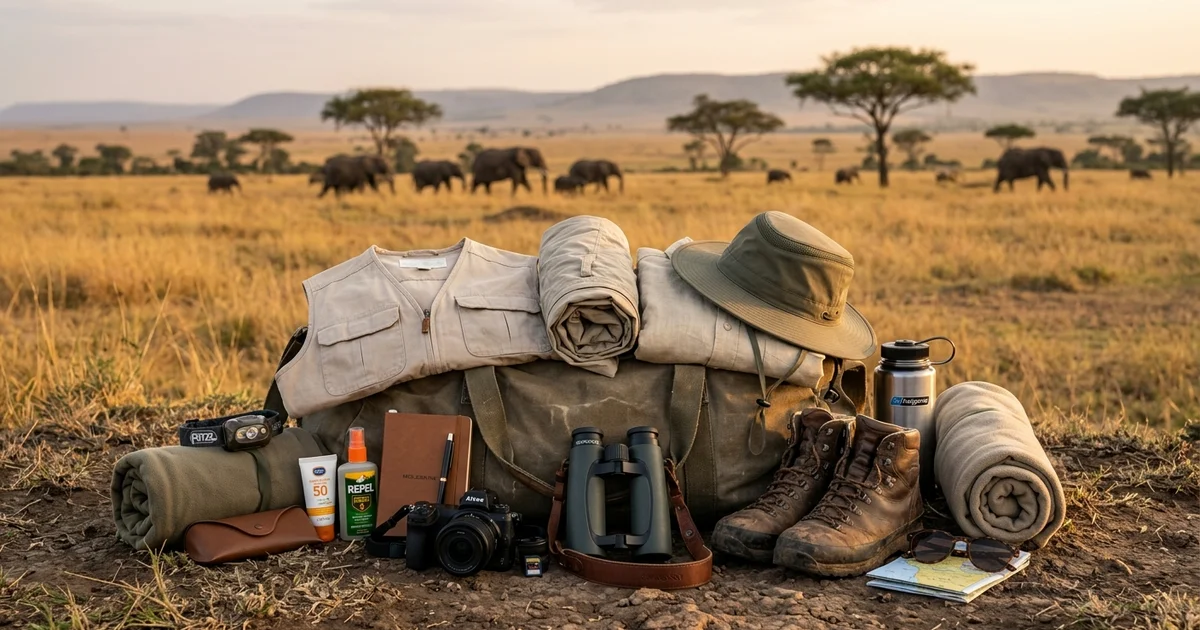
- Wide-brimmed hat (1): Essential sun protection with chin strap to prevent loss during drives
- Warm beanie or headband (1): For cold early mornings
- Buff or neck gaiter (1-2): Multipurpose protection from sun, dust, and insects
- Lightweight scarf (1): Additional warmth layer and dust protection
Footwear: Staying Comfortable and Protected
Footwear requirements for safari balance comfort during long vehicle hours with support for walking safaris and lodge exploration. Three pairs of shoes typically cover all scenarios without excessive luggage weight.
Closed-Toe Walking Shoes or Hiking Boots
Sturdy, ankle-supporting footwear protects against uneven terrain, thorns, and wildlife during guided bush walks. Select mid-weight hiking boots or trail shoes that you have already broken in. New footwear causes blisters that can ruin your safari experience.
Features to prioritize: breathable materials, good tread for varied terrain, ankle support for rocky areas, neutral colors that match safari clothing.
Comfortable Casual Shoes
Lightweight sneakers or casual closed-toe shoes work for lodge wear, travel days, and relaxed game drives. These should slip on easily as you will remove them before entering your tent or room.
Sandals or Flip-Flops
Open footwear provides relief during lodge downtime and simplifies pre-dawn game drive preparation. Choose styles with back straps rather than flip-flops for better security and support.
Sock Selection
Moisture-wicking socks prevent blisters and maintain comfort during long days. Pack 5-7 pairs of hiking-weight merino wool or synthetic socks. Merino wool regulates temperature in both warm and cool conditions while naturally resisting odor, allowing you to wear socks multiple times between washes if needed.
Avoid cotton socks entirely. Cotton retains moisture, creating friction that leads to blisters and providing breeding grounds for bacteria.
Essential Gear & Accessories for Wildlife Viewing and Comfort
Quality gear transforms good safari experiences into exceptional ones. These items enhance wildlife viewing, protect your health, and ensure comfort throughout your journey.
Optics
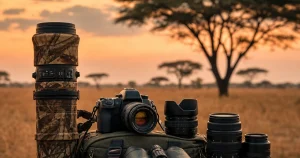
- Binoculars (essential): 8×42 or 10×42 magnification provides optimal balance between power and stability. Quality optics reveal animal behaviors and distant sightings that naked eyes miss
- Camera with telephoto lens (highly recommended): 200-400mm focal length captures wildlife detail without disturbing animals. Mirrorless systems offer excellent image quality with reduced weight
- Smartphone with good camera (backup): Modern phones capture impressive images and serve as backup to dedicated cameras
Sun Protection
- Sunscreen (SPF 50+): Broad-spectrum protection applied every two hours during daytime activities. Mineral-based formulations resist sweat better than chemical sunscreens
- Lip balm with SPF (2 tubes): Lips burn easily in intense African sun and at high elevations
- Sunglasses (1-2 pairs): Polarized lenses reduce glare and eye strain during long game drives. Bring a backup pair
- UV-blocking clothing: Many safari garments now include UPF 50+ sun protection woven into fabric
Insect Protection
- DEET-based repellent (30-50% concentration): Most effective against mosquitoes and other biting insects. Apply to exposed skin and clothing
- Permethrin clothing treatment: Spray this on clothing and gear before your trip. It remains effective through multiple washes
- Natural repellent alternative: Lemon eucalyptus oil-based products (20% concentration) offer moderate protection for those avoiding DEET
Photography and Electronics
- Extra camera batteries (2-3): Cold mornings drain batteries faster, and charging opportunities may be limited
- Memory cards (multiple): Bring more storage than you think necessary. A single game drive can produce hundreds of photos
- Universal power adapter: African countries use various plug types (D, G, and M most common)
- Portable charger/power bank: 20,000mAh capacity keeps devices charged between lodge stays
- Headlamp or flashlight: Essential for navigating camps after dark. Red light settings preserve night vision
- Waterproof bags or cases: Protect electronics from dust and unexpected rain
Comfort and Convenience Items
- Reusable water bottle (1 liter): Stainless steel bottles keep water cool during hot afternoons
- Day pack or small backpack: Carry essentials during game drives without cluttering vehicle seats
- Wet wipes or hand sanitizer: Maintain hygiene when water access is limited
- Tissues or travel toilet paper: Bush facilities may have limited supplies
- Ziplock bags (various sizes): Protect items from dust and organize small belongings
- Duct tape or repair tape: Quick fixes for torn gear or clothing
- Swiss army knife or multi-tool: Useful for various camp situations (pack in checked luggage only)
Health & Safety Essentials
Remote safari locations require self-sufficiency for minor health issues. Professional medical facilities exist in major safari regions, but immediate access to common remedies prevents small problems from disrupting your experience.
Personal First-Aid Kit
- Adhesive bandages (variety of sizes): Cover minor cuts and blisters
- Blister treatment: Moleskin or specialized blister bandages prevent and treat friction injuries
- Antibiotic ointment: Prevent infection in minor wounds
- Pain relievers: Ibuprofen and acetaminophen for headaches, muscle soreness, and general discomfort
- Antihistamine: Treat allergic reactions to insect bites or environmental allergens
- Anti-diarrheal medication: Loperamide provides relief from digestive upset
- Rehydration salts: Restore electrolyte balance if experiencing digestive issues
- Motion sickness medication: Bush plane flights and rough roads affect sensitive travelers
- Tweezers: Remove splinters or thorns encountered during bush walks
- Digital thermometer: Monitor potential fever symptoms
Prescription Medications
Bring all prescription medications in original containers with labels clearly showing your name and prescribing physician. Pack quantities sufficient for your entire trip plus one week extra in case of travel delays. Divide medications between carry-on and checked luggage to ensure access if one bag is delayed.
Carry a letter from your physician listing all prescribed medications, especially for controlled substances that may raise questions at customs.
Hygiene and Personal Care
- Toothbrush and toothpaste: Travel-sized options save space
- Biodegradable soap and shampoo: Environmentally responsible options for eco-conscious camps
- Quick-dry towel: Microfiber towels dry rapidly and pack small (though most lodges provide towels)
- Feminine hygiene products: Bring adequate supply as specific brands may be unavailable
- Razor and shaving cream: If desired for personal grooming
- Deodorant: Stick formulas avoid liquid restrictions for carry-on luggage
- Nail clippers: Small but essential for comfort during extended trips
- Contact lens supplies: Bring extras plus a backup pair of glasses
Luggage and Packing Smart
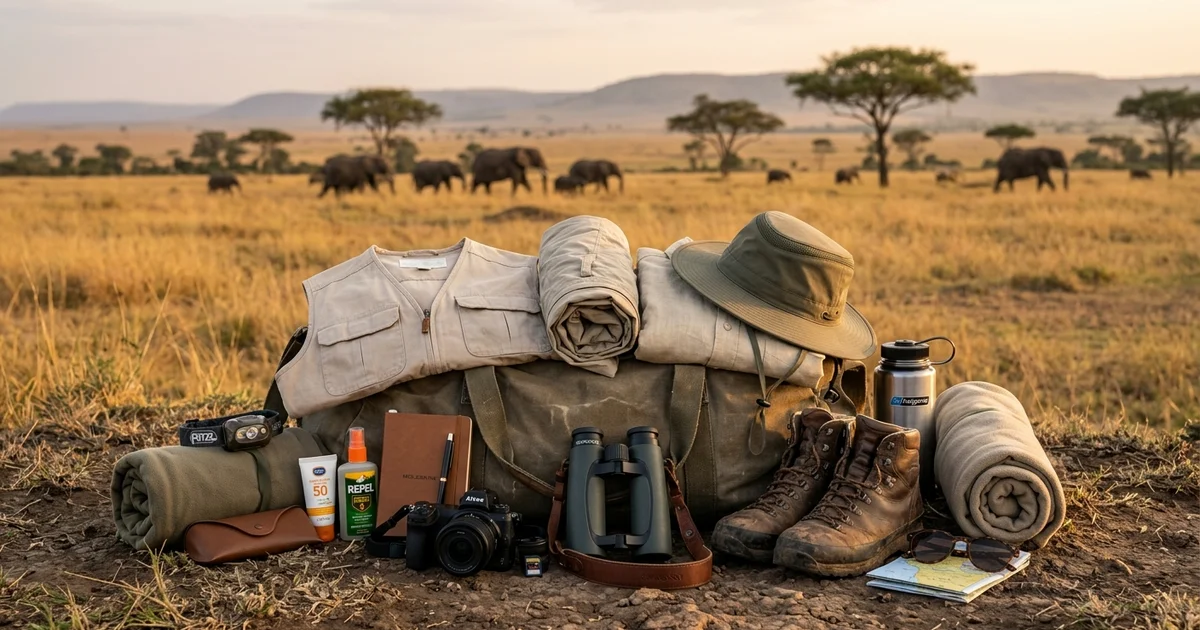
Safari luggage requirements differ significantly from standard travel due to weight restrictions on bush planes and space limitations in safari vehicles. Strategic packing ensures you have everything needed while respecting these constraints.
Soft-Sided Duffel Bags
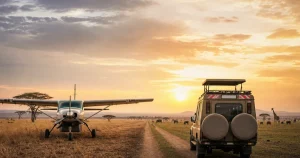
Bush planes connecting remote camps enforce strict luggage limits, typically 15 kilograms (33 pounds) per person including hand luggage. More importantly, they require soft-sided bags that fit into irregular cargo spaces.
Hard-shell suitcases cannot be accommodated on small aircraft and safari vehicles have limited secure storage. Choose duffel bags between 60-80 liters with the following features:
- Sturdy zippers with lockable pulls
- Reinforced handles and shoulder straps
- Water-resistant materials or rain covers
- Internal compression straps to secure contents
- External pockets for frequently accessed items
Packing Strategy
- Roll clothing rather than folding: Rolling minimizes wrinkles and maximizes space efficiency. For extra compression, use packing cubes that compress contents.
- Place heavy items at the bottom: Position shoes and toiletries near the bag base for stability during transport.
- Use shoes as storage: Stuff socks, underwear, or small items inside shoes to utilize all available space.
- Create layered outfits: Plan daily combinations before packing to ensure everything coordinates and serves multiple purposes.
- Keep essentials accessible: Place items needed for first and last days near the top or in external pockets.
- Separate dirty clothes: Pack a lightweight laundry bag or extra ziplock bags for worn clothing.
- Protect breakables: Wrap cameras, binoculars, and electronics in soft clothing for cushioning.
- Distribute weight between bags: If traveling with a partner, split clothing between bags so each person has essentials if one bag is delayed.
Utilizing Laundry Services
Most safari lodges and camps offer same-day or next-day laundry service, usually included in accommodation rates or available for minimal cost. This service allows you to pack significantly less clothing than the trip duration would normally require.
Pack enough clothing for three to four days, then use laundry services to refresh your wardrobe. Quick-dry fabrics also allow hand-washing in room sinks when needed, with garments drying overnight.
Carry-On Essentials
Your carry-on should contain items you cannot afford to lose and things needed during long flights:
- Passport and important documents
- Prescription medications (full supply)
- Camera and electronics
- One complete change of clothing
- Basic toiletries for first 24 hours
- Valuables including jewelry
- Reading materials and entertainment
Important Travel Documents & Finances
Proper documentation prevents entry issues and ensures access to necessary services throughout your safari. Organize these items before departure and keep copies separate from originals.
Essential Documents
- Passport: Must be valid for at least six months beyond your planned departure date with minimum two blank visa pages
- Visa: Research requirements for each country you will visit. Many East African nations offer e-visas obtained online before travel. When considering Tanzania vs Kenya for safari destinations, note that visa processes differ between these countries
- Vaccination certificates: Yellow fever vaccination certificate required for many African countries, particularly if arriving from endemic regions. Verify specific requirements for your itinerary
- Travel insurance policy: Comprehensive coverage including medical evacuation, trip cancellation, and baggage loss. Keep policy number and emergency contact information accessible
- Safari itinerary and confirmations: Printed copies of lodge reservations, flight tickets, and activity bookings
- Driver’s license: International driving permit if planning any self-drive portions
- Emergency contacts: List of phone numbers for family, tour operator, embassy, and credit card companies
Document Organization
Create three document sets: physical originals, physical copies, and digital copies. Store originals in a secure neck wallet or money belt worn under clothing. Keep physical copies in your checked luggage. Upload digital scans to cloud storage accessible from any device.
Financial Preparations
- Credit cards: Notify your bank of travel dates to prevent fraud blocks. Carry two different cards from separate issuers as backup
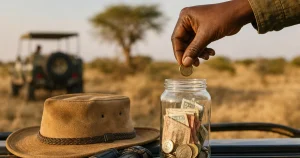
- Cash (US dollars): Bring clean, newer bills (printed 2013 or later) in denominations of $50 and $100 for tips and incidentals. Many safari destinations prefer US currency. Older or damaged bills may be rejected
- Small bills for tips: $1, $5, and $10 denominations for daily tipping of guides and staff
- Local currency: Obtain small amounts at airport exchange for immediate needs, though USD works widely in safari regions
- ATM access: Research ATM availability at your destinations. Major cities have widespread access, but remote areas do not
Travel Insurance Details
Comprehensive travel insurance is non-negotiable for African safaris. Standard policies should include:
- Medical coverage minimum $100,000
- Emergency medical evacuation coverage (essential for remote areas)
- Trip cancellation and interruption protection
- Baggage loss and delay coverage
- 24-hour emergency assistance hotline
Read policy exclusions carefully. Some insurers exclude specific activities like bush walks or hot air balloon safaris unless you purchase additional coverage. Understanding the complete budget breakdown for African safaris helps determine appropriate coverage levels for your investment.
Final Preparation Checklist
Three weeks before departure, create a physical checklist covering all categories in this guide. Begin gathering items, testing equipment, and making purchases. Two weeks before travel, conduct a trial pack to verify everything fits within weight limits and identify any missing items.
One week before departure, confirm all reservations, verify document validity, and organize important papers. Break in new footwear during daily activities if you have not already done so.
The day before travel, reconfirm flight times, pack carry-on essentials, and charge all electronic devices. Keep your passport, tickets, and accommodation confirmations easily accessible during travel.
Proper preparation allows you to focus on the extraordinary wildlife experiences awaiting you rather than worrying about forgotten items or inadequate gear. Choosing between Tanzania and Kenya for your first safari is an important decision, and having the right gear ensures you are prepared regardless of which destination you select.
Contact Only One Safaris to book your dream safari and receive personalized packing advice tailored to your specific itinerary, travel dates, and planned activities. Our experienced team provides detailed guidance on regional considerations and seasonal requirements to ensure you pack exactly what you need for an unforgettable African adventure.
Frequently Asked Questions
What clothing colors are best for an African safari?
Neutral earth tones such as khaki, beige, olive green, and brown are recommended for an African safari. These colors help you blend into the natural environment, minimizing visibility to wildlife and reducing heat absorption. It’s best to avoid white and bright colors, which can disturb animals and attract insects, and black, which absorbs excessive heat.
Why is layering important for safari clothing?
Layering is crucial for an African safari because daily temperatures can fluctuate dramatically, ranging from cool 10°C (50°F) mornings to warm 30°C (86°F) afternoons. An effective three-layer system—consisting of a base, mid, and outer layer—allows you to easily regulate your body temperature. You can add or remove layers throughout the day to stay comfortable across varying conditions.
What type of luggage should I bring for an African safari?
For an African safari, it is highly recommended to pack in soft-sided duffel bags rather than hard suitcases. This preference is due to the strict weight and space restrictions often imposed on bush planes, which are commonly used for transfers between safari camps and lodges. Soft bags are more flexible and easier to store in confined spaces.
What fabrics are recommended for safari clothes, and which should I avoid?
Preferred safari fabrics include merino wool, nylon-spandex blends, polyester microfiber, and supplex nylon, chosen for their quick-drying, moisture-wicking, wrinkle-resistant, and UPF sun protection properties. You should avoid heavy cotton, which dries slowly, restrictive denim, and delicate silk. These materials are generally impractical and uncomfortable for safari conditions.
What crucial documents should I pack for an African safari?
Essential documents for an African safari include your passport, any required visas, and vaccination certificates, such as for Yellow Fever if applicable. It is also vital to bring comprehensive travel insurance details. These documents ensure smooth travel, compliance with entry regulations, and provide important protection for your trip.
How do the climates differ between East and Southern African safari regions?
East African destinations like Tanzania and Kenya experience relatively consistent, moderate temperatures year-round, with variations primarily due to altitude and two distinct rainy seasons. In contrast, Southern African countries such as Botswana, Zimbabwe, and South Africa have more pronounced seasonal changes. They feature hot summers and cool to cold winters, with minimal rainfall during the winter months.