Choosing your first African safari destination is an exciting yet challenging decision. Tanzania and Kenya both offer world-class wildlife experiences, yet each country presents distinct advantages that appeal to different traveller preferences. Understanding these differences is essential for matching your expectations with the reality of your safari adventure. Both countries share the legendary Serengeti-Mara ecosystem, yet their approaches to wildlife tourism, infrastructure, and visitor experience differ significantly.
This comprehensive guide examines the key factors that distinguish Tanzania and Kenya safaris, providing concrete information to help you select the destination that aligns with your priorities, budget, and desired safari experience.
Key Takeaways
- Tanzania offers greater wilderness solitude with lower vehicle density, while Kenya provides easier accessibility and more developed infrastructure
- The Great Migration occurs in both countries but at different times—Tanzania hosts the calving season (January-March), while Kenya features dramatic river crossings (July-October)
- Kenya’s safari costs are generally 20-30% lower than Tanzania’s due to reduced park fees and more competitive accommodation pricing
- Tanzania permits off-road driving in private conservancies and allows walking safaris in more locations, whereas Kenya restricts most game viewing to established tracks
- Kenya offers superior international flight connectivity through Nairobi, while Tanzania requires more complex routing for most international visitors
Great Migration Experience
The Great Migration represents one of nature’s most spectacular events, involving approximately 1.5 million wildebeest, 200,000 zebras, and 350,000 gazelles moving in a continuous circuit between Tanzania’s Serengeti and Kenya’s Maasai Mara. The migration follows rainfall patterns and fresh grazing, creating different viewing opportunities depending on location and timing.
Tanzania’s Migration Highlights
Tanzania hosts the migration for approximately 10 months of the year, with the Serengeti ecosystem offering vastly more space than the Maasai Mara. The southern Serengeti plains experience the calving season from late January through March, when an estimated 8,000 wildebeest are born daily. This concentration of vulnerable newborns attracts substantial predator activity, creating exceptional wildlife viewing opportunities.
- Calving season (January-March): Concentrated in Ndutu and southern Serengeti plains with dramatic predator-prey interactions
- Western corridor (May-July): River crossings at Grumeti River, though less dramatic than Mara crossings
- Northern Serengeti (August-October): Mara River crossings on the Tanzanian side with significantly fewer vehicles than Kenya
- Space and solitude: The Serengeti covers 14,750 square kilometres versus the Mara’s 1,510 square kilometres, resulting in lower tourist density
Kenya’s Migration Highlights
The Maasai Mara hosts the migration during the period most tourists consider peak season—July through October. During these months, the herds concentrate in a relatively compact area, making wildlife encounters highly predictable but also attracting significant visitor numbers.
- Mara River crossings (July-October): The most photographed migration spectacle, with herds crossing crocodile-infested waters multiple times
- Predictable viewing: Smaller geographic area concentrates wildlife, increasing sighting reliability
- Higher vehicle density: Popular crossing points can attract 20-50 vehicles simultaneously during peak season
- Extended season: Some herds remain until November, though numbers decline from late October
Crowd Level Comparison
Vehicle density at migration events differs substantially between the two countries. In Tanzania’s northern Serengeti, a typical river crossing might attract 5-15 vehicles. The same event at the Mara River on Kenya’s side often draws 30-60 vehicles, particularly at well-known crossing points. However, Kenya’s private conservancies adjacent to the Maasai Mara offer exclusive access with strictly limited vehicle numbers, providing an escape from crowds for visitors willing to pay premium rates.
Tanzania enforces stricter regulations on vehicle proximity to wildlife and prohibits off-road driving in national parks, which paradoxically can increase congestion at popular sighting locations as all vehicles must use the same tracks. Kenya allows more flexibility in private conservancies, where off-road driving permits closer wildlife approaches with minimal environmental impact when properly managed.
Wildlife Diversity & Viewing
Both countries offer excellent Big Five viewing opportunities—lion, leopard, elephant, buffalo, and rhinoceros. However, the density, accessibility, and diversity of wildlife vary considerably between specific parks and conservancies.
Tanzania Wildlife Highlights
Tanzania’s diverse ecosystems support exceptional species variety across its parks. The country’s commitment to preserving large wilderness areas creates authentic wildlife experiences with natural animal behaviour unaffected by human presence.
- Serengeti National Park: Highest concentration of large predators in Africa, with approximately 3,000 lions and exceptional cheetah populations on the central plains
- Ngorongoro Crater: Dense wildlife concentration in a contained environment—one of the few Tanzanian locations offering reliable black rhino sightings
- Tarangire National Park: Massive elephant herds (up to 300 individuals) and rare species including fringe-eared oryx and gerenuk
- Selous Game Reserve: African wild dog populations and exceptional river-based wildlife viewing
- Unique species: Higher diversity of antelope species, including Tanzania’s endemic subspecies
Kenya Wildlife Highlights
Kenya’s parks offer excellent wildlife density, particularly in the Maasai Mara, with certain locations providing virtually guaranteed Big Five sightings within a single day.
- Maasai Mara National Reserve: Exceptional lion and cheetah populations with high visibility due to open terrain
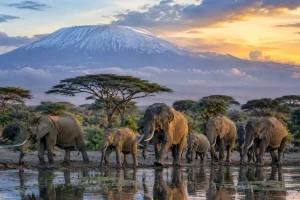
- Amboseli National Park: Large elephant herds against the backdrop of Mount Kilimanjaro, offering iconic photographic opportunities
- Samburu National Reserve: Unique northern species including Grevy’s zebra, reticulated giraffe, Somali ostrich, and gerenuk
- Laikipia Plateau: Private conservancies with healthy populations of endangered species including wild dogs and Grevy’s zebras
- Rhinoceros viewing: Better rhino populations in several sanctuaries, with both black and white rhino viewing opportunities
Predator Viewing Comparison
Tanzania’s Serengeti ecosystem supports the largest lion population of any African park, estimated at 3,000 individuals. The central Serengeti plains offer exceptional cheetah viewing from December through March when these predators follow the migration to hunt newborn wildebeest. Leopard sightings occur regularly in the Seronera Valley and along the Grumeti River.
Kenya’s Maasai Mara features perhaps the most reliable big cat viewing in Africa. The combination of open terrain, habituated wildlife, and concentrated predator populations means visitors frequently observe multiple lion prides, cheetah hunts, and leopard sightings during a three-day visit. The Mara’s famous marsh pride lions and resident cheetah populations have been extensively documented, making individual animals recognizable to experienced guides.
Cost Comparison
Budget represents a critical factor for most safari-goers. Tanzania and Kenya differ substantially in their pricing structures, with Tanzania generally requiring 20-40% higher budgets for comparable experiences.
Park Fee Structure
| Park/Reserve | Daily Conservation Fee | Vehicle Fee |
|---|---|---|
| Tanzania – Serengeti | $70 per adult | $40 per vehicle |
| Tanzania – Ngorongoro Crater | $70 per adult + $295 crater service fee | $40 per vehicle |
| Kenya – Maasai Mara | $80-100 per adult (varies by entry point) | ~$20 per vehicle |
| Kenya – Amboseli | $60 per adult | ~$15 per vehicle |
Tanzania’s park fees appear comparable to Kenya’s at first glance, but several factors increase the effective daily cost. The Ngorongoro Crater charges an additional crater service fee of $295 per vehicle, making a single day’s crater visit significantly more expensive than any Kenyan park. Tanzania also enforces camping fees ranging from $30-50 per person per night even for visitors staying in lodges outside park boundaries who enter for game drives.
Accommodation Cost Ranges
Accommodation represents the largest variable in safari budgets, with options spanning from basic camping to ultra-luxury lodges.
Budget Level ($100-250 per person per night):
- Tanzania: Limited budget lodge options within parks; most budget accommodations located outside park boundaries, requiring longer daily drives
- Kenya: More budget lodges and tented camps available both inside and adjacent to reserves, including the Maasai Mara
Mid-Range Level ($250-500 per person per night):
- Tanzania: Good selection of permanent tented camps and lodges with solid infrastructure and guiding
- Kenya: Extensive mid-range options with competitive pricing due to higher market competition
Luxury Level ($500-1,500+ per person per night):
- Tanzania: Premium properties in prime locations, often with exclusive positioning and lower guest numbers
- Kenya: Comparable luxury standards with more properties competing for high-end market, creating better value
Transportation Costs
Internal transportation costs differ based on distance between parks and whether road or air travel is used. Tanzania’s parks are generally more dispersed, often necessitating bush flights that cost $150-400 per person per segment. Kenya’s more compact northern circuit allows road transfers between parks, though this means longer driving times.
Hidden Costs and Additional Expenses
- Guide tips: Standard across both countries at $20-30 per day for the guide, $10-15 for camp staff
- Visa fees: Tanzania $50 (single entry) or $100 (multiple entry); Kenya $50 (single entry)
- Drinks and beverages: Often excluded from rates in both countries; budget $30-50 per day
- Special activities: Balloon safaris cost $500-600 in both countries; walking safaris $50-150 per person
- Flying doctor insurance: Recommended for remote Tanzania camps; $25-50 per person for trip duration
Overall Budget Estimates
For a seven-day safari including two parks, budget-conscious travellers can expect to spend $2,500-3,500 in Kenya versus $3,200-4,500 in Tanzania. Mid-range safaris run $4,500-7,000 in Kenya compared to $6,000-9,000 in Tanzania. Luxury experiences start at $8,000 in Kenya and $10,000 in Tanzania, with ultra-luxury options in both countries exceeding $20,000 for week-long trips.
Safari Style & Experience
The philosophical approach to safari experiences differs between the two countries, affecting everything from permitted activities to the sense of wilderness encountered.
Vehicle Regulations and Game Viewing
Tanzania maintains stricter regulations within its national parks, prohibiting off-road driving entirely in the Serengeti, Tarangire, and most other parks. All game viewing must occur from established tracks, which can limit photographic opportunities and wildlife proximity. However, this restriction reduces environmental impact and preserves the sense that wildlife pursues natural behaviours uninfluenced by vehicles.
Private conservancies in Tanzania’s northern circuit, such as those bordering the Serengeti, permit off-road driving for guests staying at properties within the conservancy. These areas also allow night drives and walking safaris—activities prohibited in national parks.
Kenya restricts off-road driving in the Maasai Mara National Reserve but permits it extensively in the private conservancies that comprise approximately 40% of the greater Mara ecosystem. Conservancies enforce strict vehicle limits per sighting (typically 3-5 vehicles maximum), creating exclusive wildlife encounters despite the activity flexibility. Kenya’s national parks, including Amboseli and Tsavo, maintain on-road restrictions similar to Tanzania.
Wilderness and Solitude Factors
Tanzania’s parks generally offer greater wilderness immersion due to lower tourist numbers and vast protected areas. The Serengeti averages 200,000 visitors annually across its massive expanse, while the much smaller Maasai Mara receives similar numbers, concentrating tourist impact. During peak season in popular Serengeti areas, encountering other vehicles is inevitable, but travellers regularly experience game drives with minimal vehicle presence, particularly in the western corridor and remote northern sections.
Kenya’s national reserves see higher vehicle density, especially in the Maasai Mara during migration months. However, Kenya’s private conservancy model provides exceptional wilderness experiences for visitors who prioritize exclusivity. Conservancies like Mara North, Ol Kinyei, and Olare Motorogi limit guest numbers through restricted bed capacity, ensuring low tourist density despite being adjacent to busier areas.
Activity Diversity
Walking Safaris:
- Tanzania: Permitted in many areas including private conservancies, game reserves, and certain national park buffer zones; multi-day walking safaris available in Selous and Ruaha
- Kenya: Limited walking opportunities, primarily in private conservancies and specific areas of Laikipia; not permitted in most national reserves
Night Drives:
- Tanzania: Allowed in private conservancies and game reserves; prohibited in national parks
- Kenya: Permitted in private conservancies and some national reserves with special authorization
Cultural Experiences:
- Tanzania: Maasai village visits arranged through select camps; cultural tourism programs in Karatu and Mto wa Mbu
- Kenya: More developed cultural tourism infrastructure with Maasai village experiences, Samburu community visits, and cultural centers
Guiding Standards and Expertise
Both countries require professional licensing for safari guides, with comprehensive examinations testing ecological knowledge, species identification, and safety protocols. Tanzania’s guide training emphasizes natural history and ecological relationships, producing guides who excel at interpreting animal behaviour and ecosystem dynamics. Many Tanzanian guides complete bronze, silver, and gold certifications, with gold-level guides demonstrating exceptional expertise.
Kenya’s guide culture historically emphasized wildlife tracking and locating rare species, though modern training incorporates broader ecological education. Kenya’s advantage lies in the communication networks between guides using radios to share sighting information, which increases the likelihood of encountering specific species but can contribute to vehicle concentrations at popular sightings.
Best Time to Visit
Optimal safari timing depends on priorities including weather preferences, wildlife concentrations, migration positioning, and tolerance for tourist numbers. Both countries experience distinct dry and wet seasons that dramatically affect wildlife distribution and viewing conditions.
Tanzania Seasonal Calendar
Peak Dry Season (June-October):
- Optimal general wildlife viewing with animals concentrated around water sources
- Migration in northern Serengeti and crossing Mara River (July-October)
- Clear skies and minimal rainfall create excellent photographic conditions
- Higher accommodation rates and advance booking essential
- Cooler temperatures, especially June-July evenings requiring warm clothing
Calving Season (Late January-March):
- Southern Serengeti plains host 400,000+ newborn wildebeest
- Exceptional predator activity as lions and cheetahs target vulnerable calves
- Green landscapes following short rains create beautiful photographic conditions
- Lower tourist numbers compared to dry season
- Occasional afternoon rain showers, typically brief
Green Season/Long Rains (March-May):
- Lowest accommodation rates with substantial discounts
- Lush landscapes and excellent bird watching as migrants arrive
- Unpredictable rainfall with potential road access challenges
- Wildlife dispersed across territories, reducing density
- Some seasonal camps close during April-May
Short Dry Season (January-February):
- Excellent overall wildlife viewing before calving commences
- Pleasant temperatures and generally clear weather
- Lower tourist numbers than peak season
- Migration scattered across southern and central Serengeti
Kenya Seasonal Calendar
Migration Season (July-October):
- Peak tourist season with herds concentrated in Maasai Mara
- Dramatic river crossings throughout the period
- Highest accommodation rates and essential advance reservations
- Significant vehicle numbers at popular crossing points
- Dry conditions and excellent game viewing throughout parks
Secondary Dry Season (January-February):
- Excellent wildlife viewing without migration crowds
- Pleasant weather with minimal rainfall
- Resident wildlife concentrated around permanent water
- Lower rates than July-October peak season
- Some migration herds still present in Mara through early January
Green Season (April-May):
- Lowest rates of the year with promotional packages available
- Dramatic landscapes with flowering vegetation
- Heavy rainfall can affect road conditions and daily activities
- Reduced wildlife visibility due to thick vegetation
- Excellent for bird enthusiasts with breeding plumage visible
Shoulder Seasons (March, June, November):
- Good value with moderate tourist numbers
- Generally favourable weather with occasional showers
- November marks the start of short rains (typically lighter than long rains)
- Migration begins moving south in November
Weather Comparison
Both countries straddle the equator, resulting in relatively consistent temperatures year-round. Daytime temperatures range from 25-30°C (77-86°F) in most safari areas, with early morning and evening temperatures dropping to 10-15°C (50-59°F) during the dry season. Higher-altitude areas including the Ngorongoro Highlands experience cooler conditions, occasionally reaching near-freezing temperatures on June-July nights.
Kenya’s coastal proximity brings different weather patterns to Amboseli and Tsavo parks compared to the interior Maasai Mara. The Mara experiences more reliable rainfall patterns, while southern Kenya’s parks endure more prolonged dry periods. Tanzania’s Serengeti ecosystem generally receives less annual rainfall than the Mara, contributing to different grass heights and vegetation patterns that affect wildlife distribution.
Logistics & Accessibility
Practical considerations including international access, internal transportation, and ease of movement between destinations significantly impact safari planning and overall experience quality.
International Flight Access
Kenya offers superior international connectivity through Jomo Kenyatta International Airport in Nairobi. Multiple daily long-haul flights arrive from Europe, the Middle East, and Asia, with direct connections from London, Amsterdam, Paris, Dubai, and other major hubs. Most international arrivals reach Nairobi during early morning hours, allowing same-day connections to safari destinations.
Tanzania’s primary international gateway, Julius Nyerere International Airport in Dar es Salaam, receives fewer direct international flights. Most visitors transit through Nairobi, Addis Ababa, or Middle Eastern hubs to reach Tanzania. Kilimanjaro International Airport, serving the northern safari circuit, offers limited direct international services, primarily from Amsterdam and seasonal European routes. This typically adds a connection to Tanzania-bound itineraries compared to Kenya’s direct routing options.
Internal Transportation Networks
Tanzania Internal Logistics:
- Northern circuit parks (Serengeti, Ngorongoro, Tarangire) accessible via Kilimanjaro or Arusha airports
- Road transfers between northern parks range from 2-6 hours depending on route
- Bush flights connect major camps and parks; typical flight time Arusha to Serengeti is 90 minutes
- Southern circuit (Selous, Ruaha) requires separate routing, making northern-southern combinations time-consuming
- Road conditions vary significantly; main routes between Arusha and parks are generally well-maintained
Kenya Internal Logistics:
- Most northern circuit destinations within 5-6 hours drive from Nairobi
- Wilson Airport in Nairobi serves as hub for scheduled safari flights to all major parks
- Frequent daily flights to Maasai Mara (multiple departure times) provide scheduling flexibility
- Compact geography allows multi-park itineraries without extensive travel time
- Well-developed road network connects major parks, though road quality varies
Visa and Entry Requirements
Both countries offer e-visa services allowing advance application and approval before travel. Tanzania charges $50 for single-entry visas and $100 for multiple-entry permits, with processing typically completed within 10 business days. Kenya’s single-entry visa costs $50, with similar processing timeframes.
The East African Tourist Visa ($100) permits multiple entries to Kenya, Uganda, and Rwanda within 90 days, though it does not include Tanzania. Travellers combining Kenya and Tanzania require separate visas for each country.
Health and Safety Considerations
Both countries require yellow fever vaccination certificates for travellers arriving from or transiting through endemic countries. Comprehensive travel insurance including medical evacuation coverage is essential, particularly for remote safari camps located hours from advanced medical facilities.
Water safety standards require drinking only bottled or purified water in both countries. Most safari camps and lodges provide safe drinking water, but verification is advisable. Food safety at established safari properties meets international standards, though street food in towns and cities requires caution.
Combining Parks and Activities
Tanzania’s geography favours focused itineraries within either the northern or southern circuit rather than attempting to combine both regions. Classic northern circuit combinations include Serengeti-Ngorongoro (4-7 days), Serengeti-Ngorongoro-Tarangire (7-10 days), or extended itineraries incorporating Lake Manyara. Post-safari beach extensions typically route to Zanzibar, requiring a flight from Arusha or Kilimanjaro to the island.
Kenya’s compact northern circuit facilitates diverse combinations including Maasai Mara-Amboseli, Maasai Mara-Samburu, or three-park itineraries within 7-10 days. Coastal extensions to Diani Beach or Lamu are straightforward, with domestic flights connecting safari regions to beach destinations in under two hours.
Accommodation Options
Safari accommodation directly impacts the quality and character of the experience, ranging from basic camping under canvas to palatial lodges offering every conceivable luxury. Both countries present comprehensive accommodation spectrums, though availability, pricing, and distinctive characteristics differ.
Budget Camping and Basic Lodges
| Feature | Tanzania | Kenya |
|---|---|---|
| Public Campsite Availability | Extensive network in all major parks | Available but less developed than Tanzania |
| Budget Lodge Options | Limited within parks; more common outside boundaries | Better availability inside and adjacent to reserves |
| Typical Price Range | $50-150 per person per night | $60-180 per person per night |
| Facilities Standard | Basic but functional; shared facilities common | Similar standards with slightly better amenities |
Budget camping safaris in Tanzania utilize public campsites within national parks, where travellers pitch tents at designated areas with basic toilet and washing facilities. Tour operators provide all camping equipment, meals, and staff. This option significantly reduces costs but requires tolerance for basic conditions and physical proximity to other camping groups.
Kenya offers similar camping options, though the country’s tourism development has produced more budget lodges and permanent tented camps at accessible price points. These properties provide private rooms or standing tents with en-suite bathrooms, representing a middle ground between camping and mid-range accommodations.
Mid-Range Tented Camps and Lodges
The mid-range sector offers excellent value, with comfortable permanent tented camps and lodges featuring en-suite bathrooms, quality food, and guided game drives. Tanzania’s mid-range properties often occupy prime locations within park boundaries or in private conservancies, though competition is less intense than Kenya’s market, resulting in slightly higher rates for comparable standards.
Kenya’s competitive mid-range market benefits from numerous operators, creating pressure to maintain quality while controlling prices. Properties in this category typically include spacious tents or rooms, swimming pools, bar and lounge areas, and competent guiding teams. The Maasai Mara region offers particularly strong mid-range value with dozens of properties competing for bookings.
Luxury and Ultra-Luxury Properties
Both countries excel in luxury safari accommodation, offering world-class properties that rank among Africa’s finest lodges and camps.
Tanzania Luxury Characteristics:
- Emphasis on location exclusivity with many camps in remote areas
- Lower guest capacity maintaining intimate atmosphere (often 8-20 guests maximum)
- Exceptional guiding standards with highly qualified and experienced guides
- Architectural diversity from classic safari canvas to contemporary design
- Premium pricing reflecting exclusivity and operational costs
Kenya Luxury Characteristics:
- Established luxury properties with decades of refinement
- Private conservancy locations offering exclusivity and activity flexibility
- Higher guest capacities while maintaining luxury standards
- Strong emphasis on personalized service and attention to detail
- Competitive luxury market creates relative value compared to Tanzania
Mobile and Seasonal Camps
Tanzania pioneered the mobile camping concept, with luxury tented camps that relocate seasonally to follow the migration. These camps provide authentic canvas safari experiences with surprising comfort levels, including proper beds, en-suite bathroom tents, and quality dining. Mobile camps position in prime wildlife areas during peak seasons, then relocate as animal movements shift.
Kenya offers fewer mobile camp options, with most properties maintaining fixed locations year-round. However, Kenya’s private conservancy system provides seasonal variation as some camps close during low season, reopening with refreshed infrastructure for peak periods.
Unique Accommodation Experiences
Tanzania offers distinctive accommodation options including luxury tree houses in Tarangire, crater-rim lodges overlooking Ngorongoro, and traditional walking safari camps in southern parks. The emphasis on wilderness immersion means many properties deliberately limit connectivity and modern amenities to enhance the sense of remoteness.
Kenya’s unique options include the Giraffe Manor near Nairobi (resident giraffes visit guests during breakfast), luxury conservation-focused properties in Laikipia, and exclusive island lodges combining safari with water-based activities. Kenya generally provides more consistent connectivity and modern amenities even at remote properties, reflecting different guest expectations.
Making Your Final Decision
Selecting between Tanzania and Kenya depends on weighting factors that matter most to your personal safari vision. Tanzania excels for travellers prioritizing wilderness solitude, extensive landscapes, and willingness to invest premium budgets for exclusive experiences. The country’s seasonal migration events, particularly the calving season, offer wildlife spectacles distinct from Kenya’s river crossing drama. Tanzania’s stricter conservation approach and lower tourist density appeal to those seeking authentic wilderness immersion.
Kenya represents the optimal choice for first-time safari-goers seeking reliability, accessibility, and value. Superior international flight connections, well-developed tourism infrastructure, and lower overall costs make Kenya more approachable for travellers with budget constraints or limited time. The Maasai Mara’s concentrated wildlife and experienced guiding virtually guarantee exceptional game viewing, removing uncertainty from safari planning.
Consider combining both countries if time and budget permit. A well-structured itinerary might include Kenya’s Maasai Mara during river crossing season (July-October) followed by Tanzania’s Serengeti for a different perspective on the same ecosystem, or Tanzania’s calving season paired with Kenya’s Samburu region for maximum species diversity. This approach maximizes the strengths of each destination while experiencing the full breadth of East African safari possibilities.
Ultimately, both countries deliver extraordinary wildlife experiences that fulfil safari dreams. The “wrong” choice does not exist—only the destination that better aligns with your specific priorities, expectations, and logistical requirements. Research thoroughly, consider seasonal timing carefully, and select accommodation that matches your comfort expectations and budget reality.
Ready to start planning your East African safari adventure? Contact our experienced safari specialists to design a personalized itinerary that matches your preferences, timeline, and budget. Whether you choose Tanzania, Kenya, or a combination of both, we’ll ensure your first African safari exceeds expectations and creates memories that endure for a lifetime.
Frequently Asked Questions
What are the main differences in the safari experience between Tanzania and Kenya?
Tanzania generally offers a greater sense of wilderness solitude with lower vehicle density and more opportunities for walking safaris. Kenya provides easier accessibility due to more developed infrastructure and superior international flight connectivity. While both offer world-class wildlife, Tanzania emphasizes a more untamed experience, while Kenya combines accessibility with high-density wildlife viewing, especially in its private conservancies.
When is the best time to see the Great Migration in Tanzania versus Kenya?
In Tanzania, you can witness the dramatic calving season from late January through March in the southern Serengeti plains, where an estimated 8,000 wildebeest are born daily. Kenya is renowned for the spectacular Mara River crossings, which typically occur from July through October in the Maasai Mara. The migration follows rainfall patterns, offering different highlights throughout the year in each country.
Is a safari in Kenya generally more affordable than one in Tanzania?
Yes, safari costs in Kenya are generally 20-30% lower than in Tanzania. This cost difference is primarily due to reduced park fees and more competitive accommodation pricing in Kenya. Travelers on a tighter budget might find Kenya a more economical choice for a comparable wildlife experience.
Can I experience off-road driving or walking safaris in both countries?
Tanzania permits off-road driving in private conservancies and allows walking safaris in more locations, offering a more immersive experience. In Kenya, game viewing in national parks is generally restricted to established tracks, but private conservancies adjacent to the Maasai Mara do offer exclusive off-road access. Regulations vary significantly between national parks and private concessions in both countries.
How do the crowd levels at Great Migration events compare between Tanzania and Kenya?
Vehicle density at migration events is substantially lower in Tanzania, where a typical river crossing might attract 5-15 vehicles in the northern Serengeti. Kenya’s Mara River crossings often draw 30-60 vehicles at popular points during peak season, indicating higher crowd levels. However, Kenya’s private conservancies offer an escape from crowds with strictly limited vehicle numbers.
Which country offers better international flight connectivity for a safari?
Kenya provides superior international flight connectivity, primarily through Nairobi, which serves as a major international hub. For most international visitors, reaching Tanzania typically requires more complex routing, often involving connecting flights. This generally makes Kenya a more convenient entry point for international safari travelers.
Which destination is ideal for viewing the Great Migration’s calving season?
The southern Serengeti plains in Tanzania are the ideal location for witnessing the Great Migration’s calving season. From late January through March, an estimated 8,000 wildebeest are born daily in areas like Ndutu, attracting substantial predator activity. This period offers exceptional wildlife viewing focused on predator-prey interactions with vulnerable newborns.