
South Africa Is a Foodie Destination First
Most people planning a South Africa trip think big: Kruger, penguins at Boulders Beach, sundowners on the Waterfront. Food is an afterthought.
That’s a mistake.
Cape Town competes with London, New York, and Sydney as a serious culinary destination – not “for Africa,” but outright. The World’s 50 Best Restaurants has included Cape Town names for years. Wolfgat, a 26-seat restaurant in the fishing village of Paternoster, was named Restaurant of the Year by OAD in 2019. A village of a few hundred people, a dining room the size of a large lounge, and a global title.
We’ve been building South Africa itineraries for years, and one piece of advice we repeat constantly: add two to three days in Cape Town and the Winelands specifically for the food. No client has ever regretted it.
Best Restaurants in Cape Town: The Short List
The question of best restaurants Cape Town gets different answers depending on who you ask. Here’s the list I give our clients:
La Colombe – Currently at Silvermist Wine Estate on the slopes of Constantia. A 7-10 course tasting menu that blends French technique with local ingredients. Consistently decorated, genuinely warm service, views that belong on a postcard. A La Colombe reservation requires at least three months of lead time for weekends – this is not a walk-in situation.
Wolfgat – Two hours up the West Coast in Paternoster. If you’re driving that stretch of coastline, this is the lunch you plan the day around. The menu changes based on what the sea brought in that morning. Strandveld cuisine – coastal foraging taken seriously.
The Test Kitchen – Luke Dale Roberts has been pushing boundaries here for over a decade. The food looks like art and eats like a conversation. Book ahead, dress smart, bring curiosity.
Chefs Warehouse – The best no-reservations experience in the city. Arrive early, wait a bit, share tapas with no fixed menu, leave satisfied. It’s loose and fun in a way the fine dining spots aren’t.
Cape Winelands Lunch: A Meal That Takes All Afternoon
The Winelands aren’t a day trip on the way to somewhere else – they’re a destination. Franschhoek and Stellenbosch have different characters and both earn their time.
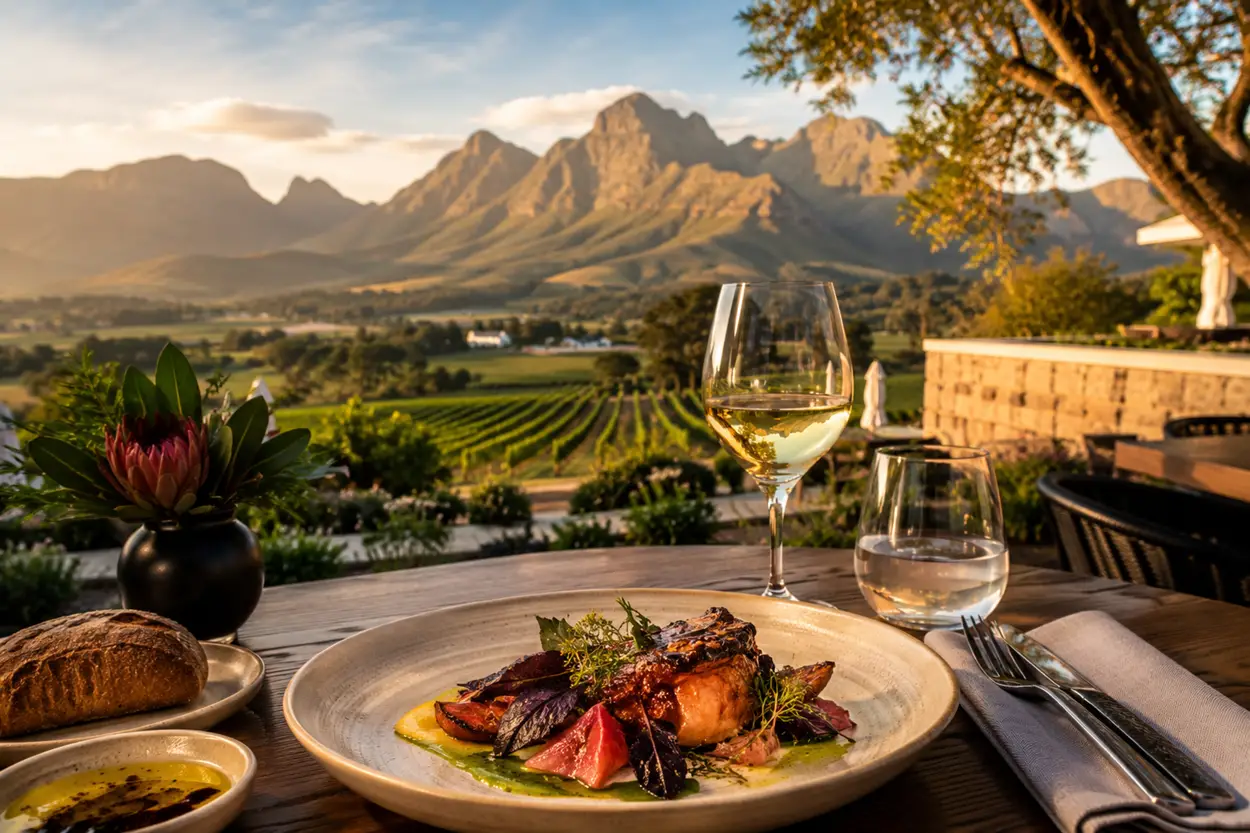
A Cape Winelands lunch has become its own genre: you arrive at a wine estate around noon, sit outside with mountains on the horizon, drink a local Chardonnay, and receive a meal that takes three hours without anyone rushing you. That pace is part of the culture here, and it’s one of the things that separates the Winelands from wine regions that are merely beautiful.
In Franschhoek: Grande Provence, Maison, and La Residence for estate dining at its most relaxed. In Stellenbosch: Delaire Graff if the budget allows, Rust en Vrede for serious red wine drinkers who want beef and Bordeaux blends.
The point I always make: foodie travel South Africa doesn’t live in Cape Town alone. The Winelands are a full culinary ecosystem – food that layers Cape Malay, Dutch, French Huguenot, and African influences into something that doesn’t exist anywhere else on earth.
The Price-Quality Gap Is Real
Here’s what surprises every client: the Rand makes Cape Town one of the best value fine-dining destinations in the world.
A tasting menu at La Colombe runs around 1,200-1,500 Rand. At the current exchange rate, that’s roughly $60-75. The same experience in New York costs $250-350 – before wine.
This isn’t because the restaurants are cutting corners. The food is genuinely world-class. The currency just works in your favor. The ingredients, the staff, the wine – all produced locally, all priced in Rand. For a traveler paying in dollars or euros, the gap between quality and cost is hard to find anywhere else.
The 3-Month Booking Rule
One rule applies across the top tables in Cape Town: don’t try to book a week out. La Colombe, Wolfgat, and The Test Kitchen fill up months in advance for weekends, and increasingly for weekdays too. The word is out internationally.
The way we handle this for clients: once an itinerary is confirmed and flights are booked, we go straight to restaurant reservations. The lodge confirmations can wait another week – the dinner reservations cannot.
Conclusion
The best South Africa trips don’t just end at the airstrip after the last game drive. They end with a long lunch in the Winelands, a glass of Chenin Blanc in hand, watching the Franschhoek mountains catch the afternoon light. South Africa’s restaurant scene competes globally, La Colombe and Wolfgat require bookings months in advance, and a proper Cape Winelands lunch is a half-day experience rather than a quick stop between activities. Add the Rand’s value advantage, and world-class dining becomes genuinely accessible for international travelers.
If you want a South Africa itinerary that treats the food as seriously as the wildlife – with the right tables booked, the right estates lined up, and a Winelands afternoon built into the schedule – we’ve done this combination many times and we know exactly how to make it work.
Get in touch and let’s plan it properly.
FAQ
Is Cape Town worth visiting just for the food?
Yes, and people do exactly that. We’ve had clients who planned their entire South Africa trip around a La Colombe reservation and built the safari around the dates. The food scene is that strong.
How far in advance do I need a La Colombe reservation?
Three months for a Friday or Saturday night is the minimum. If you’re flexible on day and time, two months sometimes works for weekdays. We handle bookings as part of itinerary planning because waiting too long is the most common mistake we see.
What is Cape Winelands lunch actually like?
Slow, long, and worth every minute. Most wine estate lunches run two to three hours without feeling rushed. The combination of food, wine, setting, and pace is something most travelers say is one of the highlights of the whole trip – not just the food part.
How does foodie travel in South Africa compare to other destinations?
The combination of world-class technique, local ingredients, excellent wine, and favorable exchange rates puts South Africa at the top of the list for value. You’re not compromising on quality – you’re getting the same level as Europe’s best dining cities at a significantly lower price.