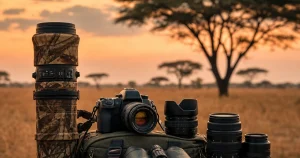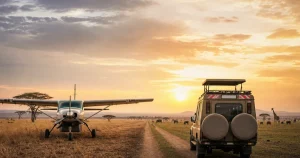
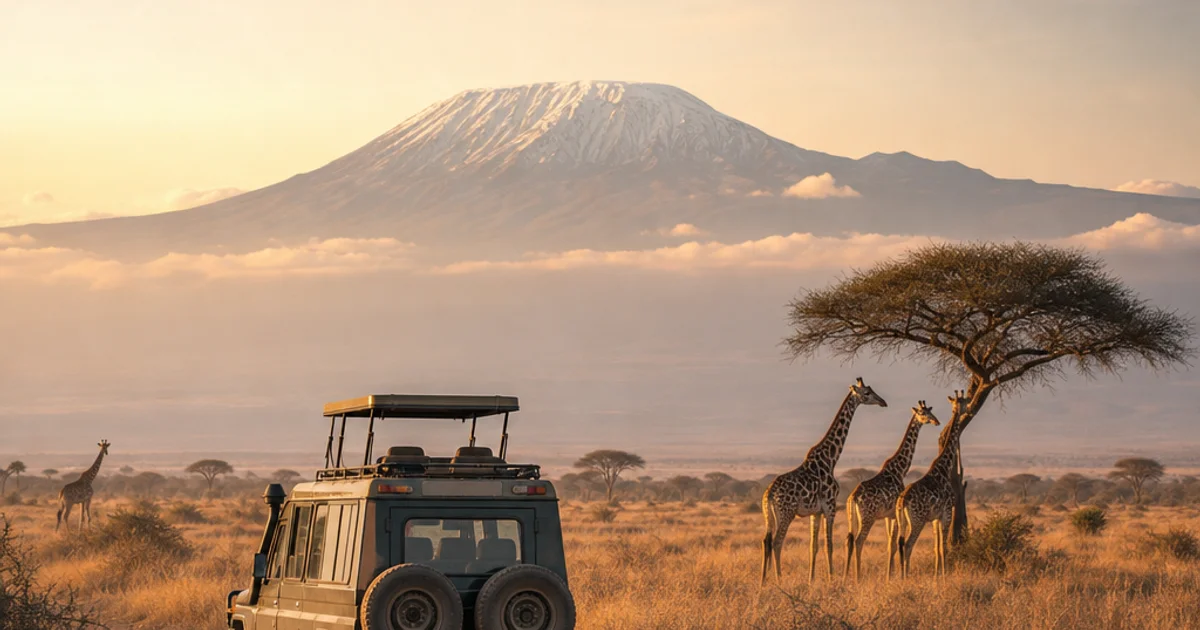
Choosing how long to spend on safari is one of the most consequential decisions you’ll make when planning an African trip — and it’s rarely as simple as “longer is better.” The right duration depends on which destinations you’re visiting, what wildlife experiences you’re chasing, how much travel fatigue you can absorb, and how you want to balance breadth versus depth. This guide breaks down the ideal safari length by destination, traveler type, and goal so you can make a decision that actually fits your trip.
- 7 to 10 days is the sweet spot for most first-time and returning safari travelers, offering enough time to cover 2 to 3 destinations without rushing.
- 3 to 5 days can be productive when focused on a single, wildlife-rich reserve — especially when combined with an international trip nearby.
- Safari duration should be matched to the destination: some ecosystems reward slow, extended stays, while others deliver peak value in fewer days.
- Travel days, internal flights, and park transfer times all eat into your game drive time — always account for logistics when calculating trip length.
- Depth (staying longer in fewer places) consistently produces more meaningful wildlife encounters than rushing through multiple parks.
Quick Answer: The Ideal African Safari Length for Most Travelers
For the majority of travelers — whether it’s your first safari or your fifth — 7 to 10 days on the ground is the ideal duration. This window gives you enough time to visit 2 to 3 parks or reserves, settle into the rhythm of early-morning and late-afternoon game drives, and absorb the full sensory experience of the African bush without burning out.
A 7-night trip in a single country like Tanzania or Kenya allows for one or two ecosystems, meaningful time at each camp, and the flexibility to follow wildlife movements within a reserve rather than racing to the next destination. A 10-night trip opens the door to adding a second country, a walking safari component, or a beach extension in Zanzibar or the Kenyan coast.
3 to 5 days can absolutely work when the goal is a single, wildlife-dense reserve — think the Serengeti, the Masai Mara, or Chobe National Park. This is a realistic option for travelers who are already in the region or combining a safari with a business trip. However, it leaves almost no margin for weather disruption or travel delays, and some of the most memorable wildlife experiences (predator kills, elephant herds at sunset, night drives) require the time investment to find them.
Anything under 3 days is generally not recommended unless it’s genuinely the only option. A one-night safari stop rarely delivers more than a surface-level game drive and doesn’t justify the significant cost of premium camps.
Recommended Safari Duration by Destination
Every safari destination has a different pace, geography, and wildlife density. The right duration in the Serengeti is not the same as the right duration in the Okavango Delta or the South African bushveld. Below is a destination-by-destination breakdown.
Tanzania — 7 to 12 Days
Tanzania is one of the most biodiverse safari destinations on the continent. The northern circuit alone — covering the Serengeti, Ngorongoro Crater, Tarangire, and Lake Manyara — can comfortably fill 8 to 10 days without any padding. The Serengeti alone warrants a minimum of 3 nights, ideally 4 to 5 if you’re timing a visit around the Great Migration.
If you’re adding the southern circuit (Ruaha, Selous/Nyerere), plan for at least 10 to 12 days in-country. These less-visited parks require extra travel time but reward you with exceptional wildlife and very few other vehicles. For help deciding which Tanzanian regions match your goals, the Tanzania vs Kenya safari comparison guide is a useful starting point.
Kenya — 7 to 10 Days
Kenya’s compact northern and southern circuits are well-connected by short internal flights, which means you can cover more ground in fewer days. A classic Kenya safari covering the Masai Mara, Amboseli, and either Samburu or Laikipia fits neatly into 8 to 10 days. The Masai Mara merits at least 3 nights on its own — particularly from July through October when the wildebeest crossing season is at its peak.
Shorter Kenya itineraries of 5 to 6 days are viable if you focus exclusively on the Mara and Amboseli, but you’ll feel the time pressure on game drives and miss the slower-paced evenings that make a Kenyan safari memorable.
Botswana — 8 to 14 Days
Botswana operates on a different rhythm to East Africa. Its signature destinations — the Okavango Delta, Chobe, the Moremi Game Reserve, and the Kalahari — are spread across a vast, remote landscape. Internal transfers are exclusively by light aircraft or 4WD, and each camp tends to be a destination in its own right.
A minimum of 8 nights is recommended to experience two or three distinct ecosystems. Many experienced safari travelers argue that Botswana is the one destination where 12 to 14 days feels entirely justified — the camps are extraordinary, wildlife is prolific, and the landscape shifts dramatically between the Delta and the desert.
South Africa — 5 to 8 Days
South Africa is the most accessible safari destination logistically. Kruger National Park and the surrounding private reserves are served by direct international flights to Johannesburg, and many lodges are within a 5-hour drive of the airport. A 5-night stay in a private Kruger concession is a complete, satisfying experience for most travelers — enough time for 8 to 10 game drives and excellent Big Five sightings.
South Africa also pairs well with a Cape Town extension, making it a popular first safari destination for travelers who want variety. A combined safari-and-city itinerary of 10 to 12 days in total is a well-tested formula.
Zimbabwe and Zambia — 6 to 10 Days
Zimbabwe’s Hwange National Park and Zambia’s South Luangwa Valley are underrated destinations that deliver exceptional wildlife viewing — particularly for elephant and leopard respectively. A minimum of 3 nights per park is necessary to settle in and give the guides time to locate resident wildlife. A dual-country itinerary combining both, with a Victoria Falls stop, works well in 8 to 10 days.
When a Short Safari (3–5 Days) Makes Sense
A short safari is not a compromise if it’s planned correctly. The key is ruthless focus: choose one destination, stay in one camp, and maximise the number of game drives per day. Here’s when a short safari is the right call:
- You’re already in the region — if you’re transiting through Nairobi or Johannesburg for business or another trip, a 4-night add-on to the Mara or Kruger is excellent value.
- You’re testing safari travel for the first time — some travelers prefer a shorter commitment before investing in a longer itinerary.
- Budget constraints are real — premium safari camps are expensive per night. A focused 4-night stay at one exceptional camp often delivers more value than spreading the same budget across 8 nights at average camps. Understanding how safari costs are structured helps make this trade-off clearer.
- You have a specific wildlife event to witness — if the wildebeest are crossing the Mara River in August, a 4-night focused visit may be more productive than a 10-night trip at the wrong time of year.
When to Consider a Longer Safari (14+ Days)
A safari of 14 days or more is not for everyone, but it is transformative for the right traveler. Extended trips make sense when:
- You’re combining two or more countries with significant distances between them (e.g., Tanzania + Botswana, or Kenya + Rwanda for gorilla trekking).
- You’re including specialist activities — walking safaris, canoe safaris, gorilla permits, or cultural community visits — that each require their own dedicated time blocks.
- You’re a wildlife photographer who needs time to capture specific behaviours, light conditions, and species rather than just sightings.
- It’s a once-in-a-lifetime trip and budget is not the primary constraint.
Longer trips also require more careful pacing — not more parks. The common mistake with 14-day itineraries is filling every day with a new destination. Most experienced safari guides will tell you that the best wildlife sightings tend to happen to travelers who stay put and let the bush come to them.
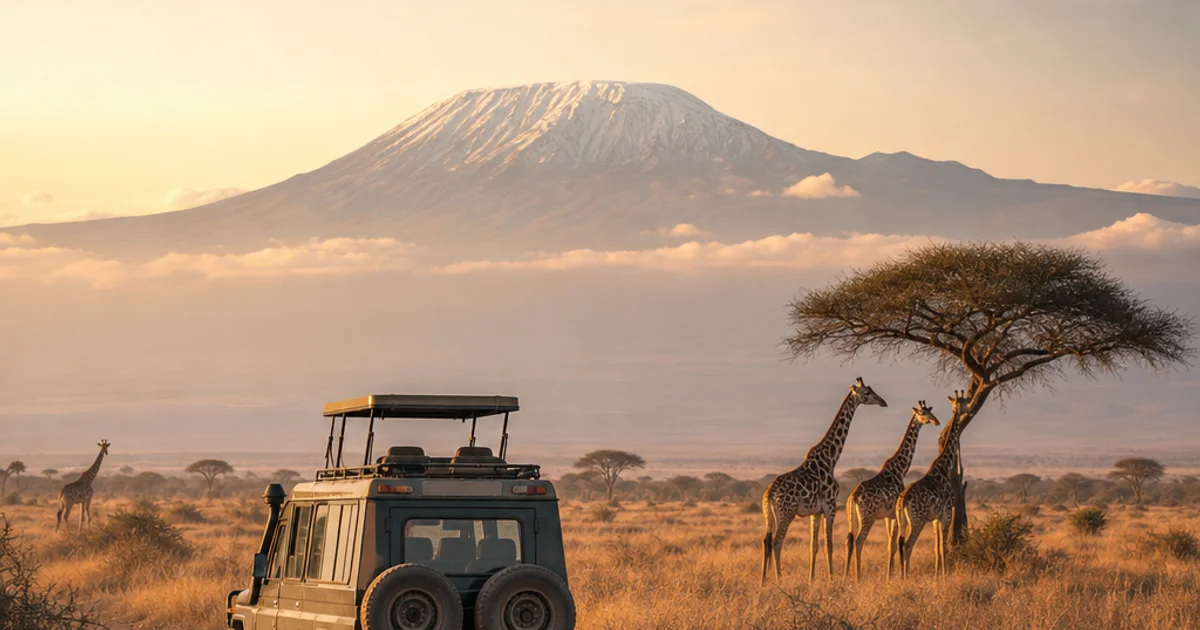
Depth vs. Breadth: The Real Trade-Off
This is the central tension in safari planning. Breadth means covering more ground — more parks, more countries, more landscapes. Depth means staying longer in fewer places, developing a relationship with a specific ecosystem, and watching individual animals over multiple days.
The case for depth is strong:
- Wildlife behaviour reveals itself over time. A lion pride you see on day one will mean something entirely different if you track them for three days.
- Guides who know the specific territory you’re in — their resident herds, regular predator routes, seasonal water sources — will show you things a quick transit visitor will never see.
- Safari fatigue is real. Multiple early mornings, bouncy tracks, and new environments every two days takes a toll. Staying in one camp lets you recover and actually enjoy the experience.
The case for breadth is also valid: different ecosystems produce genuinely different wildlife experiences, and East Africa in particular is varied enough that Tarangire, the Serengeti, and Ngorongoro feel like completely distinct worlds despite being within a few hours of each other.
The resolution: aim for 3 to 4 nights per destination minimum, and limit your total destinations to 2 or 3 per trip regardless of how many days you have. This is the formula that produces the most consistently rewarding safari experiences.
How Pacing and Logistics Affect Your Safari Length
A common planning error is counting total trip days without accounting for travel time. On a 10-day Tanzania itinerary, you might lose day one and day ten to international arrivals and departures, half of day three to a road transfer between parks, and a morning on day seven to a light aircraft delay. That leaves you with roughly 6.5 full safari days — which is fine if you’ve planned for it, and stressful if you haven’t.
Rules of thumb for building in realistic logistics:
- Always add one buffer day at the start or end of any safari itinerary to absorb delays.
- Internal light aircraft flights in East and Southern Africa are the most time-efficient transfers — but weather and load factors cause delays regularly.
- Road transfers between parks should not exceed 3 to 4 hours per day. A 6-hour road day is a wasted game drive day.
- If you’re packing for both safari and a beach or city extension, check our complete safari packing guide to make sure your luggage works across both environments.
For travelers choosing between Tanzania and Kenya as a first destination, destination-specific logistical factors — internal connectivity, road quality, camp proximity to airports — play a meaningful role in how productive your safari days will actually be. The Tanzania vs Kenya first-safari planning guide covers these differences in practical detail.
Choosing the Right Safari Length for You
There is no universal answer — but there is a right answer for your specific situation. Start by identifying your primary wildlife goal (the Great Migration, Big Five, gorilla trekking, birding), then build your duration around that goal rather than trying to fit too many destinations around a fixed number of days.
If you have 7 to 10 days, you have the ideal safari duration. Use it to go deep into one or two ecosystems, choose your camps carefully, and trust that the bush will deliver if you give it enough time. If you only have 5 days, focus ruthlessly. If you have 14 or more, resist the temptation to fill every day with movement.
The best safari isn’t the longest one — it’s the one that matches your pace, your priorities, and the specific landscapes and wildlife you’ve come to witness.
Frequently Asked Questions
What is the ideal safari length for most travelers, especially first-timers?
For the majority of travelers, whether it’s their first safari or a return trip, 7 to 10 days on the ground is considered the ideal duration. This timeframe allows ample opportunity to visit 2 to 3 parks or reserves, settle into the safari rhythm, and fully absorb the African bush experience without feeling overwhelmed. A 7-night trip can cover one or two ecosystems within a single country, while 10 nights offers flexibility to add a second country or a beach extension.
When does a shorter safari of 3-5 days make sense?
A shorter safari of 3 to 5 days can be highly effective when the goal is to focus exclusively on a single, wildlife-dense reserve, such as the Serengeti or Masai Mara. This is a practical option for travelers already in the region or those combining a safari with a nearby international trip. However, it leaves very little margin for travel delays or weather disruptions and may limit opportunities to observe some of the more memorable wildlife encounters.
Are safaris shorter than 3 days ever recommended?
Generally, safaris lasting under three days are not recommended unless it is genuinely the only option available. A one-night safari stop rarely delivers more than a surface-level game drive and often does not justify the significant cost associated with premium camps. Longer durations are crucial for deeper engagement and more profound wildlife experiences.
How does the specific destination influence the recommended safari duration?
The ideal safari duration varies significantly by destination, as each location has a different pace, geography, and wildlife density. For example, Tanzania’s Northern Circuit alone can comfortably fill 8 to 10 days, while Kenya’s well-connected circuits allow more ground to be covered in 7 to 10 days. Matching your safari length to the specific ecosystem ensures you get the most value and experience.
What are the recommended safari lengths for Tanzania and Kenya?
For Tanzania, a range of 7 to 12 days is recommended, with 8 to 10 days being ideal for its biodiverse Northern Circuit, and 10 to 12 days if you plan to include the less-visited Southern Circuit. Kenya typically suggests 7 to 10 days for a classic safari covering multiple parks, though 5 to 6 days can be viable for a focused trip on key areas like the Masai Mara and Amboseli. In both countries, primary reserves like the Serengeti or Masai Mara warrant at least 3 nights.
Is it better to visit many different parks quickly or spend more time in fewer locations?
The article emphasizes that prioritizing “depth” by staying longer in fewer places consistently produces more meaningful wildlife encounters. Rushing through multiple parks, or “breadth,” often leads to travel fatigue and a more superficial experience. Investing time in fewer locations allows for a deeper understanding of animal behaviors and a richer overall safari experience.
How do logistics like travel days and transfers impact safari length calculations?
It is crucial to account for logistics such as travel days, internal flights, and park transfer times when calculating your total safari length. These elements directly eat into your actual game drive time and can make a seemingly longer trip feel shorter. Factoring in these logistical components ensures a more realistic itinerary and helps manage expectations, preventing you from feeling rushed.