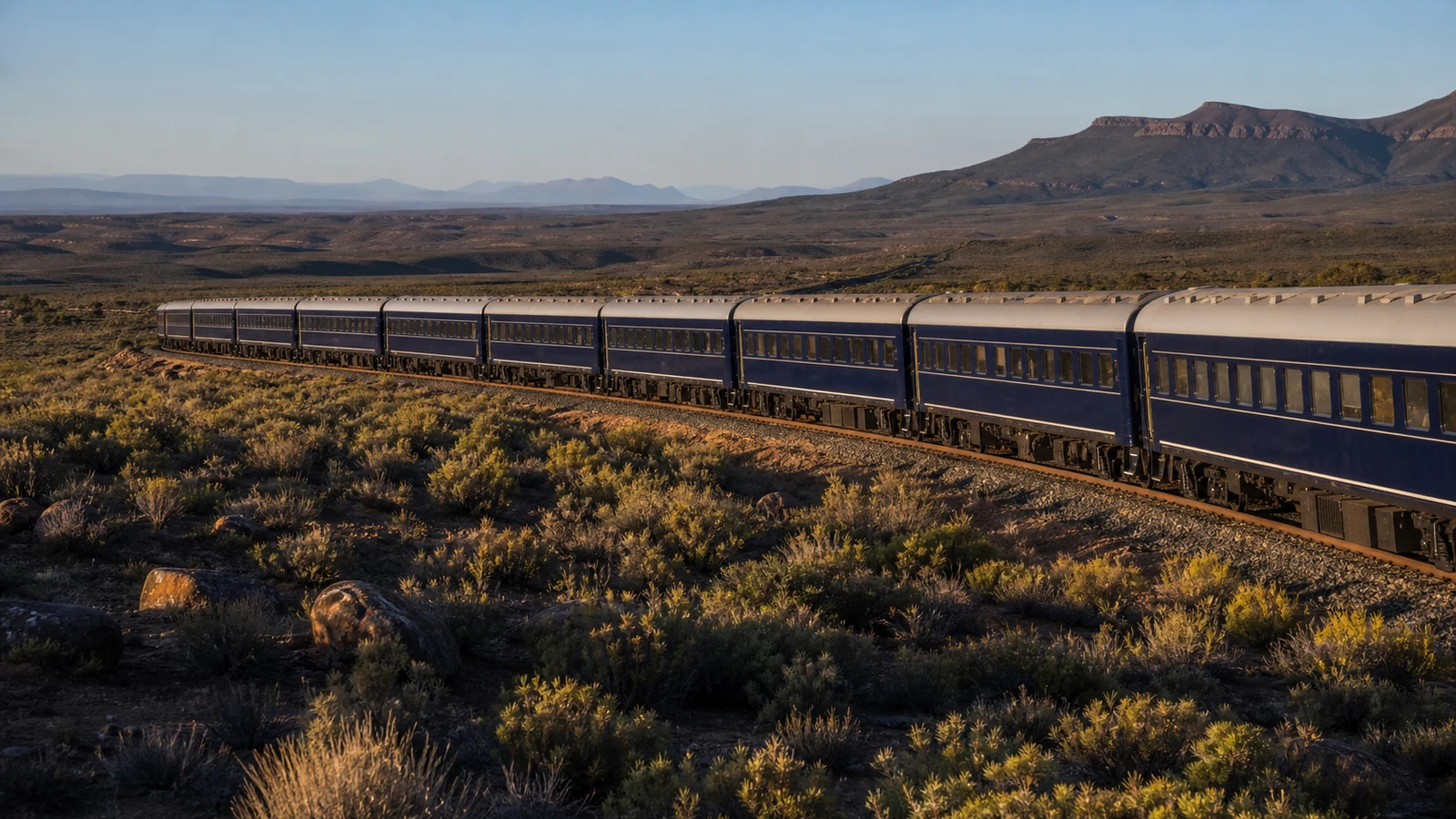
TL;DR – The Blue Train covers 1,600 kilometers between Pretoria and Cape Town in 27 hours, entirely in moving luxury. Private suites, white-linen dining, and the Karoo rolling past the window while you dress for dinner. It is Africa’s most famous train journey and one of the best arguments for slowing down a South Africa itinerary.
- One-way train, one-way fly is the right format – the journey works once in each direction; twice on the same route is redundant
- The Karoo crossing and the Hex River Mountain pass are the visual highlights – position in the observation car
- Blue Train is contemporary and accessible; Rovos Rail is vintage and more immersive for travelers who want longer journeys
- Book well in advance for peak season departures – limited capacity fills fast
The Orient Express of Africa
There is a specific pleasure to train travel that no other transport produces. The landscape moves at a pace you can actually read. The dining car is a room with a view that changes every ten minutes. You go to sleep in one place and wake up in another, and the journey is not the cost of arrival – it is the point.
The Blue Train South Africa has been running between Pretoria and Cape Town since 1946, and in that time it has accumulated the reputation that only a genuinely good experience sustains over decades. It is called the Orient Express of Africa not as marketing shorthand but because the comparison holds: a train that treats the journey as seriously as the destination, that dresses its passengers for dinner, and that makes 27 hours in a moving vehicle feel like the most civilized way to cross a continent.
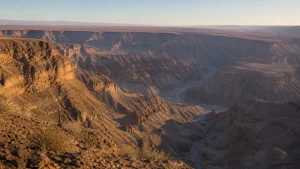
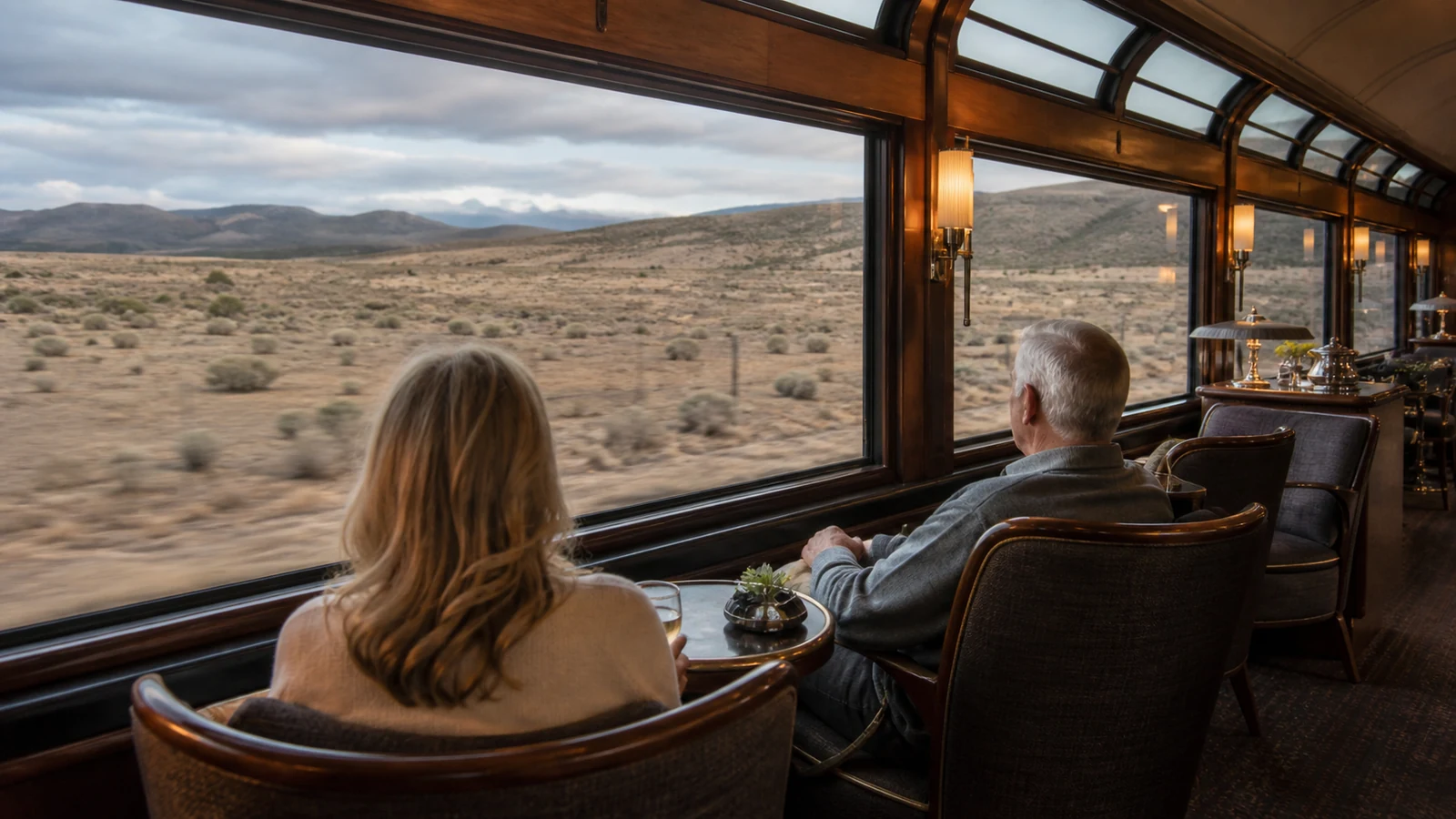
The Karoo – the vast semi-desert that occupies the interior of South Africa between Johannesburg and Cape Town – is one of those landscapes that most travelers fly over without seeing. From the Blue Train’s observation car, at ground level, crossing it through the night and the early morning, it is one of the most quietly extraordinary stretches of African landscape available.
Blue Train Price: What You’re Actually Paying For
The Blue Train price reflects its positioning as one of the world’s great luxury train experiences. Rates vary by suite type and season, but a realistic expectation for a one-way Pretoria to Cape Town journey runs from approximately $1,000 to $2,500 per person, all-inclusive of accommodation, all meals, selected beverages, and the 27-hour journey.
That number positions it clearly: this is not budget travel or even mid-range travel. It is a luxury experience priced as such.
What the price covers:
The suite – every passenger has a private suite with a full-length bed, an en-suite bathroom with a full bath on the deluxe suites, climate control, and a picture window. The suites are not large – this is a train, not a hotel – but they are beautifully finished and thoughtfully designed for a 27-hour journey.
The dining – meals are served in the dining car with white linen, silver service, and a menu that changes by meal. Breakfast as the Hex River Mountains appear outside the window. Lunch crossing the Huguenot Tunnel into the Breede River Valley. Dinner in the Karoo with the sky going dark outside and candlelight inside. The food is genuinely good rather than merely serviceable.
The observation car – an open-air rear platform where you can stand with a drink and watch South Africa pass. The observation car is where most conversations happen on the Blue Train – strangers brought together by the landscape and the shared experience of moving through it.
Blue Train vs Rovos Rail: The Honest Comparison
Blue Train vs Rovos Rail is the question that every traveler researching South African train journeys eventually asks. The honest answer is that they are genuinely different experiences aimed at slightly different travelers.
The Blue Train:
- Government-owned and operated, running on a fixed schedule
- More contemporary in design – polished, modern luxury
- A single journey: Pretoria to Cape Town (and return)
- The more accessible entry point for first-time luxury train travelers
- Slightly younger average passenger demographic
Rovos Rail:
- Private, family-owned operation run by Rohan Vos since 1989
- More vintage and theatrical in design – restored Edwardian and Victorian carriages, antique fittings, wood paneling
- Multiple itineraries including longer journeys to Victoria Falls, Dar es Salaam, and across southern Africa
- No electronic devices in the dining car – the enforced disconnection is part of the philosophy
- The stronger choice for travelers who want the full romance of historic train travel and are prepared for a more deliberate pace
The practical difference that matters most: Rovos Rail’s longer journeys – four days to Victoria Falls, 15 days from Cape Town to Dar es Salaam – offer something the Blue Train doesn’t. For a traveler who wants the 27-hour Cape Town journey specifically, both trains cover it and the choice comes down to design preference and the vintage-versus-contemporary question.
For most clients encountering South African train travel for the first time, we recommend the Blue Train for its approachability and the Rovos Rail for repeat travelers who want more depth, more journey, and more deliberate disconnection.
Luxury Train Travel Africa: The Karoo as a Destination
Luxury train travel Africa has the Blue Train and Rovos Rail as its two reference points, and both are experienced best when the Karoo is understood as a destination rather than a landscape to cross.
The Karoo covers roughly 400,000 square kilometers of the South African interior – a semi-desert of scrubland, rocky koppies, and extraordinary night skies with almost no light pollution. It is one of the least-visited landscapes in South Africa and one of the most visually distinctive. From the air it is a brown expanse. From the Blue Train it is a slow revelation: the changing light, the occasional farmhouse miles from anything, the springbok on the horizon, and after dark a sky that the residents of Cape Town and Johannesburg have forgotten exists.
The train crosses the Hex River Mountains – a dramatic pass through the mountains that separate the Western Cape from the Karoo interior – in the late afternoon or early morning depending on direction of travel. This is the section most photographers position themselves in the observation car for. The valley below the pass, the vineyards of the Hex River Valley, and the mountain walls on either side produce the visual peak of the journey.
The Matjiesfontein stop – a preserved Victorian railway town in the middle of the Karoo where the train halts for an hour – is the one land stop on the journey. The town is unchanged from the 19th century, the hotel still serves tea, and stepping off the train in the middle of nowhere and then stepping back on is part of what makes the Blue Train feel like a different relationship with time.
One Way Train, One Way Fly: The Smartest Format
The format we recommend to almost every client who asks about the Blue Train: one-way train, one-way fly.
Flying both ways between Johannesburg and Cape Town is fast, efficient, and produces nothing except the arrival. Taking the Blue Train one way adds 27 hours to the itinerary but those 27 hours are the most structured leisure time in South Africa – you cannot be anywhere else, you cannot be doing anything more productive, and the landscape you’re crossing is one you’d otherwise never see.
The standard itinerary: fly into Johannesburg, spend two nights in the city or drive to the Cradle of Humankind, board the Blue Train in Pretoria, arrive Cape Town the following afternoon, spend four to five days in the Cape. Fly back to Johannesburg for the connection home.
The reverse works equally well for travelers who want to arrive in Johannesburg refreshed after the Cape Peninsula rather than beginning the journey from there.
What the one-way format avoids: the 27-hour return journey on the same route in the opposite direction, which is genuinely pleasant but redundant for travelers with limited time. One direction is the journey. The second direction is just the same journey backward.
Only One Safaris and the Case for Slowing a South Africa Trip Down
The Blue Train is the antidote to the itinerary that moves too fast. It takes 27 hours to do what a plane does in two, and those extra 25 hours are the ones most travelers remember – the dinner service, the Karoo at midnight, the Hex River Mountains in the morning light, and the specific satisfaction of arriving somewhere having actually traveled there.
If you want a South Africa itinerary that uses the Blue Train as the transition between Johannesburg and Cape Town – with the Kruger safari at one end and the Cape Peninsula at the other, and the train positioned correctly in the flow – we’ve built this many times.
Get in touch and let’s plan it.
Frequently Asked Questions: The Blue Train: Slow Travel
How long does the Blue Train journey take?
The Blue Train covers the 1,600 kilometers between Pretoria and Cape Town in approximately 27 hours, departing Pretoria in the morning and arriving Cape Town the following afternoon. The return journey runs the same duration in the opposite direction.
What is the Blue Train price per person?
Rates run approximately $1,000 to $2,500 per person one-way depending on suite category and season, all-inclusive of accommodation, all meals, and selected beverages. The Deluxe Suite with full bath sits at the top of the range. Booking well in advance is recommended – the train has limited capacity and peak season departures fill months ahead.
Is the Blue Train or Rovos Rail better?
They are different experiences. The Blue Train is contemporary in design, government-operated, and covers the single Pretoria-Cape Town journey. Rovos Rail is vintage in design, privately operated, and offers multiple itineraries including longer journeys across southern Africa. For a first luxury train experience in South Africa, the Blue Train is the more accessible entry point. Rovos Rail rewards the traveler who wants more journey, more vintage atmosphere, and a stricter disconnection from technology.
Can I combine the Blue Train with a safari in South Africa?
Yes, and this is how most itineraries use it. The Blue Train works as a transition between Johannesburg or Kruger and Cape Town – replacing a one-hour flight with a 27-hour journey that covers the interior landscape most South Africa visitors never see. It connects naturally to a Kruger safari at one end and the Cape Peninsula, Winelands, and Garden Route at the other.
{
“@context”: “https://schema.org”,
“@type”: “FAQPage”,
“mainEntity”: [
{
“@type”: “Question”,
“name”: “How long does the Blue Train journey take?”,
“acceptedAnswer”: {
“@type”: “Answer”,
“text”: “The Blue Train covers the 1,600 kilometers between Pretoria and Cape Town in approximately 27 hours, departing Pretoria in the morning and arriving Cape Town the following afternoon. The return journey runs the same duration in the opposite direction.”
}
},
{
“@type”: “Question”,
“name”: “What is the Blue Train price per person?”,
“acceptedAnswer”: {
“@type”: “Answer”,
“text”: “Rates run approximately $1,000 to $2,500 per person one-way depending on suite category and season, all-inclusive of accommodation, all meals, and selected beverages. The Deluxe Suite with full bath sits at the top of the range. Booking well in advance is recommended – the train has limited capacity and peak season departures fill months ahead.”
}
},
{
“@type”: “Question”,
“name”: “Is the Blue Train or Rovos Rail better?”,
“acceptedAnswer”: {
“@type”: “Answer”,
“text”: “They are different experiences. The Blue Train is contemporary in design, government-operated, and covers the single Pretoria-Cape Town journey. Rovos Rail is vintage in design, privately operated, and offers multiple itineraries including longer journeys across southern Africa. For a first luxury train experience in South Africa, the Blue Train is the more accessible entry point. Rovos Rail rewards the traveler who wants more journey, more vintage atmosphere, and a stricter disconnection from technology.”
}
},
{
“@type”: “Question”,
“name”: “Can I combine the Blue Train with a safari in South Africa?”,
“acceptedAnswer”: {
“@type”: “Answer”,
“text”: “Yes, and this is how most itineraries use it. The Blue Train works as a transition between Johannesburg or Kruger and Cape Town – replacing a one-hour flight with a 27-hour journey that covers the interior landscape most South Africa visitors never see. It connects naturally to a Kruger safari at one end and the Cape Peninsula, Winelands, and Garden Route at the other.”
}
}
]
}