TL;DR – Iby’Iwacu Cultural Village sits at the edge of Volcanoes National Park in Rwanda and employs the people who used to poach the gorillas as cultural guides, performers, and hosts. It is one of the most direct and honest examples of conservation-through-community in Africa – and a genuinely enjoyable two hours before or after a gorilla trek.
- Former poachers run the village – their forest knowledge is the asset, not the threat
- The Intore dance performance is one of the most visually striking traditional experiences in East Africa
- Iby’Iwacu fits naturally into the afternoon of a gorilla trekking day – 20 minutes from the park gate
- Visit fees fund community health, education, and conservation programs with full transparency
From Poachers to Protectors
The logic of gorilla conservation in Rwanda runs into a problem that most wildlife tourism doesn’t acknowledge publicly: the people most likely to harm the gorillas are the people who live closest to them.
The communities around Volcanoes National Park in northwestern Rwanda have lived alongside the Virunga gorillas for generations. For many families, the forest that now generates millions of dollars in conservation tourism was also the forest that provided food, firewood, and income through poaching when legal alternatives didn’t exist. Protecting the gorillas without addressing that economic reality produces enforcement, resentment, and poaching that continues regardless of ranger presence.
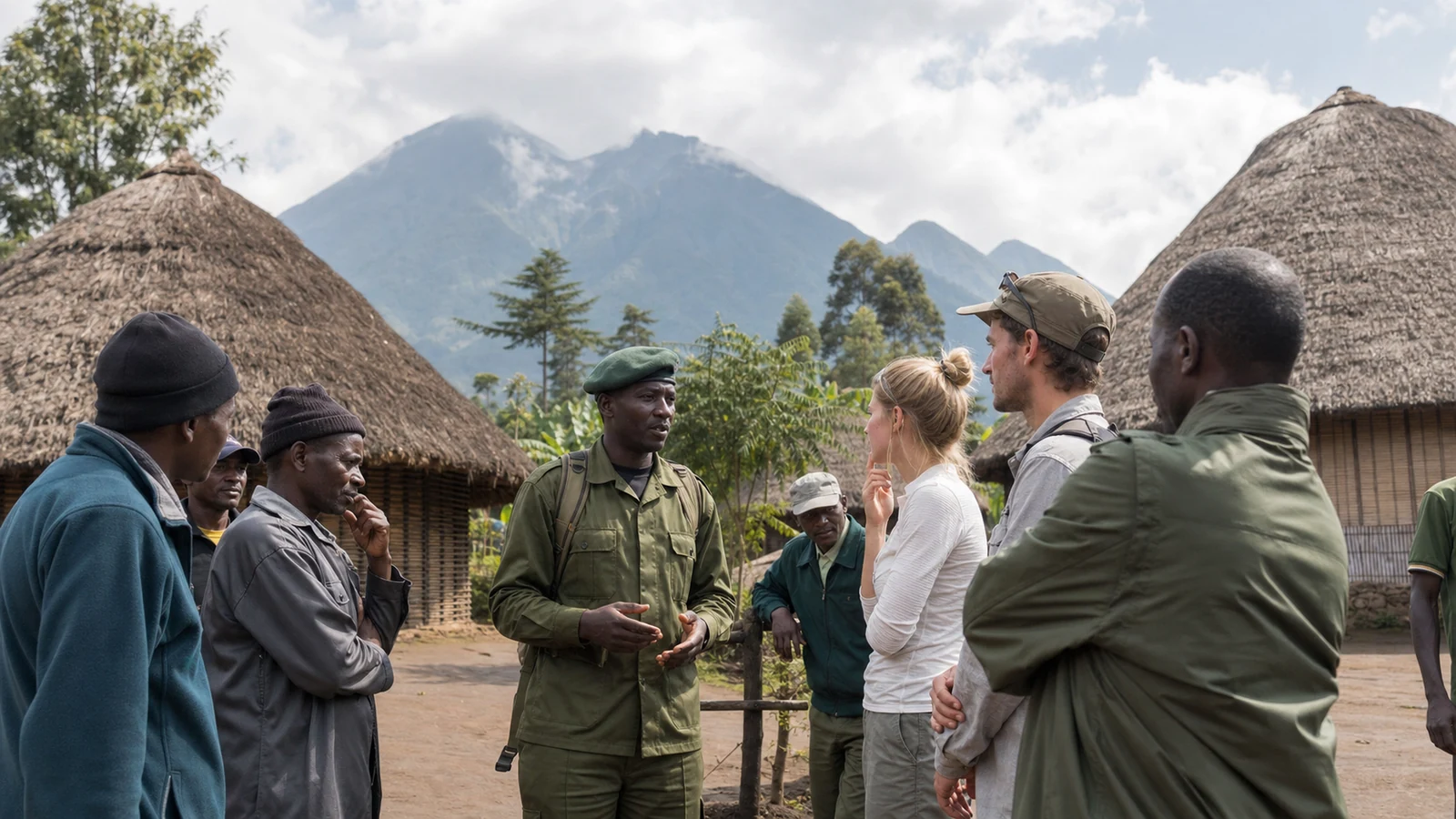
Iby’Iwacu Cultural Village – the name means “at our place” in Kinyarwanda – was built on a different premise: give the people who were poaching a better income from the gorillas being alive than from the gorillas being dead. The village employs former poachers as cultural demonstrators, guides, dancers, and hosts. Their knowledge of the forest and the animals – built over years of operating inside the park illegally – becomes the asset rather than the threat.
It is one of the most honest conservation pivots in Africa, and it works.
Iby’Iwacu Cultural Village: What the Experience Covers
The Iby’Iwacu Cultural Village experience runs as a structured two-hour visit that covers traditional Rwandan culture through the people best positioned to demonstrate it – community members whose families have lived in this specific landscape for generations.
What the visit includes:
Traditional medicine walk – a guided walk through the village gardens identifying medicinal plants used by the community. The guides are former hunters who know the surrounding forest intimately, and the plant knowledge they share is specific and deep – not a tourist approximation but the actual pharmacopoeia of people who lived off the land.
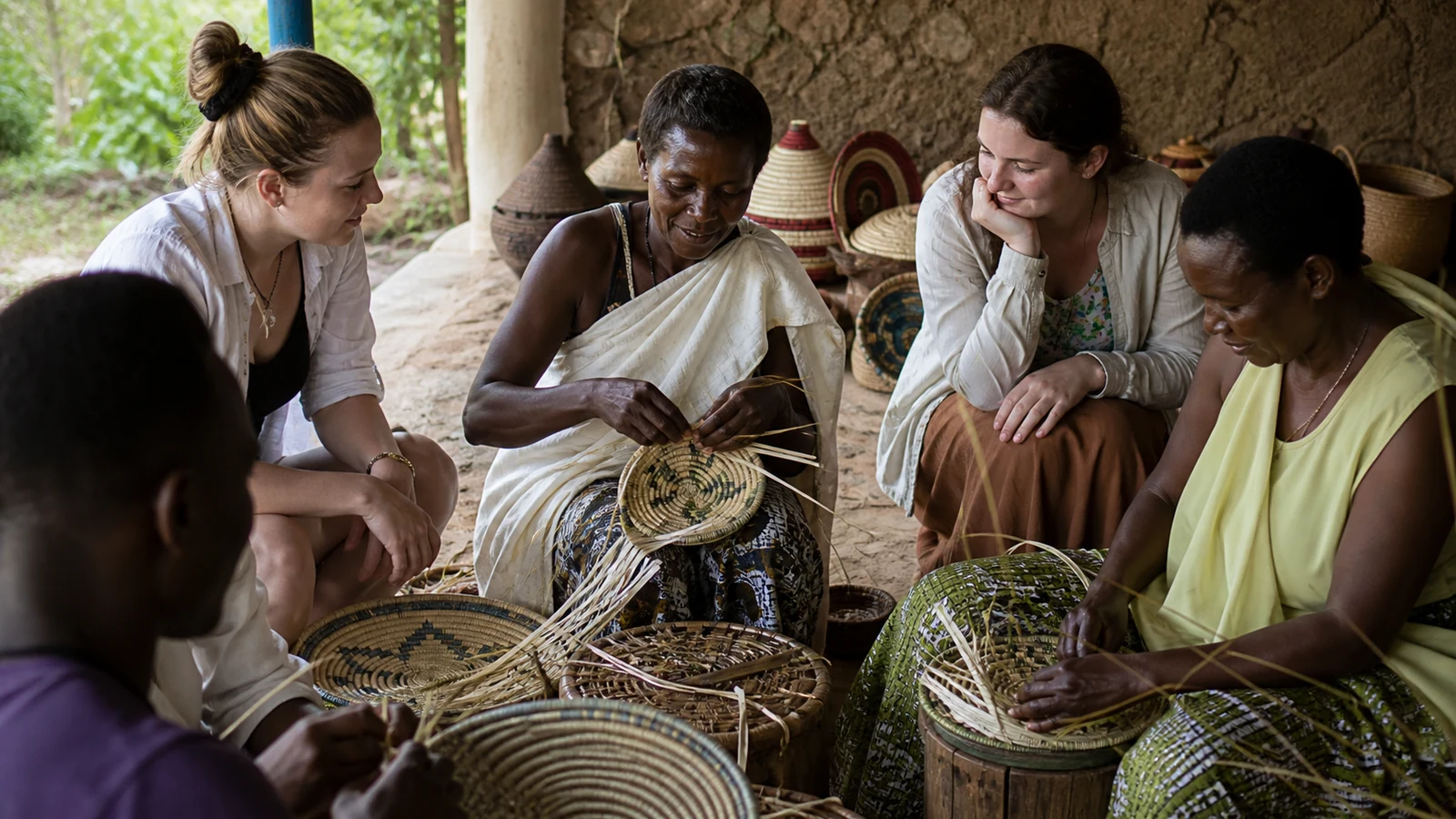
Craft demonstrations – basket weaving, pottery, and traditional blacksmithing. Rwanda has one of the strongest craft traditions in East Africa, and watching the speed and precision of an experienced basket weaver – creating the geometric patterns that Rwandan baskets are known for – is worth the visit on its own.
The Intore dance – the traditional warrior dance of Rwanda, performed by village members in full regalia. The Intore is one of the most visually striking traditional performance traditions in East Africa – the headdresses, the drums, the coordinated movement. It’s not a passive performance. Visitors are pulled in. You will look slightly undignified. You will not mind.
The king’s hut – a reconstruction of a traditional royal enclosure, demonstrating the architecture, social structure, and daily life of pre-colonial Rwanda. The guide who walks you through it typically has family history that connects directly to the period being described.
Gorilla Guardians Village: The Conservation Story Behind the Visit
Gorilla Guardians Village is the name sometimes used for Iby’Iwacu, reflecting the specific conservation function the community now serves beyond the cultural tourism.
The former poachers employed at Iby’Iwacu don’t just work at the village. They act as an informal intelligence network around the park boundary – people who know every trail, every entry point, and every community member who might be tempted by the income poaching once offered. Their presence in the conservation ecosystem makes the park’s boundaries more secure than any fence or ranger patrol could alone.
The economics of this are transparent and deliberately so. A portion of every village visit fee goes directly to the community fund that pays wages, supports local schools, and finances the healthcare program the village runs for surrounding families. The gorilla trek permit – currently $1,500 per person – generates revenue that flows partly to national conservation and partly to community programs of which Iby’Iwacu is one of the most established.
Visiting the village is not charity tourism. It is demand creation for a model that works – the clearest possible signal that community-based conservation produces outcomes that enforcement alone cannot.
Cultural Things to Do in Rwanda: Where Iby’Iwacu Fits
Cultural things to do Rwanda beyond gorilla trekking is a category that most itineraries underinvest in, and Iby’Iwacu is the most obvious correction.
The standard Rwanda itinerary runs: arrive Kigali, genocide memorial, fly to Volcanoes, gorilla trek, fly back to Kigali, depart. That sequence is correct in its priorities but leaves out the Rwanda that exists between the airports and the forest – the culture, the community life, and the history that makes the country’s recovery from 1994 legible.
Iby’Iwacu fits into the gorilla trekking day as a natural extension. Treks finish by early afternoon – the time in the forest is capped at one hour regardless of when you find the gorillas. The afternoon is free, and the village is 20 minutes from the park gate. Two hours at Iby’Iwacu, back at the lodge for sundowners, and the day has covered both the gorillas and the human story that contextualizes them.
Community Tourism Rwanda: Why This Model Matters
Community tourism Rwanda has grown significantly since the country opened to international visitors in the post-genocide recovery period, and the quality varies considerably. Some community tourism experiences are designed primarily for foreign consumption – a version of culture that performs for cameras rather than reflecting actual life.
Iby’Iwacu is not that. The people running the village are from the village. The dances are the dances their grandparents performed. The plant knowledge is used in their own households. The craft techniques are the ones their mothers taught them. Tourism is the income stream, not the reason for the culture’s existence.
The distinction matters because it changes what you take away from the visit. You leave Iby’Iwacu having spent time with people who genuinely have something to share – knowledge, history, a specific and hard-won relationship with a landscape – rather than having watched a reconstruction of something that no longer exists.
That authenticity is also what makes the visit emotionally coherent alongside the genocide memorial and the gorilla trek. Rwanda asks its visitors to hold complexity – loss and recovery, conservation and community, tradition and modernity – simultaneously. Iby’Iwacu is the place where those threads come together most clearly in a single afternoon.
Why Only One Safaris Builds Iby’Iwacu Into a Rwanda Itinerary
The best conservation stories are not about animals saved in isolation. They are about communities that found a better path. Iby’Iwacu is a community that went from hunting gorillas to hosting the people who come to see them – and built a livelihood, a cultural program, and a conservation function out of the transition.
If you want a Rwanda itinerary that includes Iby’Iwacu alongside the gorilla trek, the genocide memorial, and the right lodges throughout – built in a sequence that gives each experience its proper weight – we’ve put this together many times.
Get in touch and let’s plan it.
Frequently Asked Questions: Community Projects: Iby’Iwacu Village
What is Iby’Iwacu Cultural Village in Rwanda?
Iby’Iwacu is a community-owned cultural village at the edge of Volcanoes National Park that employs former poachers as cultural guides and performers. The village offers traditional medicine walks, craft demonstrations, Intore dance performances, and a guided reconstruction of traditional Rwandan royal architecture. A portion of every visit fee funds community health, education, and conservation programs.
How long does an Iby’Iwacu visit take?
The standard visit runs approximately two hours, covering the main cultural demonstrations and a guided walk through the village. It fits naturally into the afternoon of a gorilla trekking day, which typically ends by early afternoon. Some visitors extend to three hours if the basket weaving or traditional medicine walk generates extended conversation.
Is Iby’Iwacu suitable for children?
Yes, and it’s one of the better family experiences in Rwanda. The Intore dance performance in particular tends to engage children immediately, and the craft demonstrations – especially pottery and basket weaving – allow hands-on participation. The village atmosphere is warm and unintimidating in a way that makes it accessible for younger travelers.
Does visiting Iby’Iwacu support conservation?
Directly. The former poachers employed at the village have become informal conservation partners – their forest knowledge and community relationships make the park boundary more secure than enforcement alone. Visit fees fund community programs that reduce the economic incentive for poaching in surrounding families. The conservation benefit is structural, not incidental.