TL;DR – Everyone knows the land Big 5. Mozambique’s Marine Big 5 – whales, whale sharks, manta rays, dolphins, and turtles – operates on the same logic and delivers encounters that are, in several cases, impossible to replicate anywhere else in the Indian Ocean. The Mozambique ocean safari is one of the most underbuilt itinerary concepts in Africa. Here’s how it actually works.
- The best window for all five species in a single Mozambique ocean safari trip is October through November
- Swimming with manta rays at Tofo and Bazaruto is guide-dependent – the right operator turns a chase into an hour-long encounter
- Diving Mozambique adds depth options but all five Marine Big 5 species are accessible to snorkelers
- Mozambique’s protected coastline is what keeps these populations healthy enough to deliver consistent encounters year after year
The Big 5 Isn’t Just on Land
The original Big 5 – lion, leopard, elephant, buffalo, rhino – was a hunting term. The five animals most dangerous to pursue on foot. The term survived into the safari era because it gave travelers a framework, a checklist, a way of measuring whether a trip had delivered.
The Marine Big 5 works on the same principle, applied to the Indian Ocean off Mozambique‘s coast. Five species. Each one a genuine encounter – not a sighting from a distance, but something that happens at close range, in water warm enough to spend hours in, in a marine protected area that has kept these populations healthy while reef systems elsewhere decline.
The five: humpback whales, whale sharks, manta rays, dolphins, and sea turtles.
Seeing all five in a single trip is realistic in Mozambique in a way it isn’t anywhere else in Africa. That’s not marketing. It’s a function of geography, seasonal overlap, and what happens when a coastline gets genuinely protected.
The Five: What Each Encounter Actually Looks Like
Humpback whales. Between June and November, humpback whales migrate north along Mozambique’s coast from their Antarctic feeding grounds to breed in the warmer waters off the Bazaruto Archipelago and Ponta do Ouro. At peak season – August and September – whale density is high enough that surface activity is visible from boats without searching hard. Breaches, tail slaps, and the particular sound of a humpback exhaling twenty meters from the boat are the standard. Swimming with humpbacks is possible under specific conditions with experienced operators who know how to approach without disturbing breeding behavior.
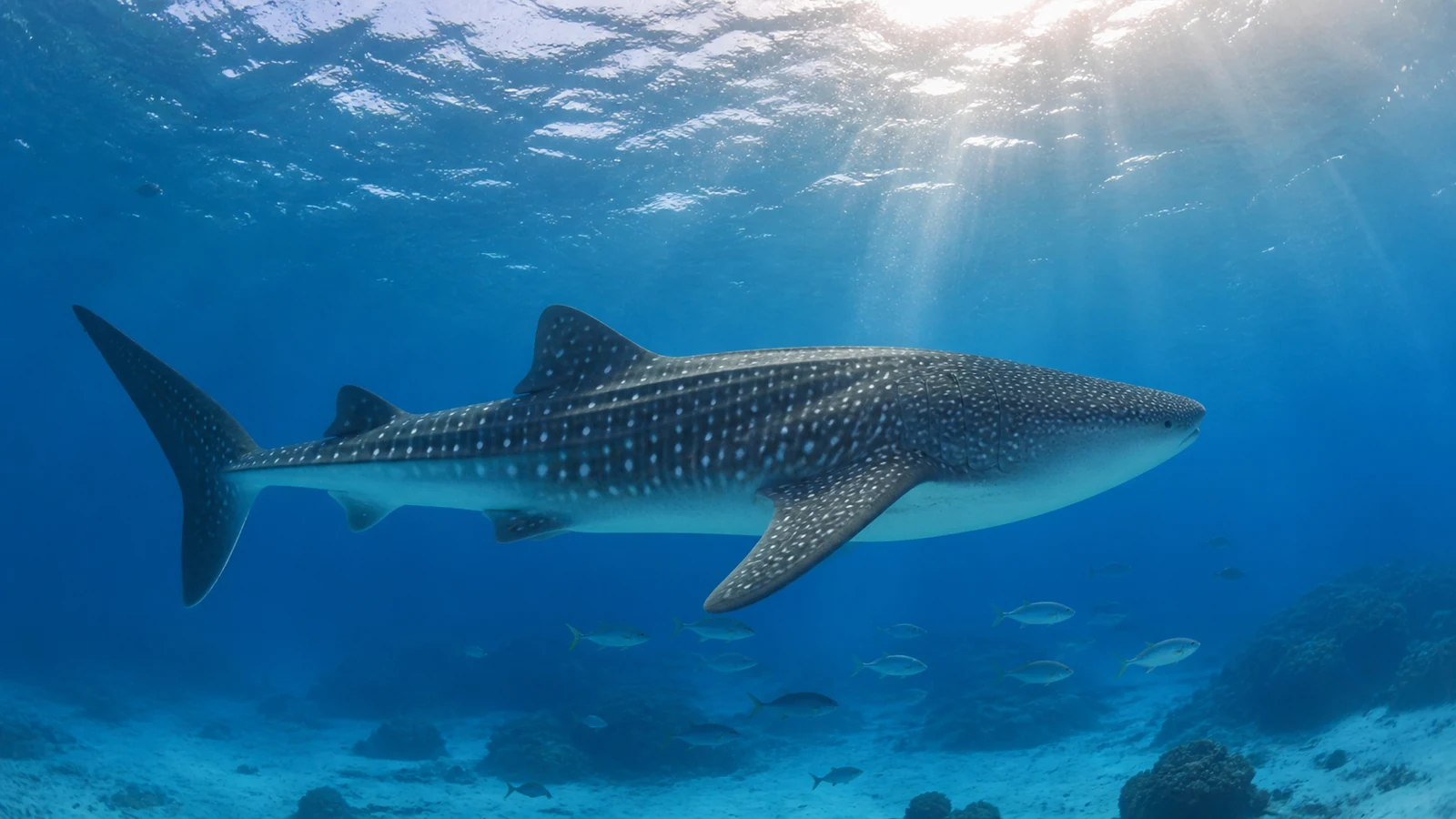
Whale sharks. The whale sharks that move through Mozambican waters are among the most reliably accessible in the world. Tofo Beach, on the central Mozambique coast, sits on a feeding aggregation point that brings whale sharks into shallow, clear water close to shore between October and March. The encounters here happen at snorkeling depth – no dive certification required, no boat drift to manage. The animal simply moves through and you move alongside it for as long as the guide positions you correctly.
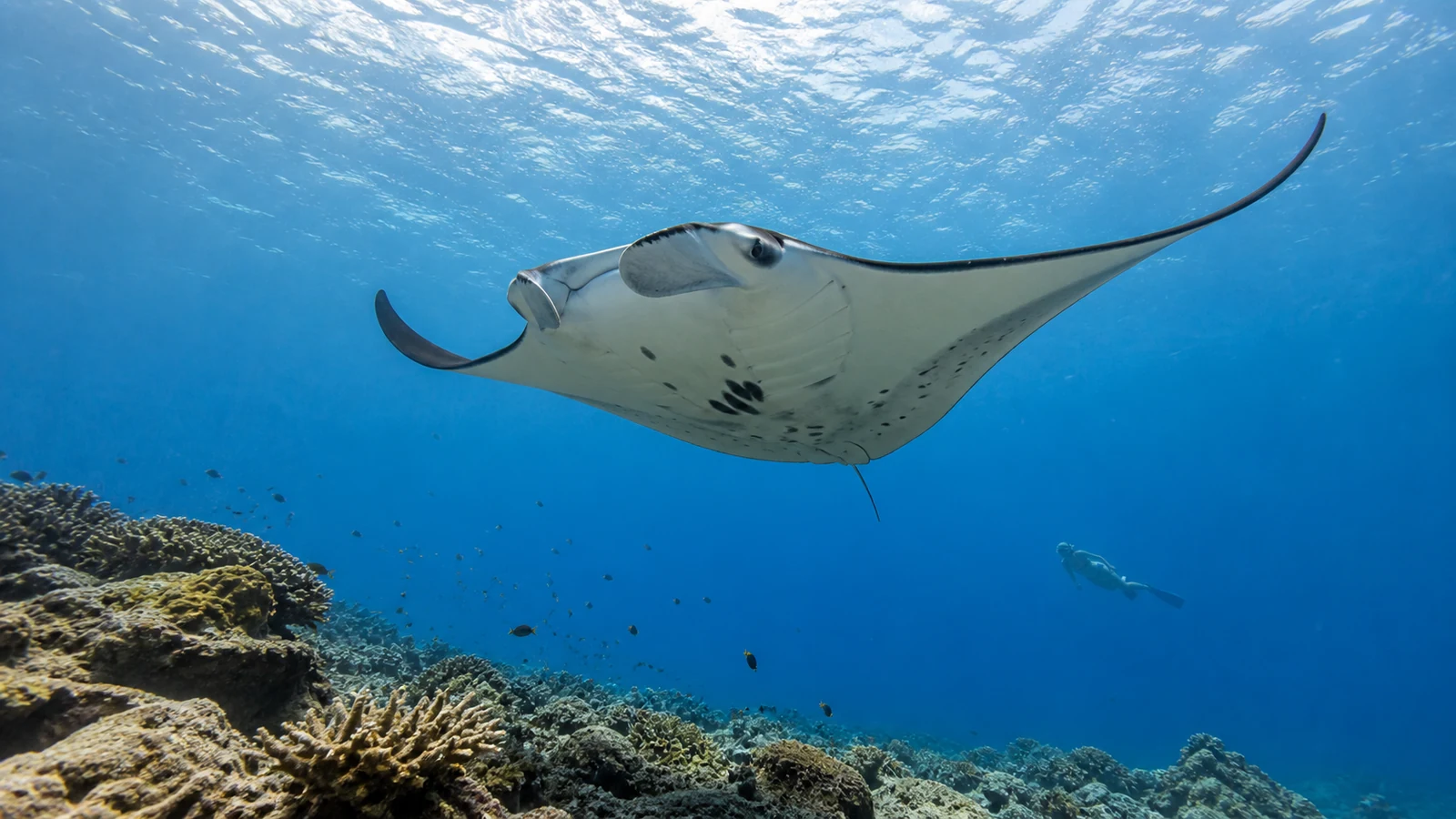
Manta rays. The manta ray population around the Bazaruto Archipelago and Tofo operates on cleaning station logic – the rays return to specific reef sites to be groomed by cleaner fish, creating predictable aggregation points that experienced dive guides know and plan around. Manta encounters in Mozambique frequently involve multiple animals simultaneously. Swimming with manta rays here, in clear water with visibility that lets you watch the full wingspan from ten meters below, is as good as it gets anywhere in the Indian Ocean.
Dolphins. Mozambique’s coastal waters support several dolphin species – bottlenose, spinner, and humpback dolphins are the most commonly encountered. Spinner dolphins in particular tend to approach boats and ride bow waves in the kind of enthusiastic, prolonged engagement that makes dolphin encounters here feel interactive rather than incidental. Ponta do Ouro in the south is the most reliable dolphin location, with resident pods that have been interacting with boats and swimmers for years.
Sea turtles. Green and loggerhead turtles nest on Mozambique’s beaches and feed on the reef systems throughout the year. Turtle encounters are the most consistent of the Marine Big 5 – reliable in the water at most dive and snorkel sites, and on the beach during nesting season from October through February. The Bazaruto Archipelago’s shallow seagrass beds are feeding habitat for green turtles year-round, making turtle sightings close to guaranteed on any marine activity in the archipelago.
Diving Mozambique: The Two Coasts
The Marine Big 5 Mozambique offers isn’t concentrated in one location – it’s distributed across a coastline that runs nearly 2,500 kilometers, and the different sections deliver different species at different times. Diving Mozambique properly means understanding which coast does what.
The central coast – Tofo and Inhambane. Tofo is Mozambique’s dive capital and the best single location for whale sharks and manta rays. The dive sites here sit on a deep oceanic shelf that brings pelagic species close to shore in concentrations that more sheltered reef systems don’t produce. The PADI dive center at Tofo has been training divers and running pelagic trips for years, and the guides know the aggregation points with a specificity that produces consistent results.
The north – Bazaruto Archipelago. The Bazaruto Archipelago is where the reef diving is best – Two Mile Reef, Manta Reef, the coral gardens around Benguerra Island. Turtles, reef sharks, and manta rays are the headline encounters. The protected status of Bazaruto National Park is what keeps the reef system healthy enough to deliver the diving quality it does.
The south – Ponta do Ouro. The southernmost tip of Mozambique, just above the South African border, is dolphin territory. Resident pods of bottlenose and spinner dolphins interact with snorkelers and divers in ways that feel genuinely mutual – the animals approach, engage, and move off when they’re done, on their own schedule.
Swimming with Manta Rays: What It Takes
Of the five species, manta rays are the one that generates the most specific questions – and the one where the quality of the guide makes the biggest difference to the encounter.
Swimming with manta rays in Mozambique is fundamentally different from watching them from a boat. In the water, at the level of the cleaning station, the scale of a manta – wingspan up to seven meters – registers in a way that surface observation doesn’t prepare you for. The animal moves with a slowness that makes it seem unhurried and deliberate, and when it passes close enough to see its cephalic fins extended and its gill plates cycling water, the detail of it is extraordinary.
What makes or breaks the encounter is positioning. A guide who knows where the cleaning station is, how to approach without triggering the manta’s departure reflex, and how to signal swimmers to hold position while the animal completes its cleaning cycle – that guide turns a fifteen-minute encounter into something that runs for an hour. A guide who doesn’t know these things turns it into a chase, which mantas win immediately.
We only book manta encounters with operators whose guides have spent years on these specific sites. The difference shows up immediately in the water.
Mozambique Ocean Safari: Timing the Full Five
The Mozambique ocean safari question that matters most is timing – because the five species don’t all peak simultaneously, and the best single window for stacking as many encounters as possible requires understanding the seasonal calendar.
| Species | Best Window |
|---|---|
| Humpback Whales | June – November (peak Aug-Sep) |
| Whale Sharks | October – March (peak Nov-Dec) |
| Manta Rays | May – November (peak Jun-Sep) |
| Dolphins | Year-round (peak May-Oct) |
| Sea Turtles | Year-round (nesting Oct-Feb) |
The overlap window that gives the best shot at all five in a single trip is October to November. Humpbacks are still present in early October before moving south. Whale sharks arrive in October as the rains begin. Mantas are active through November. Dolphins are year-round. Turtles begin nesting in October.
A ten-day Mozambique itinerary in October, split between Tofo for whale sharks and mantas and Bazaruto for reef diving and turtles, with a day on the water at Ponta do Ouro for dolphins, covers the full Marine Big 5 within a realistic schedule. We’ve built this itinerary multiple times. It delivers.
Building a Mozambique Ocean Safari With Only One Safaris
The Marine Big 5 reframes what a Mozambique trip can be – not just a beach extension after a land safari, but a destination in its own right, with its own logic, its own seasonal calendar, and its own category of encounters. The ocean here is as rich as any savannah on the continent. It just requires knowing when to go and who to go with.
If a Mozambique marine trip is something you’ve been considering – or if you’ve done Bazaruto and want to add the whale shark and manta experience at Tofo – this is exactly the kind of itinerary we build well. We know the seasonal windows, we know which operators run the best pelagic trips out of Tofo, and we know how to structure ten days in Mozambique so that the ocean delivers everything it’s capable of. Let’s talk timing.
Frequently Asked Questions: Marine Big 5: The Ocean Safari
What is the Marine Big 5 Mozambique offers, and is it officially recognized?
The Marine Big 5 is an experiential framework rather than a formal designation – whale sharks, humpback whales, manta rays, dolphins, and sea turtles. It’s the ocean equivalent of the land Big 5 and reflects the five species that Mozambique’s waters deliver at encounter quality high enough to anchor a trip around. Several Mozambican operators and conservation organizations have adopted the term formally.
Is diving Mozambique necessary to see the Marine Big 5, or can snorkelers access all five?
Snorkelers can realistically access all five. Whale sharks and dolphins are surface encounters. Manta rays aggregate at cleaning stations shallow enough for snorkeling at most Mozambique sites. Turtles feed in seagrass beds at snorkeling depth. Humpback whale encounters happen at the surface. A dive certification adds depth options and access to specific reef sites, but it’s not a prerequisite for the Marine Big 5 experience.
Where is the best location for swimming with manta rays in Mozambique?
Tofo Beach and the Bazaruto Archipelago are the two primary locations. Tofo produces more consistent manta aggregations at the cleaning stations on the oceanic shelf. Bazaruto’s Manta Reef delivers manta encounters in the context of broader reef diving. Both require guides who know the specific sites – the quality of the encounter is directly tied to the guide’s knowledge of where the animals are and how to approach them.
How does the Mozambique ocean safari compare to marine experiences elsewhere in Africa?
In terms of species diversity and encounter quality, Mozambique is in a category of its own on the African continent. South Africa offers great white shark cage diving and humpback whale watching. Kenya and Tanzania have reef diving. None of them stack five distinct marine megafauna species with the consistency and accessibility that Mozambique’s combination of protected coastline and seasonal overlap produces.