TL;DR – Gonarezhou National Park is Zimbabwe’s second largest park, home to some of the biggest-tusked elephants left in Africa, and visited by almost nobody. The Chilojo Cliffs turn red at sunset in a landscape that looks nothing like the rest of southern Africa. This is what off the beaten path Zimbabwe actually means – not “slightly less crowded,” but genuinely, completely alone.
- The Chilojo Cliffs Zimbabwe delivers at sunset is one of southern Africa’s great unvisited landscapes
- Gonarezhou’s tusked elephants represent a genetic lineage nearly lost and slowly recovered – seeing them in context matters
- Gonarezhou vs Hwange isn’t a quality comparison – it’s a solitude comparison, and Gonarezhou wins completely
- Singita Pamushana and Chilo Gorge offer two different quality registers for the same extraordinary landscape
The Park Nobody Goes to Yet
There’s a version of Zimbabwe that travelers know: Victoria Falls, Hwange National Park, Matobo Hills. That circuit is excellent and we book it regularly. But it represents a fraction of what Zimbabwe contains – and the fraction that gets left out is, in certain ways, the most extraordinary.
Gonarezhou National Park sits in the far southeast of the country, pressed against the Mozambican border in a landscape of sandstone, mopane woodland, and the Runde and Save rivers. It’s roughly the size of the Kruger National Park’s northern section. It receives perhaps two percent of comparable visitor numbers.
The reason isn’t the wildlife. The wildlife is exceptional. The reason is distance, logistics, and the fact that Zimbabwe’s tourism infrastructure has historically concentrated around the Falls and Hwange, leaving Gonarezhou to the travelers who specifically go looking for it.
Those travelers come back differently. There’s a particular quality to a wilderness that hasn’t been organized around managing large numbers of visitors – a rawness to the game drives, a silence at the camps, a sense that the park is operating on its own terms rather than on a schedule built around tourist arrivals. Gonarezhou has that quality completely.
The Chilojo Cliffs: Gonarezhou’s Signature
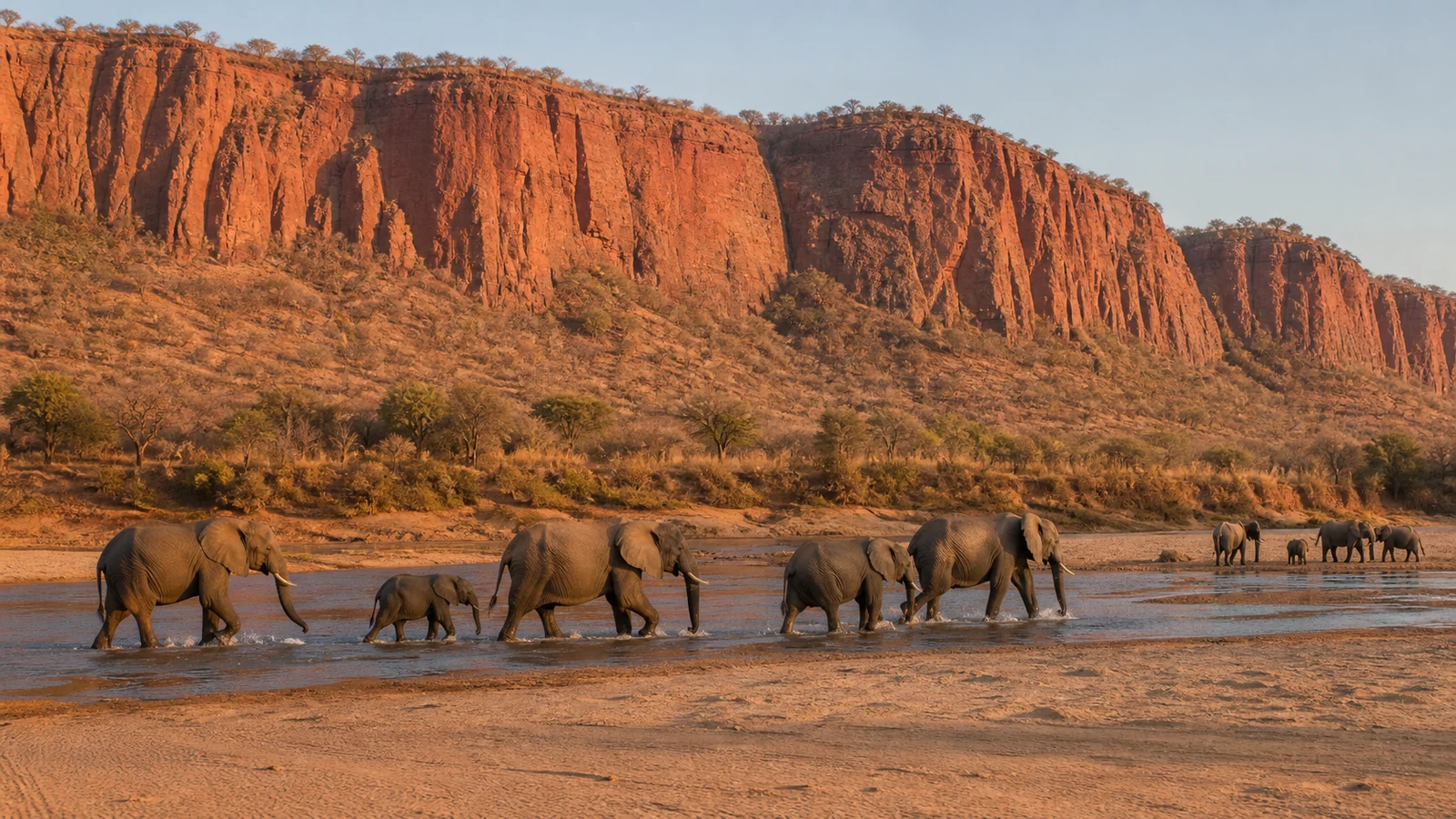
If Gonarezhou has one image that defines it, it’s the Chilojo Cliffs – a thirty-kilometer escarpment of red and orange sandstone rising above the Runde River floodplain in the park’s northern section.
The cliffs are geologically ancient and visually unlike anything else in Zimbabwe. The sandstone has been carved by millions of years of erosion into vertical faces and rounded formations that glow amber in the afternoon and turn deep red as the sun drops. At sunset, with the Runde River catching the last light in the valley below and a herd of elephants moving along the floodplain in the distance, the Chilojo Cliffs Zimbabwe delivers is one of the most purely beautiful landscapes in southern Africa.
The practical reality of experiencing it is part of what makes it special: you are almost certainly the only people watching. No other vehicles. No radio chatter. No queue for the viewpoint. Just the cliffs, the light, and whatever wildlife has decided to occupy the floodplain that evening.
We’ve sat at the Chilojo overlook at sunset with guests who’ve done safaris across East and southern Africa for years, and watched them go quiet in a way that the more visited parks rarely produce. The absence of infrastructure is the experience.
The Elephants: What “Place of Elephants” Actually Means
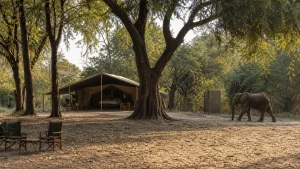
Gonarezhou means “Place of Elephants” in Shona, and the name reflects a history as much as a present reality. The park’s elephant population was decimated during Zimbabwe’s colonial period, when the animals were systematically culled because they were considered a threat to agriculture in surrounding areas. The tuskers that survived that era, and the generations that followed, developed a wariness of humans that persists to this day.
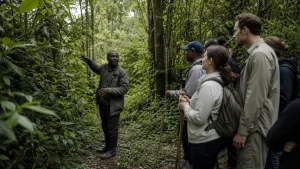
What that history produced, paradoxically, is some of the most dramatic elephant viewing in Africa. Gonarezhou’s elephants are not habituated to vehicles in the way Amboseli or Chobe elephants are. They are wild in a way that requires different skills from a guide – reading body language from greater distances, approaching with more patience, accepting that some encounters stay at a respectful remove.
But the tuskers. The tuskers are the reason specialists travel here specifically.
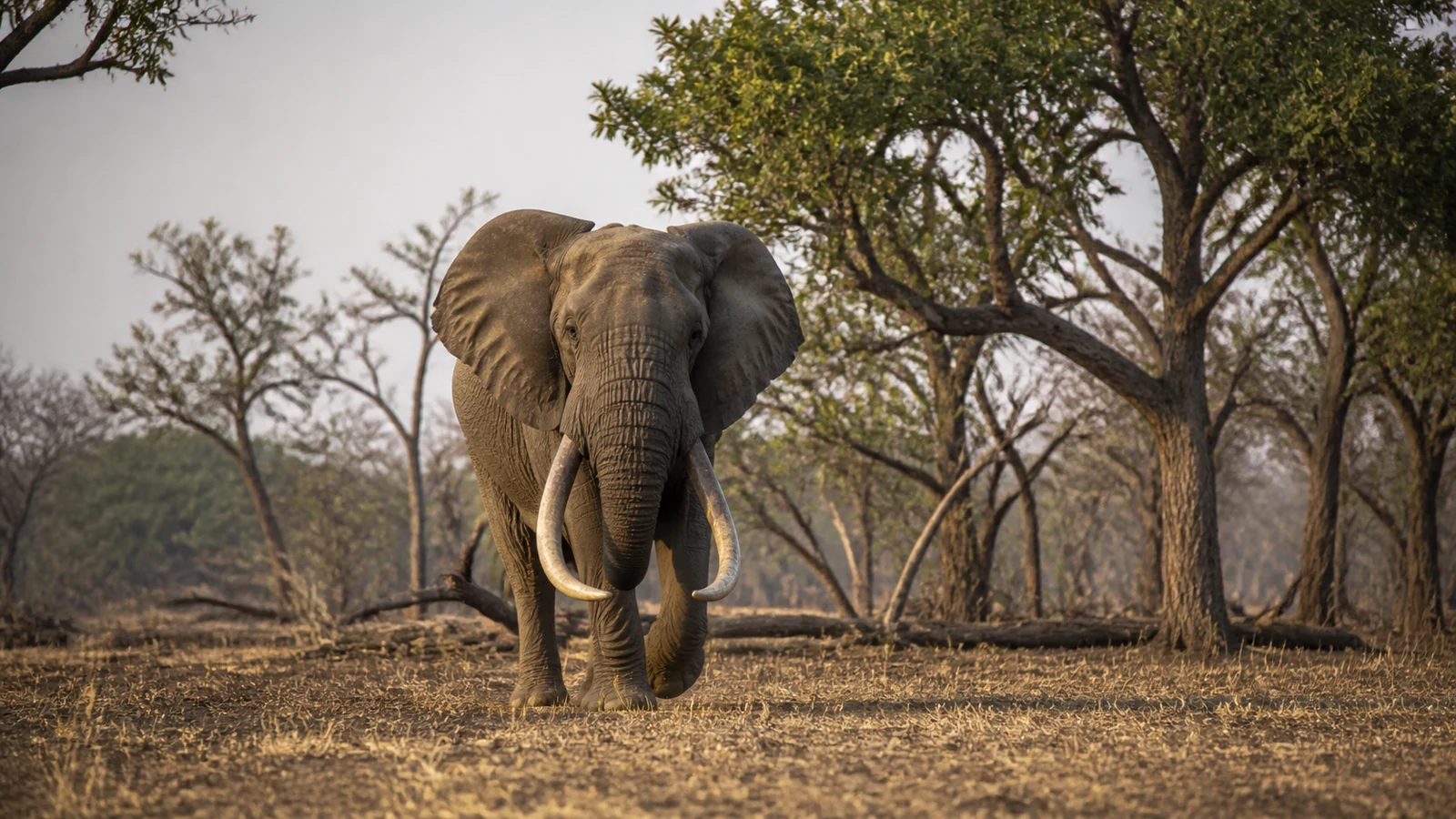
Gonarezhou carries one of the highest concentrations of large-tusked bull elephants remaining in Africa – animals with ivory that reaches the ground, a genetic lineage that was nearly extinguished and has recovered slowly under the protection of the Gonarezhou Conservation Trust. Seeing a hundred-pound tusker in the wild, in a park with no other tourists visible, is an encounter with a scale of animal that most safari itineraries no longer make possible. Gonarezhou still does.
Gonarezhou vs Hwange: An Honest Comparison
The Gonarezhou vs Hwange question comes up regularly for guests building Zimbabwe itineraries, and the honest answer depends entirely on what the guest is after.
Hwange is Zimbabwe’s most established safari destination – excellent infrastructure, reliable Big Five sightings, camps ranging from mid-range to genuinely luxurious, and a well-organized game viewing circuit that produces consistent results. For guests visiting Zimbabwe for the first time, Hwange is the dependable choice and we recommend it without hesitation.
Gonarezhou is the choice for guests who’ve done Hwange – or the equivalent elsewhere – and want something that feels genuinely unvisited. The infrastructure is more limited, the logistics require more advance planning, and the experience of the park is less predictable in ways that reward flexibility and patience. In exchange, you get solitude that Hwange, by its nature as a popular park, simply cannot offer.
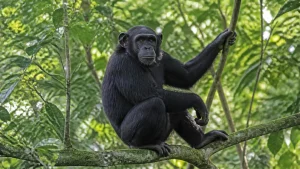
The wildlife comparison is closer than most travelers expect. Gonarezhou has lion, leopard, wild dog, cheetah, buffalo, hippo, crocodile, and those extraordinary tusked elephants. What it doesn’t have is the density of sightings that Hwange’s waterholes – artificially pumped through the dry season – produce. Gonarezhou’s game viewing is wilder and less guaranteed. That’s either a drawback or the entire point, depending on the traveler.
Singita Pamushana and Chilo Gorge: The Right Bases
Two camps anchor the Gonarezhou experience for guests looking for a high-quality stay in or adjacent to the park.
Singita Pamushana sits on the Malilangwe Wildlife Reserve, which borders Gonarezhou to the north and is managed in partnership with the national park. Pamushana is Singita’s Zimbabwe property and carries everything the brand is known for – extraordinary design, exceptional food, guiding at the highest level – in a landscape that the Singita name hasn’t yet made famous the way Sabi Sands has. The reserve shares game with Gonarezhou across an open boundary, giving guests access to wildlife that moves freely between protected areas. For guests who want the Gonarezhou experience without compromising on camp quality, Pamushana is the answer.
Chilo Gorge Safari Lodge sits directly on the boundary of Gonarezhou itself, on a rocky bluff above the Save River. It’s a smaller, less polished operation than Singita – more in keeping with the raw character of the park itself – and it offers direct access to the park’s interior on full-day game drives and walking safaris. The guides at Chilo have been working this specific landscape for years and carry the kind of park-specific knowledge that only comes from sustained time in one place. For guests who want to be inside Gonarezhou’s energy rather than adjacent to it, Chilo is the honest choice.
Only One Safaris on Reaching Gonarezhou Before Everyone Else Does
Gonarezhou is the Zimbabwe that existed before the safari industry organized itself around predictability and convenience. The elephants are wilder, the landscapes are stranger, and the silence is the kind that has actual weight. It’s not the right first safari destination. For the traveler who knows what they’re looking for and is ready to go find it without a crowd, it’s one of the best in Africa.
If off the beaten path Zimbabwe is what you’re after – genuinely off it, not just slightly less trafficked – Gonarezhou is where we’d point you. We know both Singita Pamushana and Chilo Gorge well, we know the seasonal windows that give you the Chilojo Cliffs at their most dramatic, and we know how to connect Gonarezhou into a Zimbabwe itinerary that doesn’t waste a single day getting there. Let’s talk through the map.
Frequently Asked Questions: Gonarezhou: The Place of Elephants
How does a Gonarezhou National Park safari compare to more visited Zimbabwe parks?
The wildlife quality is comparable to Hwange, the solitude is incomparable. Gonarezhou consistently delivers game drives without another vehicle visible – something that Zimbabwe’s more popular parks can no longer guarantee in peak season. The trade-off is less infrastructure and longer travel times to reach the park.
What makes the Chilojo Cliffs Zimbabwe’s most underrated landscape?
The combination of geological scale, dramatic light, and complete absence of crowds. The Chilojo escarpment is thirty kilometers of red sandstone above a river floodplain – in a more visited park, it would be one of southern Africa’s iconic viewpoints. In Gonarezhou, it’s still a discovery.
Is off the beaten path Zimbabwe suitable for first-time Africa travelers?
For guests who’ve never done a safari, we’d recommend starting with a more established circuit before adding Gonarezhou. The park rewards travelers who know what they’re looking at and can appreciate solitude as a feature rather than experiencing it as a sign something is wrong. For experienced safari travelers, the remoteness is exactly the point.
What is the best time of year for a Gonarezhou National Park safari?
May through October, the dry season. Water concentrates at the rivers and remaining waterholes, wildlife visibility is at its highest, and the Chilojo Cliffs are most dramatic in the clear dry-season light. The park partially closes during the wet season when roads become impassable.