Africa doesn’t have a single season. It has dozens — layered across a continent so vast, so varied, that while one country bakes in golden dry-season heat, another is erupting in green, storm-lit life. This is what makes planning an African safari feel overwhelming to some and endlessly exciting to those who understand it. The secret isn’t finding the “best” time to go on safari in Africa. The secret is finding the best time to go to the right place — and knowing exactly what extraordinary thing is happening there when you arrive.
This guide works differently from most. Instead of listing countries and attaching a generic “best months” label, we’ve built a living safari calendar. You can start from the month you’re available to travel and immediately discover which countries are peaking, which wildlife events are unfolding, and what specific, unrepeatable experience is waiting for you. From the wildebeest calving plains of Tanzania’s southern Serengeti in February, to Botswana’s floodwater mokoro trails in June, to Zimbabwe’s Mana Pools walking safaris in October — there is no bad month for safari. There are only months you haven’t matched to the right destination yet.
Key Takeaways
- Africa operates across multiple distinct climate zones — the “best time” varies significantly by country and region, not just by continent.
- The dry season delivers reliable game-viewing as animals concentrate around water, but the green season offers dramatic scenery, newborn wildlife, and extraordinary birding with far fewer crowds.
- East Africa has two dry seasons (January–February and June–October); Southern Africa follows one pronounced dry season (May–October) — this fundamentally shapes trip planning.
- Specific wildlife events — wildebeest calving, Chobe elephant gatherings, Zambia’s Emerald Season, Namibia’s desert-adapted species — are deeply tied to micro-seasons that standard guides rarely highlight.
- Every single month of the year, at least one African safari destination is delivering a world-class wildlife experience. Your job is simply to match your travel window to the right one.
—
The Rhythm of the Wild — Understanding African Safari Seasons
The first thing to understand about African safari seasons is that Africa is not a country. It is a continent spanning 30 million square kilometres, home to tropical rainforests, high-altitude volcanic ranges, vast semi-arid savannahs, Kalahari desert grasslands, and river deltas that flood in reverse of the rains that cause them. The weather systems governing Tanzania’s Serengeti have almost nothing to do with those shaping Namibia’s Namib Desert or Botswana’s Okavango Delta. Start here, and everything else becomes clearer.
African safari seasons broadly fall into three types, each with its own character, its own rewards, and its own distinct atmosphere in the field.
Dry Season (Peak)
Vegetation thins. Grasses shrivel. Rivers and seasonal waterholes begin to disappear. And then the magic happens: wildlife has no choice but to converge on the remaining water sources, creating extraordinary concentrations of animals in predictable locations. Elephants, buffalo, zebra, giraffe, and their accompanying predators — lions, leopards, cheetahs, wild dogs — orbit waterholes in a daily theatre of survival. Dust hangs golden in the late afternoon light. Visibility is superb. In East Africa, the core dry season runs June through October, with a shorter dry window in January and February. In Southern Africa, the dry season stretches May through October and is even more pronounced.
Wet / Green Season
Rain transforms the landscape. Burnt ochre turns emerald almost overnight. The air smells electric. Migratory birds arrive in their tens of thousands, and resident species burst into breeding plumage — colours you simply won’t see at any other time of year. Prey species give birth: the Serengeti’s southern plains erupt with wildebeest and zebra calves in January and February, and the instinct of predators sharpens accordingly. Crowds thin out. Safari camps offer a more intimate atmosphere. And the skies — dramatic, towering, storm-lit — are a photographer’s obsession. The green season is not a compromise. For the right traveller at the right destination, it is the single most atmospheric time to be in the bush.
Shoulder Season
The transition months — typically May in Southern Africa and November in East Africa — carry a particular magic that experienced safari-goers often seek out deliberately. The landscape is caught between two worlds. Early rains begin to soften the dry dust, or the last of the rains give way to clearing skies. Wildlife activity remains high, lodges have more availability, and the bush feels less visited. There’s a quiet electricity to the shoulder season that’s hard to describe until you’ve experienced it.
One misconception worth dismantling directly: the idea that the wet season means you’ll see nothing. Some of the most spectacular safari moments on record have happened in the green season — a cheetah hunting through tall wet grass, a leopard draped over a branch amid lush foliage, a sky full of migrating storks above a flooded Okavango channel. The green season simply demands a different mindset, and rewards it richly.
Here’s the guiding principle for everything that follows: every month somewhere in Africa, something extraordinary is happening. This guide will help you find exactly what that is.
—
East Africa Safari Planner — Tanzania, Kenya, Uganda & Rwanda
East Africa is anchored by one of the most famous wildlife events on the planet — the Great Wildebeest Migration — but to think of it only in those terms is to miss the depth and diversity that Tanzania, Kenya, Uganda and Rwanda collectively offer. These are four very different safari destinations, peaking at different times, delivering very different experiences.
If you’re trying to decide between Tanzania and Kenya specifically, our detailed guide on Tanzania vs Kenya Safari: Which Country Should You Choose for Your First Safari? breaks down exactly what each delivers and when.
Tanzania
Best Months: January–February (calving season, southern Serengeti); June–October (river crossing season, northern Serengeti; dry season across the country)
Tanzania is home to the Serengeti — arguably the greatest wildlife theatre on earth — and the annual wildebeest migration that moves through it in a vast, pulsing circle. Understanding this migration’s rhythm is the key to unlocking Tanzania’s full potential.
From late January through February, approximately 500,000 wildebeest calves are born on the short-grass plains of the southern Serengeti, close to the Ngorongoro Conservation Area. This calving season is one of the most extraordinary wildlife events in Africa. The sheer density of newborns draws lions, cheetahs, and spotted hyenas into open, observable hunts — predator action this concentrated and this visible is rare anywhere in the world. Cheetahs in particular hunt with terrifying efficiency on these wide-open plains, and watching a female feed her cubs after a successful hunt as a golden-lit Serengeti dawn breaks behind her is the kind of moment that rewires how you think about nature.
By April and May, the herds begin their long northward push, moving through the Western Corridor toward the Grumeti River. The long rains fall during this period, and while some lodges close, those that remain open offer intimate, crowd-free experiences in a lush, dramatically lit landscape.
From July through October, the migration reaches the northern Serengeti and the Mara River — the most dramatic phase of the annual cycle. Massive columns of wildebeest and zebra pace the riverbanks, testing the waters before plunging in. Nile crocodiles wait. Lions flank the exits. The chaos and visceral energy of a Mara River crossing is something that no wildlife documentary fully prepares you for. It is overwhelming in the best possible sense.
Year-round, the Ngorongoro Crater functions as its own self-contained ecosystem — a collapsed volcanic caldera sheltering roughly 25,000 large mammals, including one of Africa’s densest populations of lions and the critically endangered black rhino. It does not depend on migration timing and delivers consistent Big Five viewing throughout the year.
For those seeking complete remoteness, Ruaha National Park and Nyerere National Park (formerly Selous) in southern Tanzania offer exceptional dry-season game-viewing from June through October, with wild dog sightings, massive elephant herds, and a profound sense of wilderness that the more visited northern circuit simply cannot replicate.
Kenya
Best Months: July–October (Maasai Mara river crossings); year-round for Big Five across diverse parks
Kenya’s Maasai Mara is the northern stage of the Great Migration, and from July through October, the Mara River crossings unfold with the same pulse-stopping drama as on the Tanzanian side. The Mara is known for having particularly large, unpredictable crossings — herds of tens of thousands — and the resident lion population here is among the densest and most studied in Africa.
But Kenya’s appeal extends far beyond the migration window. Amboseli National Park, set against the iconic backdrop of Mount Kilimanjaro, is extraordinary for elephant viewing almost any time of year, with herds moving through open floodplains in a landscape so cinematic it feels constructed. Samburu National Reserve in the north harbours species found almost nowhere else in East Africa — the reticulated giraffe, Grevy’s zebra, beisa oryx, and the gerenuk (an antelope that stands on its hind legs to browse) — and is best visited during Kenya’s dry season, June through October and January through February.
Kenya’s shoulder months — particularly November and April — deliver vibrant birdlife, lush scenery, and a noticeably quieter bush. For a traveller more interested in a private, immersive experience than peak game density, these months offer an atmospheric alternative to high season. You can explore more about how to choose between Tanzania and Kenya for your first safari to find the approach that suits your travel style.
Uganda
Best Months: June–August; December–February (gorilla trekking, drier forest trails)
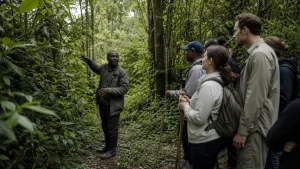
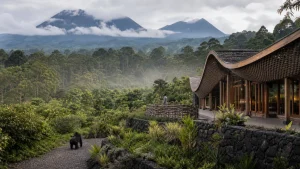
Uganda is a different kind of safari entirely. Forget open savannah for a moment. Bwindi Impenetrable National Park is exactly what its name suggests — a primordial montane rainforest draped in mist, alive with the sounds of ancient trees and unseen creatures. It is the home of the mountain gorilla, one of the most endangered great apes on earth, and tracking them through this forest is an experience that operates on a different emotional register from anything else in African wildlife travel.
When you find them — and you will find them, with a skilled ranger leading the way — the encounter lasts one full hour. One hour in the company of a family of mountain gorillas: a silverback at rest, juveniles tumbling through the undergrowth, a mother nursing an infant with an expression of such calm familiarity that the boundary between human and primate becomes something you stop thinking about entirely.
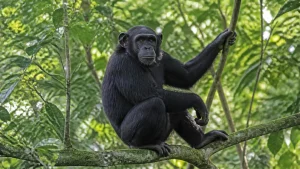
While gorilla trekking is possible year-round, the drier months of June through August and December through February make the forest trails more manageable, the mud less punishing, and the experience more physically accessible — particularly for travellers who may find steep, wet slopes challenging. Uganda also offers excellent chimpanzee tracking in Kibale National Park, making a combined primate-focused itinerary one of the most unique wildlife experiences available anywhere on the continent.
Rwanda
Best Months: June–September; December–February (gorilla trekking, Volcanoes National Park)
Rwanda’s Volcanoes National Park is the other great mountain gorilla destination, and it shares Uganda’s seasonal logic: drier periods make for more comfortable trekking, though the gorillas themselves are present year-round. Rwanda tends to offer slightly shorter trekking distances to gorilla groups and has invested heavily in the quality of the visitor experience — the country’s commitment to conservation is evident in everything from park management to community integration.
Rwanda and Uganda pair beautifully as a combined itinerary, and many travellers combine both destinations in a single trip — trekking different gorilla families, spending time with chimpanzees, and then flying south to Tanzania or Kenya to complete a safari with open savannah game drives. The contrast is remarkable and the emotional range of such a trip is unlike anything a single-country safari can offer.
—
Southern Africa Safari Planner — South Africa, Botswana, Zambia, Zimbabwe & Namibia
Southern Africa operates on a different seasonal calendar from East Africa. The single pronounced dry season running from May through October is when most of the region’s wildlife viewing peaks. But the green season — October through April — has its own remarkable character, and some of Southern Africa’s most extraordinary experiences, from Botswana’s Kalahari to Zambia’s emerald bush camps, belong entirely to that period.
South Africa
Best Months: May–September (dry season, Kruger and surrounds); October–April (green season, calving, birding)
Kruger National Park is South Africa’s flagship safari destination and one of the most accessible Big Five parks in Africa. In the dry winter months of May through September, the bush strips back to bare bones. Grasses shrink. Trees drop their leaves. Rivers slow to trickles. Animals cluster along the remaining water sources in concentrations that make game-viewing feel almost effortless — a waterhole stakeout in August can deliver elephant, lion, buffalo, hippo, giraffe, and zebra within a single afternoon. Leopard sightings in Kruger’s dense riverine thickets improve significantly as concealing vegetation disappears.
The private reserves bordering Kruger’s western boundary — including areas like Sabi Sand — operate with open-vehicle game drives, night drives, and walking safaris that the national park itself does not permit. These reserves consistently produce some of the continent’s finest leopard sightings year-round.
The green season in South Africa (October through April) transforms Kruger into a completely different landscape. Impala calving peaks in November in what is locally called the “Suicide Month” — named for the relentless predator pressure on newborns that draws every carnivore in the area into a frenzy of opportunistic hunting. The birding during this period is world-class, with hundreds of migrant species arriving from Europe and Asia. It’s busier than the dry season in terms of vegetation, but in terms of energy and raw wildlife drama, it is anything but quiet.
Botswana
Best Months: May–August (Okavango Delta peak flooding); July–October (Chobe dry season, elephant concentrations)
Botswana is, for many safari veterans, the single finest wildlife destination on the continent. It combines extraordinarily low tourist density with extraordinary animal density, across two wildly different ecosystems that happen to peak at complementary times of year.
The Okavango Delta is one of the natural wonders of the world — an inland river delta fed by Angolan highland rains that flow southward and arrive in Botswana’s Kalahari basin between May and August, flooding a vast wilderness of papyrus channels, palm islands, and open floodplains. The paradox of the Okavango is that it floods as the rest of Southern Africa dries, creating a magnet for wildlife when everything around it is parched. During the peak flood months, the mokoro experience — drifting silently through narrow papyrus channels in a traditional dugout canoe, poled by a guide who reads the water like a language — is unlike anything else safari travel offers. There is no engine noise, no dust, no roar. Just the lap of water, the call of a malachite kingfisher, and the occasional glimpse of a hippo ear above the surface.
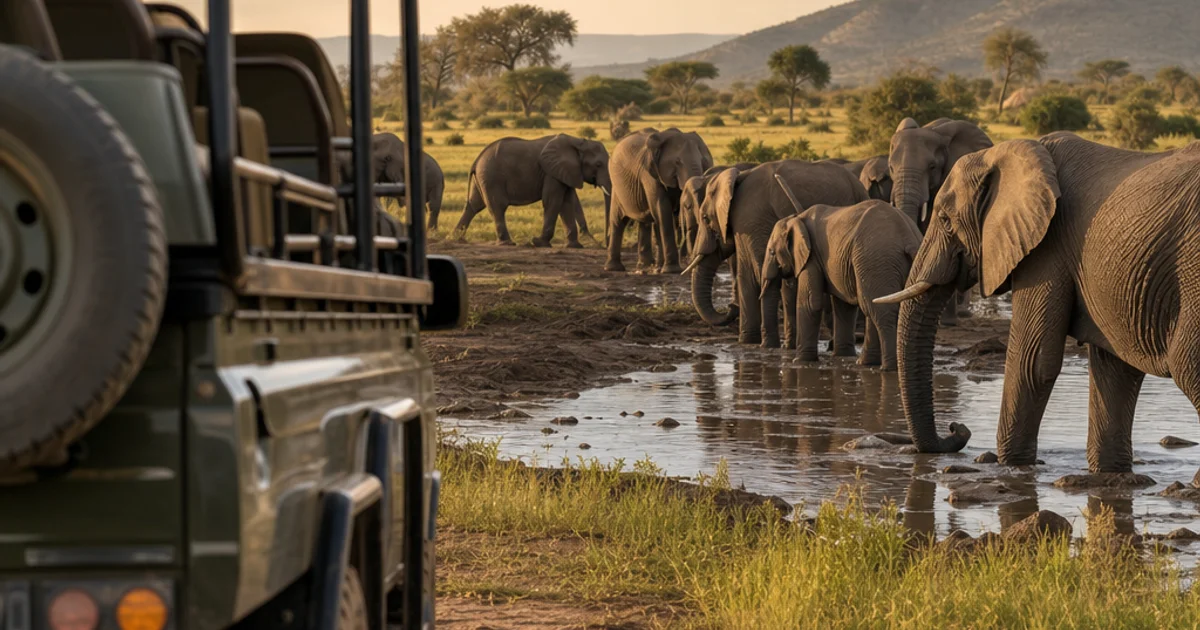
Chobe National Park, in Botswana’s northeast, is home to the largest elephant population on earth — estimated at over 130,000 individuals. During the dry season from July through October, these elephants converge on the Chobe River in herds of hundreds, creating one of the most staggering wildlife spectacles in Africa. Boat safaris along the Chobe River deliver close, unhurried encounters with elephants swimming, drinking, sparring, and crossing in columns that seem to stretch to the horizon.
The Kalahari in the green season — particularly the Central Kalahari Game Reserve — offers something entirely different: brown hyenas, meerkats, black-maned Kalahari lions, and the rare spectacle of desert-adapted wildlife navigating a landscape briefly transformed to grassland by summer rains.
Zambia
Best Months: May–October (dry season, South Luangwa); November–April (emerald season walking safaris)
Zambia is where walking safari was born, and South Luangwa National Park remains the gold standard for the experience. In the dry season from May through October, the Luangwa River drops and meanders, concentrating hippos, crocodiles, elephants, and big cats along its banks in extraordinary numbers. The park is renowned for its leopard sightings and for its wild dog population — one of the most endangered large carnivores in Africa, and one of the most exciting to watch hunt.
From November through April, Zambia enters what operators call the Emerald Season — a period when the national parks burst with life, the bird diversity peaks dramatically, and a handful of intimate bush camps remain open specifically for guests who want the park to themselves. The green season walking in South Luangwa carries a particular intensity: navigating the landscape on foot in vegetation this lush, reading tracks, smelling lion scrapes in the soil, hearing hippos in flooded channels nearby — it is safari in its most primal, unmediated form.
Zimbabwe
Best Months: August–October (Mana Pools dry season, walking safari season)
Zimbabwe’s Mana Pools National Park is in a category of its own. A UNESCO World Heritage Site set along the Zambezi River floodplain, Mana Pools is one of the only parks in Africa where you can walk unguided — and where the wildlife has become so habituated to human presence on foot that a lion may simply watch you pass from fifteen metres away without rising. This is not recklessness; it is the product of decades of walking safari culture and an extraordinary relationship between wildlife and the Mana Pools ecosystem.
The dry season months of August through October see the floodplain pools shrink and animals concentrate in massive numbers. Elephants stand on their hind legs to browse the albida pods from trees along the river. Wild dogs hunt in the open. And the light at Mana Pools — golden, low, filtered through riverine trees — is something landscape photographers travel specifically to capture.
Zimbabwe also offers the Hwange National Park, which delivers exceptional elephant and lion viewing throughout the dry season, and the area surrounding Victoria Falls, one of the seven natural wonders of the world, which can be visited year-round and pairs naturally with a Zimbabwean safari itinerary.
Namibia
Best Months: May–September (game-viewing, desert wildlife); January–April (Etosha green season, predator activity; Sossusvlei for dramatic desert landscapes)
Namibia is unlike any other safari destination in Africa. It is austere, otherworldly, and built around landscapes that feel more like another planet than anywhere on the continent. The Namib Desert, the world’s oldest desert, shelters desert-adapted wildlife found almost nowhere else: desert-adapted lions, desert elephants, oryx navigating red sand dunes, and brown hyenas padding across ancient gravel plains under a sky so unpolluted by light that the Milky Way feels close enough to touch.
Etosha National Park in the dry season (May through September) is one of Africa’s most efficient game-viewing destinations — a vast salt pan fringed by waterholes where black rhino, lion, cheetah, and hundreds of other species converge in full view. In the green season months of January through April, Etosha’s sparse vegetation fills briefly, the wildlife disperses across the pan’s edges, and predator-prey interactions reach annual peaks as newborns appear and hunting intensifies.
Sossusvlei in the Namib-Naukluft National Park — home to the world’s tallest sand dunes — can be visited year-round but carries its most dramatic visual presence when morning mist rolls in off the Atlantic coast between June and August, when the interplay of shadow and apricot dune light is at its peak.
—
The African Safari Calendar — Month-by-Month Highlights
| Month | Top Destination(s) | Why It’s Extraordinary |
|---|---|---|
| January | Tanzania (Southern Serengeti) | Wildebeest calving begins; massive predator concentrations on open plains; short rains clearing |
| February | Tanzania (Southern Serengeti, Ngorongoro) | Peak calving season; 500,000+ wildebeest calves born; cheetah and lion activity at annual highs |
| March | Kenya (coast & Rift Valley), Rwanda & Uganda | Green season in full effect; gorilla trekking viable; dramatic skies and lush landscapes |
| April | Uganda, Rwanda, South Africa (Kruger) | Gorilla trekking; Kruger long rains — lush bush, calving impala, excellent birding; fewer visitors |
| May | Botswana (Okavango), Zambia (Luangwa), South Africa | Delta flooding begins; Luangwa dry season starts; Kruger transitioning — shoulder magic |
| June | Botswana, Tanzania, Uganda, South Africa | Okavango peak flood approaching; Northern Serengeti migration building; gorilla trekking dry window |
| July | Tanzania (Northern Serengeti), Kenya (Maasai Mara), Botswana (Chobe) | Mara River crossings begin; Chobe elephant herds peak; Okavango in full flood |
| August | Kenya, Tanzania, Botswana, Zimbabwe (Mana Pools) | Peak river crossing season; Mana Pools walking safari season; highest game concentration continent-wide |
| September | Kenya, Zambia, Zimbabwe, Namibia (Etosha) | Final river crossings; Luangwa at its most prolific; Etosha at peak dry-season game density |
| October | Zimbabwe, Zambia, South Africa | Mana Pools and Luangwa at dramatic peak; Kruger’s green season awakening begins; calving starts |
| November | South Africa (Kruger), Tanzania | Kruger “Suicide Month” — impala calving frenzy; migratory birds arrive; short rains in East Africa |
| December | Uganda, Rwanda, Botswana (Kalahari), Tanzania | Gorilla trekking dry window; Kalahari green season; Serengeti southern herds returning for calving |
—
Micro-Season Wildlife Events Most Guides Overlook
Standard safari guides will tell you when it’s dry and when it rains. What they rarely capture are the hyper-specific wildlife events tied to micro-seasons — short windows within the broader calendar when something so particular and so spectacular unfolds that missing it, even by a few days, changes the experience entirely.
The Serengeti Calving Explosion (Late January–February)
Most guides mention “calving season.” Few convey what it actually means at ground level: a landscape so thick with newborn wildebeest that the grass seems to move. Approximately 8,000 calves are born per day at peak calving. They can stand within minutes and run within hours. But the survival rate in those first 48 hours is brutal — and the predator density on the southern Serengeti plains during this window is the highest it will be anywhere in Africa for the entire year. A single morning game drive here in February can involve a cheetah hunt, a hyena clan scavenging, a lion family at rest beside a fresh kill, and a golden eagle overhead. This micro-season is arguably the most underrated event in African wildlife travel.
The Okavango Flood Arrival (May–June)
The Okavango Delta doesn’t flood all at once. It fills from the north, channel by channel, over weeks. There is a specific window in May and June — before the mainstream safari visitor rush of July and August — when the water is fresh, the birdlife is frenzied with the change, and the atmosphere in the delta carries a kind of electrical anticipation. Experienced guides will tell you that the early flood is, in some ways, the most beautiful time to be in the Okavango.
Zambia’s Wild Dog Denning Season (July–August)
African wild dogs are nomadic almost all year, covering vast territories and rarely seen twice in the same area. But during the annual denning season — when packs establish a den site and pups are confined to a small area — wild dogs become predictably findable, sometimes for weeks at a time. South Luangwa’s wild dog population produces some of the finest pack-viewing experiences on the continent during this window. It is a micro-season that most travellers don’t know to ask about.
Etosha’s Black Rhino Night Visits (Year-round, Peak May–September)
Namibia’s Etosha National Park contains one of Africa’s highest concentrations of black rhino, but these are largely nocturnal animals, rarely glimpsed on standard game drives. At a handful of floodlit waterholes inside the park — most famously at Okaukuejo Camp — black rhino visit reliably after dark, often alongside elephant and lion. Sitting in silence at one of these waterholes at 2 AM, watching a black rhino drink ten metres away while lions circle in the darkness beyond the light, is a safari experience that exists in almost no other park on the continent.
Kenya’s Rift Valley Lake Flamingo Gathering (Variable, Often November–January)
When conditions are right on Kenya’s Rift Valley soda lakes — particularly Lake Bogoria and Lake Nakuru — hundreds of thousands of lesser flamingos gather in concentrations that turn the shoreline pink. This is a variable event, triggered by algal blooms rather than fixed seasons, but when it happens it is one of the most visually staggering wildlife spectacles anywhere in the natural world.
—
How to Choose the Right Safari Country for Your Travel Window
Every traveller arrives at this decision from a slightly different angle. Some have a fixed travel window dictated by work, school, or family. Others have flexibility but don’t know where to start. Most are trying to balance multiple competing priorities: the best wildlife, the right climate, the most memorable experience, and a trip that fits within a realistic budget and timeframe.
Before we get to specifics, two practical questions will narrow your options significantly:
- How long can you travel? A four-day safari is a very different proposition from a twelve-day journey. Our guide on how long your African safari should be breaks this down by destination and experience level — and it’s essential reading before you book anything.
- What kind of experience matters most to you? Open savannah game drives? Walking safaris? Gorilla trekking? Water-based mokoro experiences? Desert landscapes? The answer significantly narrows which countries belong on your itinerary for any given month.
If you’re a first-time safari traveller, the choice typically comes down to Tanzania versus Kenya for East Africa, or South Africa versus Botswana for Southern Africa. Tanzania’s Serengeti ecosystem offers the most iconic and diverse wildlife concentration in Africa, with extraordinary experiences available in almost every month of the year. South Africa’s Kruger National Park is the most accessible, varied, and logistically straightforward entry point for first-timers.
Frequently Asked Questions
How should I approach planning an African safari to find the best time to go?
Instead of searching for a generic “best” time for all of Africa, the article suggests focusing on finding the ideal time for a specific destination. You should align your travel dates with particular wildlife events or peak conditions unfolding in a chosen country or region. This approach ensures you experience extraordinary and specific events tailored to your visit.
What are the primary differences between the dry season and the wet (green) season for a safari?
During the dry season, vegetation thins and animals congregate around shrinking water sources, offering excellent visibility and predictable game viewing. In contrast, the wet, or green, season transforms the landscape into lush emeralds, attracts migratory birds, and is when many prey species give birth. While crowds are smaller, the green season offers dramatic skies and a distinct, atmospheric experience.
Is it true that there are no “bad” months to go on an African safari?
Yes, the article emphasizes that there is no bad month for a safari, only months you haven’t matched to the right destination yet. Every single month of the year, at least one African safari destination provides a world-class wildlife experience. The key is to understand the continent’s diverse seasons and micro-climates to select the ideal location for your travel window.
How do the safari seasons vary between East Africa and Southern Africa?
Safari seasons differ significantly by region. East Africa typically experiences two dry seasons: a shorter one in January–February and a longer period from June–October. Southern Africa, however, generally follows one pronounced dry season that stretches from May through October. Understanding these regional variations is fundamental for effective safari planning.
What is a “shoulder season” and why might it be a good time for a safari?
Shoulder seasons are transitional months, such as May in Southern Africa or November in East Africa, which bridge the wet and dry periods. They offer a unique charm where the landscape is caught between two worlds, with early rains softening the dust or the last rains giving way to clear skies. Wildlife activity remains high, lodges often have more availability, and the bush can feel less visited, offering a quiet electricity.
Can I still have a rewarding safari experience during Africa’s wet season?
Absolutely, the article directly debunks the misconception that the wet season means you’ll see nothing, stating it’s not a compromise. The green season offers incredible benefits like vibrant, emerald landscapes, a profusion of migratory birds, and the chance to witness newborn animals. For travelers seeking dramatic scenery and a more intimate atmosphere, it can be the single most atmospheric time to be in the bush.