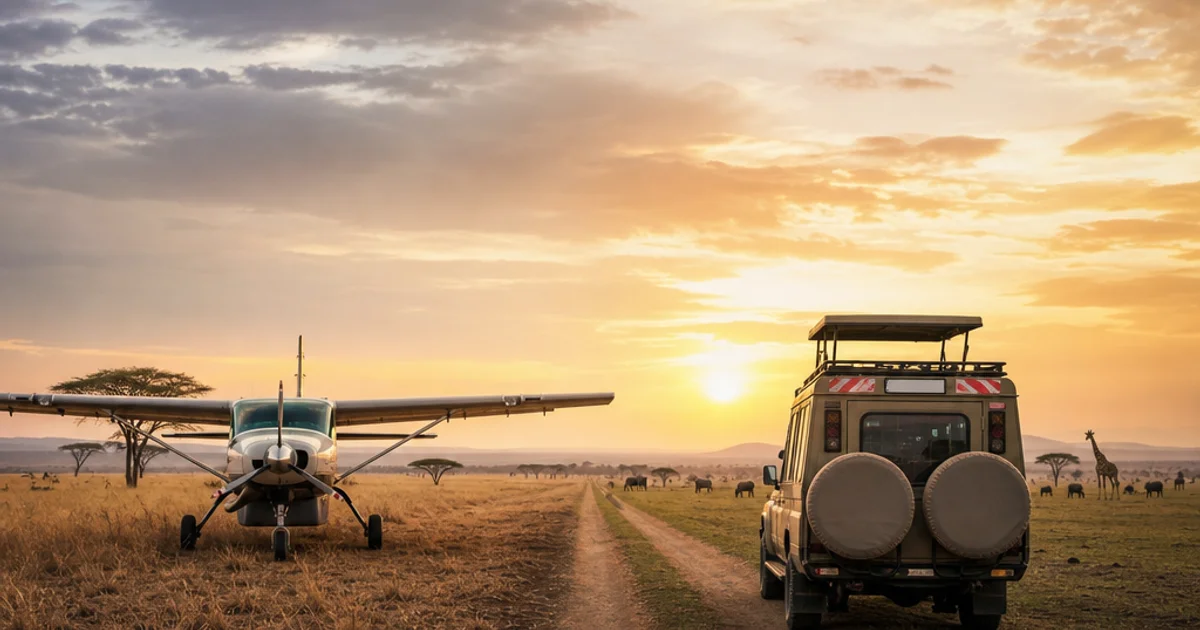
There’s a moment on every safari that has nothing to do with lions or leopards. It happens the second you leave the airport or the lodge gate behind and realize you’re actually moving through Africa, not just toward it. How you make that journey, whether you’re buzzing over the Serengeti in a six-seater plane or bouncing along a dirt track watching a Maasai herder walk his cattle across the horizon, shapes the entire feeling of the trip. Some travelers don’t think about this until they’re deep into planning. They should think about it first.
A flying safari moves you between parks and camps by light aircraft, hopping from bush airstrip to bush airstrip so you spend your time game viewing instead of driving. An overland safari moves you by 4×4 vehicle or safari truck along roads and tracks, turning the transfers themselves into part of the adventure. Neither one is the “correct” way to see Africa. They’re different lenses on the same continent, and the right choice depends on how much time you have, who you’re traveling with, and what kind of experience you’re actually chasing.
- Flying safaris use light aircraft between bush airstrips, cutting transit time and opening access to remote, wildlife-dense areas that roads simply don’t reach.
- Overland safaris use 4×4 vehicles or trucks, trading speed for immersion: villages, farmland, and spontaneous sightings unfold along the way.
- Luggage on flying safaris is strictly limited to soft-sided bags, usually around 15kg, which matters a lot if you’re traveling with camera gear.
- Solo travelers and couples often gravitate toward flying for efficiency, while families and larger groups often find overland safaris more social and better value per day.
- Some of Africa’s best camps, particularly in Botswana’s Okavango Delta and Kenya’s remote conservancies, are only realistically reachable by air.
Two Ways to Fall in Love With Africa
A flying safari is a style of African travel in which guests move between parks, reserves, and camps aboard small light aircraft, landing on unpaved bush airstrips close to the lodges themselves. An overland safari is a style of African travel in which guests move between the same destinations by road, typically in a 4×4 safari vehicle or a larger overland truck, following highways and tracks that wind through towns, farmland, and open bush.
Both get you to the same place, eventually. But the journey between those places is where the two experiences split apart completely. On a flying safari, the transfer is a scenic bonus, a chance to see the Rift Valley escarpment or the braided channels of a delta from above before you’ve even unpacked. On an overland safari, the transfer is the story itself. You watch the land change color, texture, and rhythm mile by mile, and you arrive at camp having actually felt the scale of the country you’re in.
Neither wins outright. The right choice comes down to how many days you have, how many people you’re traveling with, and whether your dream safari involves maximum wildlife hours or maximum immersion in the in-between spaces most travelers never see.
What Actually Happens on a Flying Safari
Flying safaris run on small aircraft, usually single-engine Cessna Caravans or similar bush planes seating anywhere from six to fourteen passengers. These aren’t scheduled commercial flights in the traditional sense. They’re light aircraft charters or shared scheduled services that hop between remote airstrips, often making two or three stops to drop and collect passengers at different camps along the route.
You land, and there’s no terminal, no baggage carousel, no customs queue. Usually it’s a dirt or gravel strip, a small thatched shelter, and a guide from your camp waiting beside an open-sided safari vehicle. Sometimes the game drive back to camp becomes your first game drive of the trip, since the road from airstrip to lodge often cuts straight through prime wildlife territory.
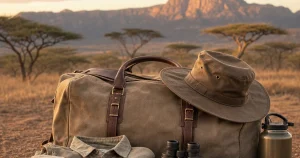
The catch is luggage. Light aircraft have strict weight and shape restrictions, generally around 15kg per person in a soft-sided duffel bag, no hard suitcases, because rigid luggage doesn’t fit the aircraft’s storage hold. This matters enormously if you’re planning to bring serious camera gear, and it’s worth reviewing a detailed packing list before you commit to a fly-in itinerary.
Flying Safari at a Glance
- Aircraft type: Small single-engine planes (Cessna Caravan, Cessna 206, or similar), typically 6 to 14 seats
- Passenger numbers: Shared flights with a handful of other travelers, occasionally private charter for families or small groups
- Luggage limits: Roughly 15kg per person, soft-sided duffel bags only, no hard-shell suitcases
- Airstrip access: Unpaved bush strips located minutes from camps, often with wildlife visible from the runway itself
- Transit time: Minutes to a couple of hours between camps, compared to a full day by road
There’s something genuinely thrilling about this way of moving through Africa. You see the Okavango Delta’s water channels fan out like veins beneath the wing. You catch the Serengeti’s plains stretching to a horizon with no visible edge. It reframes the scale of what you’re about to experience on the ground.
What Actually Happens on an Overland Safari
Overland safaris move guests by road in a 4×4 safari vehicle, usually a modified Land Cruiser or similar with pop-up roof hatches for game viewing, or in a larger converted overland truck built for bigger groups. The distinction between these two matters. A small-group 4×4 overland safari, typically four to seven guests, feels personal and flexible, with a guide who gets to know your interests over days on the road. A classic overland truck tour, often carrying fifteen to twenty-four passengers, moves at a steadier, more social pace, with a shared itinerary, communal camping, and a built-in sense of group adventure.
What both share is continuity. You keep the same guide and often the same vehicle for the length of the trip, which builds a rapport you simply don’t get when you’re handed off from camp to camp by air. Your guide learns what you’re excited about, whether that’s birdlife, big cats, or photography, and adjusts the pace accordingly.
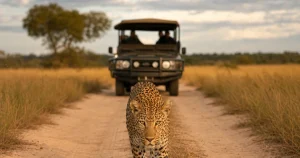
The road itself becomes part of the narrative. You pass through small towns, roadside markets, subsistence farms, and open grazing land where livestock and wildlife share the same horizon. Spontaneous sightings happen, an elephant crossing ahead of the vehicle, a giraffe browsing beside the road that no fly-in itinerary would ever show you, because those moments only exist between destinations, not at them.
Overland Safari at a Glance
- Vehicle type: 4×4 safari vehicles (small group) or purpose-built overland trucks (larger group tours)
- Typical group size: 4 to 7 guests for private 4×4 safaris, 15 to 24 for classic overland truck tours
- Pacing: Slower and more deliberate, with multiple hours of road travel between major stops
- Immersion level: High, direct exposure to villages, farmland, and landscape transitions along the route
- Continuity: Same guide and vehicle throughout, building familiarity and trust over the journey
If you’re weighing whether the smaller, private version or the larger group version suits you better, it’s worth reading through the breakdown in Private vs Group Safari: Which Option Offers Better Value and Experience?, since the same personality questions that apply there apply here.
Flying vs Overland: Head-to-Head Comparison
Put side by side, the practical differences become clear fast. Here’s how the two stack up across the factors that actually affect your trip.
| Category | Flying Safari | Overland Safari |
|---|---|---|
| Time | Minutes to a couple hours between camps; more hours spent actually viewing wildlife | Half a day or more between stops; more hours spent traveling through the landscape |
| Comfort and fatigue | Short hops reduce physical tiredness, though small planes mean some turbulence on hot afternoons | Long or rough road stretches can be tiring over multiple consecutive travel days |
| Immersion | Sweeping aerial perspectives of deltas, escarpments, and open plains | Ground-level cultural encounters, village life, and gradual landscape transitions |
| Group size and style | Well suited to solo travelers and couples wanting efficiency and privacy | Well suited to larger groups and families who enjoy shared vehicle time and group energy |
| Access to remote areas | Reaches otherwise inaccessible camps in places like the Okavango Delta’s deep interior | Limited to areas connected by drivable roads and tracks, though this still covers most classic parks |
Time is the most obvious difference, and for travelers with limited vacation days, it’s often the deciding factor. A flying safari can connect three or four distinct ecosystems in a ten-day trip because you’re not losing entire days to road transfers. An overland safari covering the same distance would likely require a longer trip to fit in comparable time on game drives, which is worth factoring in when you’re mapping out how long your safari should actually be.
Comfort matters too, though it cuts both ways. Flying spares you from washboard roads and long hours in a vehicle, but turbulence over hot bush terrain isn’t for everyone. Overland travel is smoother in the sense that you’re always in control of the pace, with stops whenever you need them, but multiple long driving days back to back can wear you down by day six or seven.
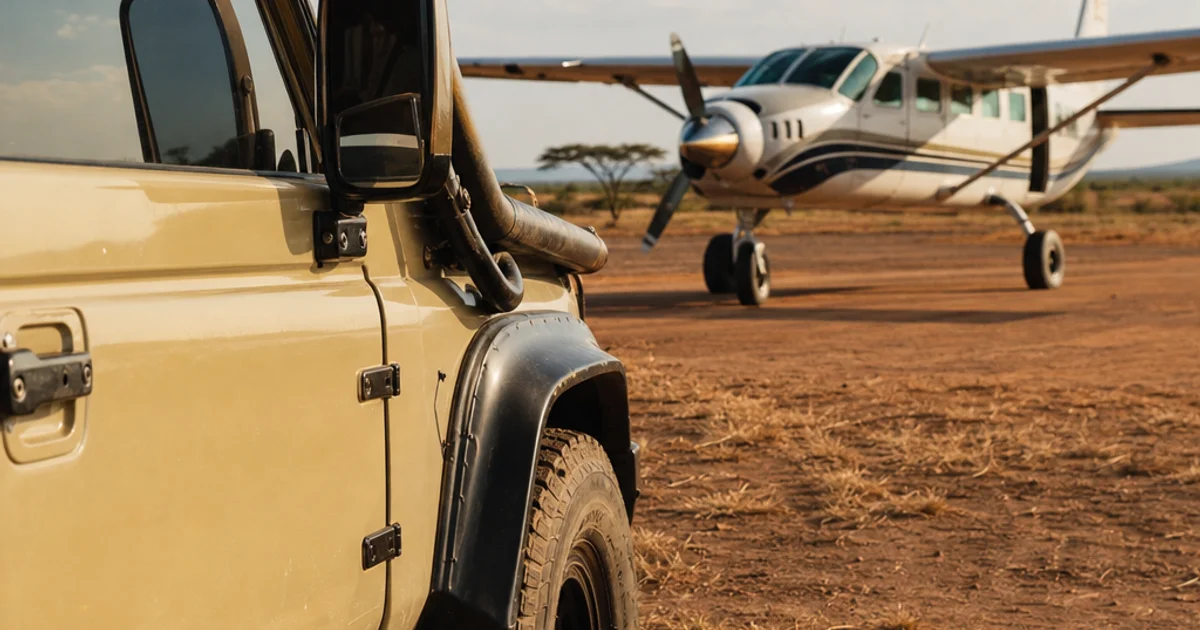
Group dynamics shape this decision more than people expect. Couples and solo travelers tend to lean toward flying because it’s efficient and doesn’t require compromise with a larger group’s pace. Families and groups of friends often find overland safaris more naturally suited to them, since the shared vehicle becomes a social space, meals happen together, and the whole group experiences the same landscape unfolding at once.
How Country and Itinerary Shape the Decision
The destination itself often makes this decision for you before personal preference even enters the conversation.
Kenya offers some of the richest fly-in options on the continent, with light aircraft connecting the Maasai Mara, Amboseli, Samburu, and the northern conservancies in a single seamless loop. This works beautifully for travelers who want to sample multiple ecosystems, savannah, elephant country, and semi-arid landscapes, without sacrificing days to road travel. That said, overland circuits within Kenya are equally rewarding, particularly if the Rift Valley scenery and rural life along the way matter to you as much as the wildlife itself. Comparing the two countries more broadly is worth doing before you commit, and Tanzania vs Kenya Safari: Which Country Should You Choose for Your First Safari? lays out those differences clearly.
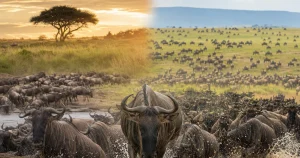
Tanzania rewards both approaches almost equally, depending on the season and where the Great Migration happens to be. A fly-in safari can jump between the Serengeti, Ngorongoro Crater, and Tarangire in days rather than the week or more an overland route would need. But driving the classic northern circuit by road lets you watch the landscape shift from crater highlands to endless plains, which many travelers say is unforgettable in its own right. If migration timing is your priority, the seasonal breakdown in How to Choose Between Serengeti and Maasai Mara for the Great Migration will help you decide which country and which travel style aligns with the herds’ movement that time of year.
Botswana is arguably the strongest case for flying safaris on the continent. The Okavango Delta’s camps sit deep within a seasonally flooded wilderness with few roads capable of reaching them reliably. Light aircraft aren’t just the faster option here, they’re often the only practical one, and the flight itself, tracing water channels and islands from above, is a highlight travelers remember as vividly as the game drives that follow.
Namibia flips the equation. Its dramatic desert landscapes, towering dunes at Sossusvlei, the eerie quiet of Damaraland, the wildlife-rich Etosha Pan, are meant to be experienced by road. Self-drive and guided overland routes let you absorb the sheer scale of the desert in a way flying over it never could. Namibia is where overland safaris feel less like a compromise and more like the obvious, correct choice.
Whichever countries make your final itinerary, matching transport style to the landscape itself, rather than picking one method for the entire trip out of habit, tends to produce the most memorable results. Many travelers actually combine both: flying into a remote Botswana camp for a few nights of total immersion, then joining an overland circuit through Namibia’s landscapes on the same trip. It’s worth discussing this hybrid approach with your safari planner early, since it affects everything from luggage packing to daily scheduling, and details like tipping etiquette across multiple guides are covered well in Tipping on Safari: Complete Guide to Gratuity Amounts for Guides, Trackers, and Lodge Staff.
There isn’t a wrong answer here, only a better fit. If your dream is watching a delta unfold beneath a small plane’s wing before touching down minutes from your tent, fly. If your dream is feeling the miles pass, watching Africa change color and texture from a dusty window seat, drive. Most travelers, once they’ve done one, start dreaming about trying the other on their next trip. That’s not indecision. That’s just what happens when a continent this size gets under your skin.
Frequently Asked Questions
What’s the main difference between a flying safari and an overland safari?
A flying safari moves guests between camps by small light aircraft, landing on unpaved bush airstrips close to the lodges, which cuts transit time dramatically. An overland safari moves guests by 4×4 vehicle or safari truck along roads and tracks, turning the journey itself into part of the experience. Both reach the same destinations, but flying prioritizes efficiency and access, while overland prioritizes immersion in the landscapes between stops.
How much luggage can I bring on a flying safari?
Flying safaris typically limit luggage to around 15kg per person, and it must be packed in a soft-sided duffel bag rather than a hard-shell suitcase. This restriction exists because rigid luggage doesn’t fit the small storage holds of light aircraft used for these charters. If you’re planning to bring serious camera equipment, it’s worth checking a detailed packing list before booking a fly-in itinerary.
What kind of planes are used for flying safaris?
Flying safaris typically use small single-engine bush planes such as Cessna Caravans or Cessna 206s, seating anywhere from six to fourteen passengers. These operate as light aircraft charters or shared scheduled services rather than traditional commercial flights, often making multiple stops at different bush airstrips to drop and collect passengers along the route.
Is a flying safari or an overland safari better for families or large groups?
Families and larger groups often find overland safaris more social and better value per day, since a shared vehicle keeps everyone together and costs are spread across more people. Solo travelers and couples tend to gravitate toward flying safaris instead, since the efficiency of quick air transfers suits smaller parties better. The right choice ultimately depends on group size, budget, and how much time everyone has for the trip.
Can I reach places like the Okavango Delta without flying?
Some of Africa’s best camps, particularly in Botswana’s Okavango Delta and Kenya’s remote conservancies, are only realistically reachable by air. These locations sit far from major road networks, so light aircraft transfers are the practical way in rather than just a scenic option. Travelers set on visiting these specific areas should generally plan around a flying safari itinerary.
What happens when you land on a bush airstrip during a flying safari?
There’s no terminal, baggage carousel, or customs queue when you land on a bush airstrip. Typically it’s just a dirt or gravel strip with a small thatched shelter, and a guide from your camp is already waiting beside an open-sided safari vehicle. Often the drive from the airstrip to the lodge cuts straight through wildlife territory, so it can double as your first game drive of the trip.
Why would someone choose an overland safari over flying?
An overland safari lets travelers watch the land change color, texture, and rhythm mile by mile, offering a real sense of scale that flying over it doesn’t provide. Road transfers also pass through villages, farmland, and open bush, creating chances for spontaneous sightings and cultural glimpses along the way. For travelers who value immersion in the in-between spaces as much as the wildlife itself, overland travel often delivers a richer overall journey.