There’s a moment that happens on almost every first safari — usually around sunset on day two — when a traveller leans over to their guide and asks, “Wait, are we still in the park?” The answer, more often than not, unlocks a piece of information nobody explained before they booked: the land itself has rules, owners, and a personality, and that personality shapes everything from how close you’ll get to a lion to whether you’ll see another vehicle all day.
National parks, private reserves, conservancies, and concessions aren’t just different names on a map. They’re different philosophies of how wild land should be used, protected, and shared — and each one delivers a completely different safari. Understanding these models before you book isn’t a technicality. It’s the difference between guessing what your trip will feel like and knowing exactly what you’re walking into.
- National parks are government-owned and open to the public, with fixed gate hours and restrictions on off-road driving and night drives.
- Private conservancies and concessions offer off-road access, walking safaris, night drives, and far fewer vehicles per sighting.
- Conservancies are typically community- or trust-owned land leased to safari operators, funnelling income directly to local landowners.
- Concessions are defined traffic-controlled areas — often inside or bordering parks — leased exclusively to one or a handful of camps.
- Your choice of land model doesn’t just affect your experience — it directly funds conservation and community livelihoods across Kenya, Tanzania, Botswana, and South Africa.
What Really Sets a National Park, a Private Reserve, and a Conservancy Apart
Every African safari happens on one of four broad land types, and each carries its own rules, ownership structure, and rhythm. Here’s the clearest breakdown you’ll find:
- National Park / National Reserve: Government-owned land, open to the public, managed by a national wildlife authority (think Kenya Wildlife Service or Tanzania National Parks). Anyone with a valid entry permit can drive in — tour operators, self-drivers, campers, all sharing the same roads and the same sightings.
- Private Game Reserve: Privately owned land, often fenced off from surrounding areas, operated independently or as a collective of adjoining properties. South Africa’s Sabi Sands, bordering Kruger National Park, is the textbook example — a mosaic of privately owned traversing rights where a handful of lodges share exclusive access to enormous, unfenced wilderness.
- Community/Private Conservancy: Land owned by local communities — frequently Maasai landowners in Kenya — who lease it to safari operators under long-term contracts. The Mara Naboisho Conservancy, bordering the Masai Mara National Reserve, is a leading example. Only a limited number of beds are permitted per acreage, keeping vehicle density deliberately low.
- Concession: A defined, often traffic-controlled block of land leased — usually from a government or trust — to one or a small number of operators for exclusive or semi-exclusive use. The Greater Kruger private concessions, the Okavango Delta’s private concessions, and Botswana’s Linyanti region all operate this way, granting camps sole traversing rights over vast, wild tracts.
Here’s the emotional truth hiding inside these definitions: it’s the same Africa, but wildly different experiences. A lion sighting in a busy national park section during peak season might mean sharing the moment with a dozen vehicles. That same lion, wandering through a private concession in the Okavango Delta, might be entirely yours.
Freedom in the Wild — Comparing What You Can Actually Do
The land model you choose doesn’t just change the scenery — it changes what you’re legally and physically allowed to do inside it. This is where “watching Africa” and “living inside it” start to diverge sharply.
| Activity | National Parks | Conservancies & Concessions |
|---|---|---|
| Gate/drive hours | Fixed, typically 06:30–18:30 | Flexible, often including pre-dawn starts |
| Night drives | Generally prohibited | Permitted — spotlighting nocturnal predators is often a highlight |
| Off-road driving | Prohibited in most parks (protects vegetation and reduces disturbance) | Permitted, allowing guides to follow animals off the marked tracks |
| Walking safaris | Restricted or unavailable in most parks | A core feature in many conservancies and concessions |
| Guiding style | Self-drive possible; public campsites available | Fully guided, exclusive-use vehicles tied to your camp |
| Vehicle traffic | Shared with all permit holders | Limited to guests of the specific camps holding traversing rights |
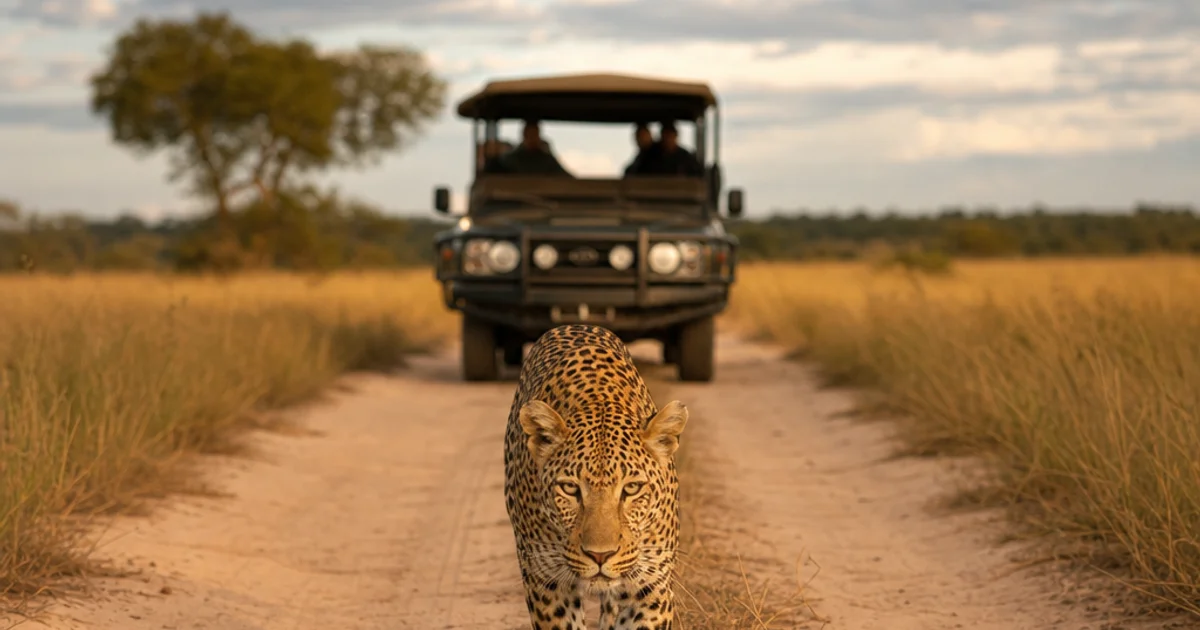
That inability to leave the road inside most national parks exists for good reason — it protects fragile ecosystems from erosion and disturbance at scale. But it also means that when a leopard disappears into thick riverine bush fifteen metres off the track, you watch it go. In a conservancy or concession, your guide simply follows.
Walking safaris deserve their own mention here. There’s no substitute for standing on the ground where an elephant has just passed, reading tracks in the sand, hearing the bush at footstep level rather than through a windscreen. That intimacy is largely reserved for conservancies and concessions, where guiding standards are higher and visitor numbers are controlled precisely to make this kind of close, quiet immersion possible.
If you’re still deciding whether a fully guided private experience or a more independent, shared-access trip suits you better, our guide on private vs. group safaris breaks down exactly how that choice affects both your budget and your daily freedom in the bush.
Wildlife Encounters — Crowds, Quiet, and the Thrill of the Sighting
This is where land model stops being a technicality and starts being the entire emotional core of your trip. Here’s what the numbers and the reality on the ground actually look like:
- Most conservancies cap vehicle numbers at a sighting — typically two to three vehicles maximum, sometimes fewer.
- Popular zones inside busy national parks can see ten, fifteen, even twenty vehicles converge on a single leopard or cheetah sighting during peak season.
- Conservancy bed density is contractually limited — often one bed per 350+ acres or stricter — which caps the total number of guests in the entire ecosystem at any given time.
- Concessions in the Okavango Delta and Linyanti frequently operate with sole traversing rights, meaning the camp you’re staying at may be the only vehicle for kilometres in any direction.
- A private moment with a leopard draped over a marula branch feels entirely different from that same leopard viewed through a line of a dozen roofs and long lenses.
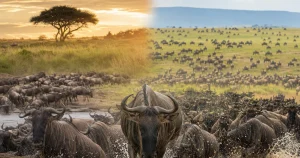
None of this means national parks lack magic — the Serengeti’s plains during migration season or the Masai Mara’s river crossings are among the most extraordinary wildlife spectacles on Earth, crowds and all. But it does mean that if solitude and intimacy matter to you as much as the sighting itself, conservancies and concessions deliver something parks simply cannot replicate at scale.
And here’s the reassurance many first-time planners need: choosing a conservancy doesn’t mean sacrificing the big-ticket wildlife. Conservancies bordering the Masai Mara, like Naboisho, Olare Motorogi, and Mara North, sit directly adjacent to the reserve — many guests split their stay or take game drives into the reserve itself for Mara River crossings, then retreat to the quiet exclusivity of the conservancy for everything else. You get both the spectacle and the solitude, just on your terms.
If migration timing and river crossings are central to your planning, our Serengeti vs. Maasai Mara migration guide and our month-by-month wildlife and weather guide will help you align the land model with the calendar.
Conservation and Community — Why These Models Matter Beyond the Safari
Every safari booking is, whether travellers realise it or not, a small act of land-use policy. Where you choose to stay determines who benefits from your visit and how that wilderness is protected for the next generation.
- Conservation levies: Most conservancies and concessions charge a nightly conservation fee, separate from accommodation, that funds anti-poaching patrols, ecological monitoring, and habitat management directly within that specific piece of land.
- Community income: In Kenya’s Maasai Mara conservancies, Maasai landowners receive lease payments regardless of occupancy, plus employment as guides, trackers, and camp staff — creating a direct financial incentive to keep the land wild rather than converting it to agriculture or settlement.
- Wildlife corridors: Many conservancies share unfenced boundaries with national parks and reserves, effectively expanding the total protected ecosystem. Wildlife moves freely between the Masai Mara Reserve and its surrounding conservancies, or between Kruger National Park and its private concessions, without ever crossing a fence line.
- Shared conservation infrastructure: In the Greater Kruger system, concession revenue contributes to the broader conservation area’s anti-poaching operations and research programmes, benefiting the ecosystem far beyond the boundaries of any single camp’s lease.
- Population control through capacity limits: Because conservancies contractually restrict the number of beds per acre, they prevent overdevelopment — the same mechanism that limits vehicle crowding also limits habitat pressure over the long term.
Choosing where to stay, then, is never just a lifestyle decision. It’s a vote for a particular conservation model — one where community landowners have a direct financial stake in keeping wildlife alive and land intact. That’s the quiet, powerful mechanism behind Africa’s most successful conservation stories over the past two decades.
The All-Inclusive Safari Rhythm — What a Day in a Conservancy or Concession Feels Like
Step inside a private conservancy or concession and the entire rhythm of the day changes. Gone is the ticking clock of gate hours; in its place is a schedule built entirely around animal behaviour, light, and your own curiosity.
Mornings begin before sunrise — coffee delivered to your tent, the crackle of a two-way radio as your guide checks overnight sightings from trackers already out at first light. You climb into an open vehicle knowing you can go wherever the wildlife takes you: off-road, into the treeline, along a dry riverbed where a pride denned the night before. There’s no rush to beat a closing gate; the concession is yours until you choose to head back.
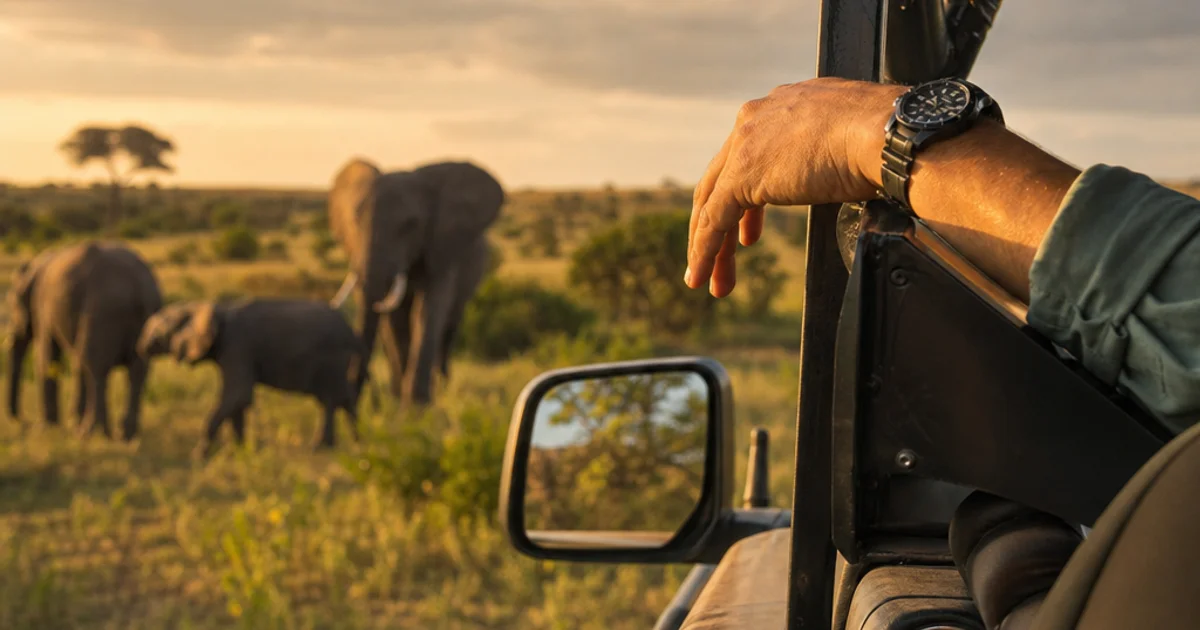
Midday brings the shift most first-timers don’t expect: a proper break. Brunch under a shade canopy, a nap through the heat, perhaps a dip in a plunge pool while the bush goes quiet around you. Because everything — accommodation, meals, drinks, guided drives, and often walking safaris — is bundled into a single all-inclusive stay, there’s no logistics to manage. No separate park fees to calculate at a gate, no navigating which roads are permitted. Your guide handles the entire day’s structure.
Afternoon game drives stretch into evening in a way national park visitors never experience. As the light turns gold, you’re not racing back to beat a 18:30 curfew — you’re easing into a night drive, spotlight catching the green-gold flash of a genet’s eyes or the low profile of a hunting leopard. Dinner might happen under stars around a fire, guide and tracker trading stories from the day, before you retire to a tent where the sounds of the wild — not traffic, not other vehicles — are the last thing you hear.
This bundled, unhurried rhythm is precisely why conservancies and concessions command such loyalty among repeat safari travellers. It removes friction and replaces it with immersion. For a full sense of how this experience compares financially to national park-based itineraries, see our detailed breakdowns in how much an African safari actually costs and our country-by-country price breakdown.
Deciding how many nights to spend in each type of setting also shapes your itinerary significantly — our guide on ideal trip duration by destination walks through how to balance park time with conservancy or concession time depending on your country and travel window.
Choosing the Right Land Model for Your Safari
There’s no universally “better” choice between a national park, a private reserve, a conservancy, and a concession — only the right choice for the experience you’re chasing. Want to witness the sheer scale of the Great Migration crossing the Mara River, shoulder to shoulder with fellow travellers who gasped at the same moment you did? A national reserve delivers that spectacle unmatched. Want to sit in silence as a leopard stalks an impala twenty metres away, with no other vehicle in sight, followed by a walking safari at dawn and a night drive under a blanket of stars? That’s the domain of the conservancy and the concession.
Many of the richest itineraries in Kenya, Tanzania, Botswana, and South Africa blend both — a few nights inside the drama of a national park or reserve, followed by the intimacy of a private conservancy or concession. Understanding this distinction before you book isn’t just useful trivia; it’s the single piece of knowledge most likely to determine whether your safari matches the picture in your head.
For deeper country-specific planning, explore our comparisons on Tanzania vs. Kenya for your first safari, review our 45-question safari planning FAQ, and check our wildlife glossary to get familiar with the terminology you’ll hear from your guide on day one. And once your land model is chosen, make sure your kit matches your days in the bush with our complete packing checklist.
Africa’s wild spaces are not one thing — they are dozens of overlapping systems of ownership, protection, and access, each offering its own version of wonder. Know which one you’re stepping into, and the anticipation of what’s waiting on the other side of that gate becomes something entirely different: not a guess, but a promise.
Frequently Asked Questions
What’s the main difference between a national park and a private conservancy on safari?
National parks are government-owned land open to the public, meaning anyone with a valid permit can drive in and share the same roads and sightings with other visitors. Private conservancies, by contrast, are usually community- or trust-owned land leased exclusively to a small number of safari operators, which keeps vehicle numbers low and access limited to guests staying at those specific camps.
Can I go on a night drive or off-road during a safari?
It depends entirely on where you are. National parks generally prohibit night drives and off-road driving to protect vegetation and reduce disturbance, while conservancies and concessions permit both, allowing guides to follow animals off marked tracks and spotlight nocturnal predators after dark.
What exactly is a concession, and how is it different from a conservancy?
A concession is a defined, traffic-controlled block of land leased — usually from a government or trust — to one or a handful of operators for exclusive or semi-exclusive use, as seen in Botswana’s Linyanti region or the Okavango Delta. A conservancy is similar in spirit but specifically refers to land owned by local communities, such as Maasai landowners in Kenya, who lease it directly to safari operators under long-term contracts.
Will I see fewer other vehicles if I book a stay in a conservancy instead of a national park?
Yes, this is one of the biggest practical differences between the two models. Conservancies like Mara Naboisho cap the number of beds permitted per acreage, deliberately limiting vehicle density, whereas national parks are open to all permit holders, so a popular sighting during peak season can attract a dozen or more vehicles.
Are walking safaris available everywhere in Africa?
No, walking safaris are restricted or unavailable in most national parks due to safety and land-management rules. They are, however, a core feature in many private conservancies and concessions, where exclusive-use arrangements and lower visitor density make guided walks a regular and popular activity.
Does choosing a conservancy or concession actually help conservation and local communities?
Yes, this is a central point of these land models. Conservancies funnel lease income directly to local landowners, such as Maasai communities bordering the Masai Mara, while concessions support conservation funding and community livelihoods across countries like Kenya, Tanzania, Botswana, and South Africa through operator lease agreements.
Is Sabi Sands a national park or a private reserve?
Sabi Sands is a private game reserve, not a national park. It borders Kruger National Park in South Africa and operates as a mosaic of privately owned traversing rights, where a handful of lodges share exclusive access to a large, unfenced wilderness area.