
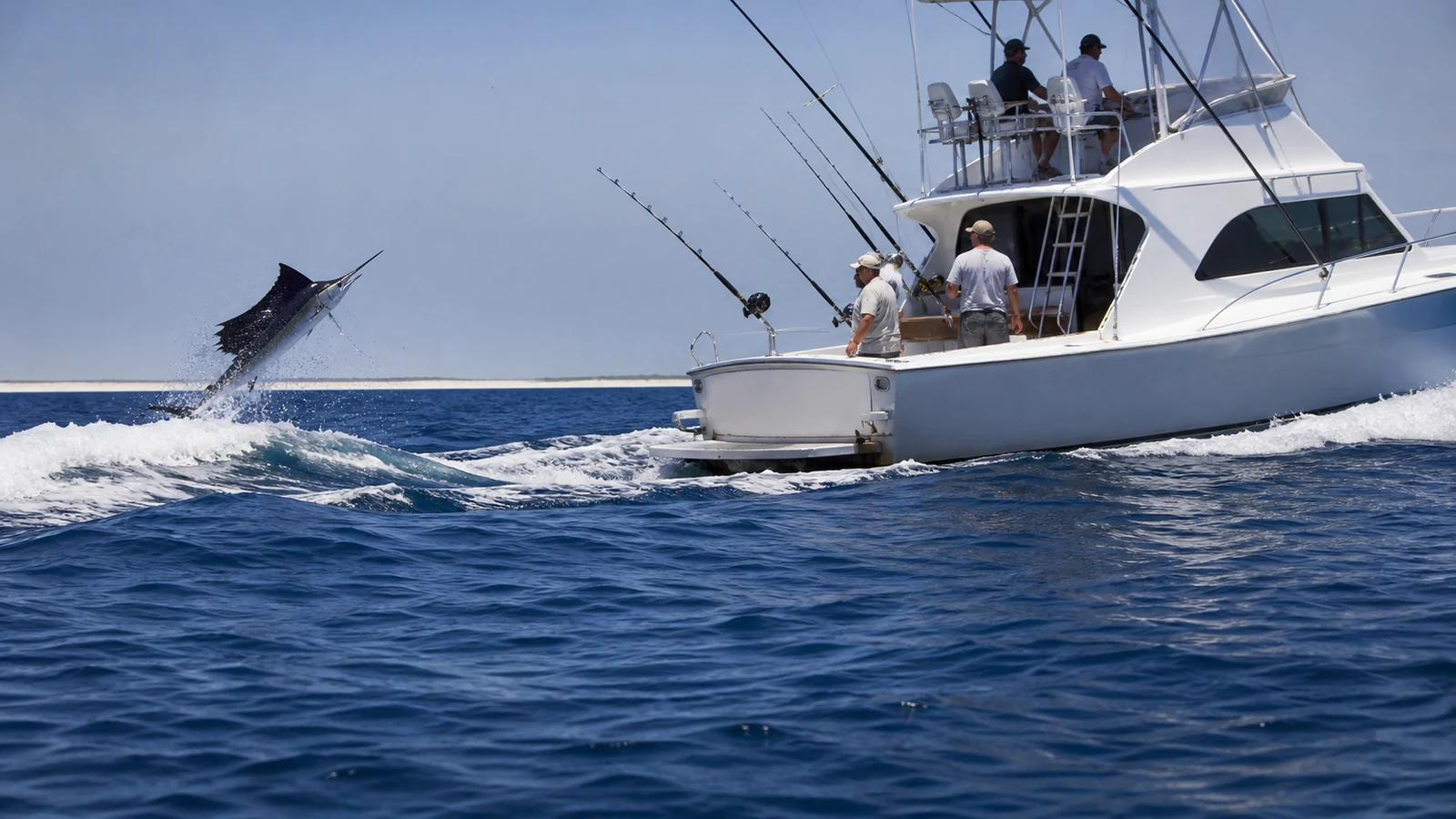
TL;DR – The waters off Mozambique’s Bazaruto Archipelago are among the most productive big game fishing grounds in the world. The channel drop-off delivers marlin, sailfish, dorado, and wahoo in concentrations that serious anglers travel from every continent to reach. This is what the Jurassic Park of fishing looks like – and why catch and release is the only way to fish it responsibly.
- The channel drop-off is 20-40 minutes from the lodge – you’re in productive water fast
- Black marlin averaging 150-300 kilograms are the headline species; sailfish fill every other day
- October through January is peak marlin season; September through March for sailfish
- Catch and release is mandatory for billfish on all reputable operators – it’s why the fishing is as good as it is
The Jurassic Park of Fishing
There are good fishing destinations in the world and then there is the Bazaruto Channel.
The Bazaruto Archipelago sits off the coast of southern Mozambique, directly above one of the most dramatic underwater topographies in the Indian Ocean. The channel between the islands and the mainland drops from shallow sand flats to depths exceeding 1,000 meters within a few kilometers. That drop-off – the point where the warm, shallow Mozambique Channel water meets the deep cold water rising from the abyss – creates a feeding zone that concentrates baitfish, and consequently concentrates the predators that follow them.
Big game fishing Mozambique at Bazaruto is not the kind of fishing where you wait. The reel screams within the first hour on most days. Sometimes within the first 20 minutes. Marlin, sailfish, dorado, wahoo, yellowfin tuna – species that anglers in other parts of the world spend entire trips hoping to encounter once are here in numbers that reframe what a productive day on the water means.
Serious anglers who have fished Cabo San Lucas, the Azores, and the Great Barrier Reef put Bazaruto in the same conversation. Some put it above.
Marlin Fishing Bazaruto: The Channel Drop-Off
Marlin fishing Bazaruto is built entirely around the channel drop-off – the underwater cliff that runs parallel to the archipelago and generates the upwelling that makes these waters so productive.
Black marlin and blue marlin are both present in the Bazaruto Channel. Black marlin are the headline species – fish that reach over 500 kilograms in these waters, with average catches running 150-300 kilograms. The world record black marlin of 707 kilograms was caught off the coast of Peru, but Bazaruto produces fish in that category consistently enough that it’s on every serious marlin angler’s destination list.
The fishing method is predominantly trolling – running lures and rigged baits behind the boat at speed across the drop-off. The captains who know Bazaruto read the water temperature, the color changes at the thermocline, and the baitfish activity to find the productive sections of the channel on any given day. On a good day, the same stretch of water will raise multiple marlin in a single morning.
Sailfish run smaller than marlin but fight differently – acrobatic, fast, multiple jumps – and are present in the channel year-round. A day that doesn’t produce marlin almost always produces sailfish, which means a blank day on Bazaruto is genuinely rare.
The peak season for marlin is October through January, when warm water pushes south and the fish move with it. Sailfish are productive from September through March. Dorado and wahoo are year-round species that fill the gaps between the bigger fish.
Deep Sea Fishing Africa: How Mozambique Compares
Deep sea fishing Africa spans a wide range of destinations – South Africa’s Wild Coast and KwaZulu-Natal coast, the waters off Pemba and Zanzibar in Tanzania, Kenya’s Malindi and Watamu, and the various Mozambique channel options from Maputo north to the Quirimbas.
Bazaruto sits at the top of that list for big game specifically. The combination of factors that make it exceptional:
The drop-off proximity – in most deep sea fishing destinations, the productive water is a significant run from the marina. At Bazaruto, the channel drop-off is 20-40 minutes from the lodge jetty. You’re fishing productive water within the hour, which matters enormously when you’re paying for a full day charter.
Water clarity and temperature – the Mozambique Channel’s warm, clear water keeps fish active and makes sight fishing for sailfish – casting to tailing fish spotted on the surface – a viable technique rather than a rare event.
The bycatch – even days that don’t produce the target species deliver something. Dorado are some of the most spectacular light tackle fish in the ocean. Wahoo run fast enough to feel like a different sport. Giant trevally and barracuda in the inshore waters are available for anglers who want a change of pace from the deep water.
The absence of pressure – Bazaruto is not Cabo San Lucas. The fishing effort in this channel is a fraction of what the most famous destinations in the world receive, which means the fish are less pressured and the behavior is less educated. A lure presentation that would be refused in heavily fished water gets eaten here.
Fishing Charters Mozambique: How to Book the Right Boat
Fishing charters Mozambique at Bazaruto operate primarily out of Vilanculos and from the lodges on Benguerra and Santa Carolina islands. The charter market has professionalized significantly over the past decade – purpose-built game fishing boats with fighting chairs, outriggers, and experienced captains who know the channel intimately have replaced the improvised arrangements of an earlier era.
What to look for when booking:
The captain’s track record – ask for catch records. Reputable operators keep detailed logs and will share them. A captain who knows the channel has years of data on where the fish are by month and by water temperature, and that knowledge is the difference between a productive day and a slow one.
The boat specification – a proper game fishing boat for marlin needs a fighting chair, a gin pole for weighing, outriggers for spread management, and a live bait tank for sailfish work. Boats without these are set up for inshore fishing, not the channel.
Crew experience – the mate who manages the lure spread, handles the gaffs, and coaches first-time anglers through a marlin fight is as important as the captain. A good mate on a marlin boat turns a chaotic first encounter into a successful one.
Most lodges at Bazaruto – Azura, Kisawa, Santorini – can arrange charter fishing through dedicated operators. Standalone charters without a lodge stay are also available out of Vilanculos for day trips.
Catch and Release: The Only Way to Fish Mozambique
The fish populations of the Bazaruto Channel are what they are because of decades of relatively low fishing pressure and a shift in the local charter industry toward catch and release.
Mozambique’s marlin and sailfish are not infinite. The same drop-off that produces extraordinary fishing today will produce depleted fishing in a generation if the harvest rate increases. The operators who have been working this channel longest understand this better than anyone – their livelihoods depend on the fish being there next year and the year after.
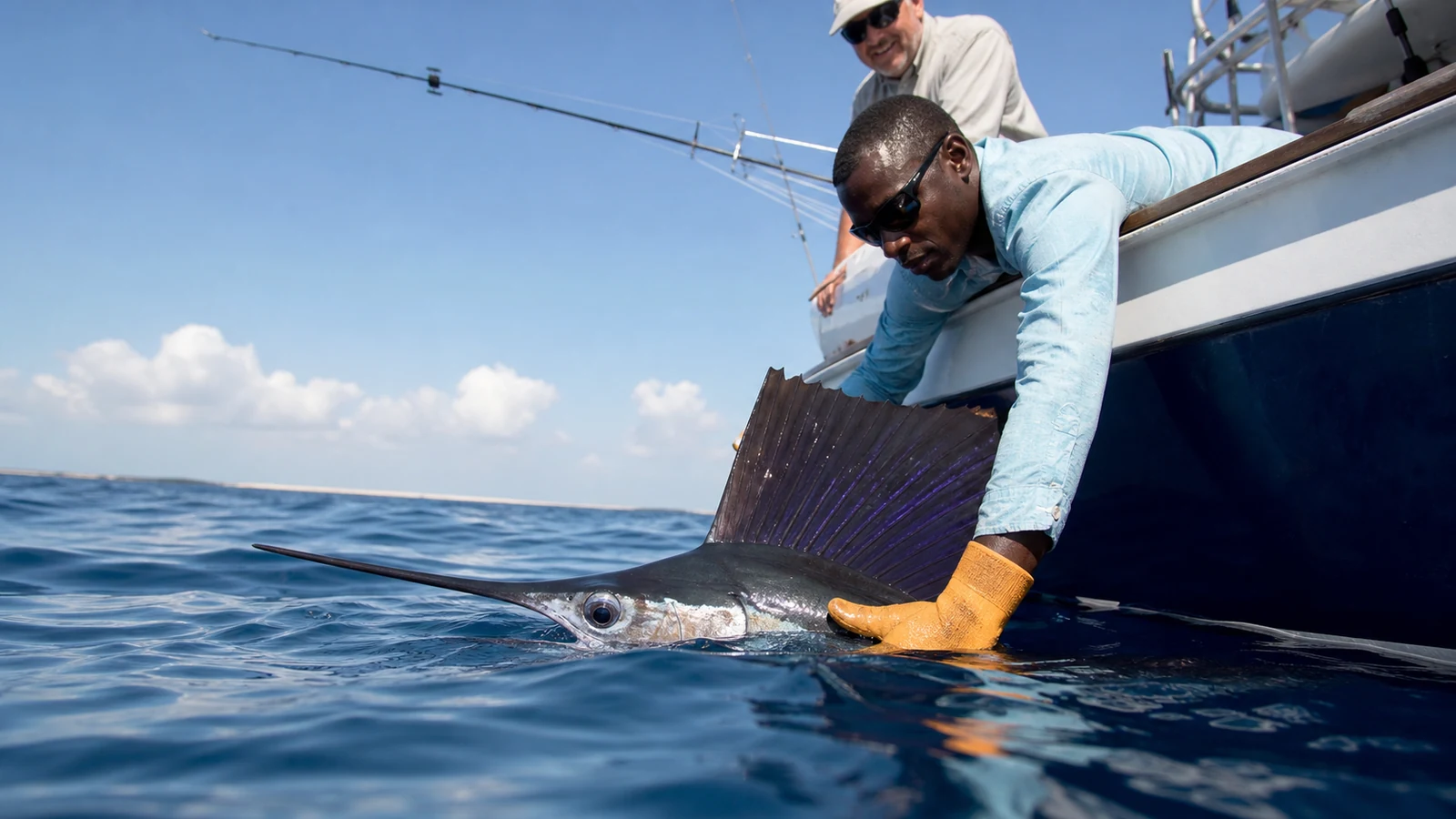
All reputable Bazaruto fishing operators practice mandatory catch and release for marlin and sailfish. Fish are fought to the boat, measured, photographed, and released alive. The angler gets the catch record, the photograph, and the experience. The fish gets to fight another boat next season.
This policy is not a restriction on the fishing experience – it’s the reason the fishing experience is as good as it is. The Bazaruto Channel’s fish populations are healthy partly because the people fishing it have committed to keeping them that way.
Booking the Right Boat: Where Only One Safaris Comes In
The Bazaruto Channel is one of those fishing destinations that arrives in the conversation among serious anglers and stays there. The drop-off, the fish density, the water quality, and the catch and release ethic that keeps it productive – all of it adds up to a fishery that rewards the angler who finds it and keeps rewarding the ones who come back.
If you want a Mozambique itinerary that combines island luxury with a proper fishing program – the right lodge, the right operator, and the timing matched to the species you’re after – we’ve built this combination many times.
Get in touch and let’s plan it.
Frequently Asked Questions: Deep Sea Fishing: Marlin & Sailfish
What fish can you catch in Mozambique’s Bazaruto Channel?
Black marlin, blue marlin, sailfish, dorado, wahoo, yellowfin tuna, giant trevally, and barracuda are all regularly caught in Bazaruto waters. Marlin and sailfish are the target species for most big game anglers. Dorado and wahoo provide exceptional light tackle action on days when the billfish aren’t cooperating.
What is the best time of year for big game fishing in Mozambique?
October through January is peak marlin season when warm water pushes the fish south. Sailfish are productive September through March. Dorado and wahoo are year-round. The shoulder months of September and February often produce the best combination of target species alongside smaller crowds and better accommodation availability.
Do I need fishing experience for a Mozambique deep sea charter?
No. The crews on reputable Bazaruto charters are experienced at coaching first-time anglers through every stage of a marlin or sailfish fight. The equipment does most of the work; the crew provides the guidance. Experienced anglers will appreciate the quality of the water and the bite rates. First-timers will be equally impressed and considerably more surprised.
Are fishing charters available as an add-on to a Mozambique island stay?
Yes, and this is the most common format. Azura Benguerra, Kisawa Sanctuary, and the other Bazaruto lodges all coordinate fishing charters for in-house guests. A standard island stay of four nights with one or two fishing days built in is the structure most anglers use – enough time on the water to give the marlin a genuine chance without the trip becoming purely fishing-focused.
{
“@context”: “https://schema.org”,
“@type”: “FAQPage”,
“mainEntity”: [
{
“@type”: “Question”,
“name”: “What fish can you catch in Mozambique’s Bazaruto Channel?”,
“acceptedAnswer”: {
“@type”: “Answer”,
“text”: “Black marlin, blue marlin, sailfish, dorado, wahoo, yellowfin tuna, giant trevally, and barracuda are all regularly caught in Bazaruto waters. Marlin and sailfish are the target species for most big game anglers. Dorado and wahoo provide exceptional light tackle action on days when the billfish aren’t cooperating.”
}
},
{
“@type”: “Question”,
“name”: “What is the best time of year for big game fishing in Mozambique?”,
“acceptedAnswer”: {
“@type”: “Answer”,
“text”: “October through January is peak marlin season when warm water pushes the fish south. Sailfish are productive September through March. Dorado and wahoo are year-round. The shoulder months of September and February often produce the best combination of target species alongside smaller crowds and better accommodation availability.”
}
},
{
“@type”: “Question”,
“name”: “Do I need fishing experience for a Mozambique deep sea charter?”,
“acceptedAnswer”: {
“@type”: “Answer”,
“text”: “No. The crews on reputable Bazaruto charters are experienced at coaching first-time anglers through every stage of a marlin or sailfish fight. The equipment does most of the work; the crew provides the guidance. Experienced anglers will appreciate the quality of the water and the bite rates. First-timers will be equally impressed and considerably more surprised.”
}
},
{
“@type”: “Question”,
“name”: “Are fishing charters available as an add-on to a Mozambique island stay?”,
“acceptedAnswer”: {
“@type”: “Answer”,
“text”: “Yes, and this is the most common format. Azura Benguerra, Kisawa Sanctuary, and the other Bazaruto lodges all coordinate fishing charters for in-house guests. A standard island stay of four nights with one or two fishing days built in is the structure most anglers use – enough time on the water to give the marlin a genuine chance without the trip becoming purely fishing-focused.”
}
}
]
}