TL;DR – The Maasai cultural visit is one of Kenya’s most requested experiences and one of its most frequently disappointing. The difference between a genuine encounter and a rehearsed performance comes down to who owns the experience, who benefits from it, and whether the interaction goes both ways. The authentic Maasai experience Kenya offers exists – it’s just not the one most camps arrange by default.
- Community ownership is the clearest indicator of a genuine cultural safari Kenya experience – Il Ngwesi, Ol Kinyei, and Naboisho are the standard
- Maasai village tour ethics reduce to three questions: who benefits, who controls the narrative, and does the interaction go both ways
- The authentic Maasai experience Kenya delivers at its best involves conversation, not performance – sitting in a boma discussing cattle rather than watching a rehearsed ceremony
- Community conservancies Kenya has developed across Laikipia and the Mara ecosystem represent the most sophisticated approach to cultural tourism in East Africa
The Human Zoo Problem, Again
We’ve talked about this with the Himba in Namibia. The same dynamic operates in Maasai country – and at a larger scale, because the Maasai are more famous, more photographed, and more commodified than almost any other community in Africa.
The standard Maasai village tour runs like this: a vehicle pulls up to a boma arranged for tourism, warriors perform the adumu jumping ceremony on cue, women sing while guests take photographs, someone demonstrates fire-starting, and the visit concludes at a craft market where the pressure to buy is the most genuine interaction of the afternoon. It takes forty-five minutes. Everyone smiles. Nobody has learned anything, and nobody has met anyone.
That version exists because demand created it. Travelers want a Maasai experience. Camps oblige. The community receives a fee. The transaction completes. What doesn’t complete is any actual cultural exchange – because actual cultural exchange requires time, curiosity, and the willingness to be present in someone else’s context rather than having their context perform for you.
We don’t book the forty-five minute version. We never have.
What an Authentic Maasai Experience Actually Involves
The authentic Maasai experience Kenya delivers at its best starts from a different premise: the community is the host, not the performer.
In practice, this means visits arranged through camps and conservancies that have genuine, long-standing relationships with specific Maasai communities – relationships built over years of shared land management, employment, and economic partnership rather than a tourism fee paid at the gate.
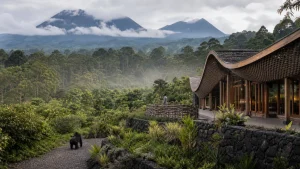
At Il Ngwesi Group Ranch in Laikipia – one of the best examples of community-owned safari anywhere in Kenya – the Maasai community doesn’t host visitors as a separate tourism activity. They own the lodge. They staff it. They manage the conservancy. When guests interact with Maasai guides, warriors, or community members at Il Ngwesi, they’re interacting with people whose relationship to the land and the tourism operation is substantive rather than contractual. The conversation that happens in that context is different in kind from the conversation at a designated cultural village.
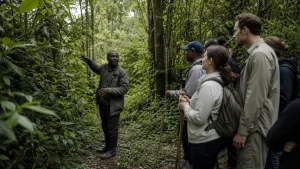
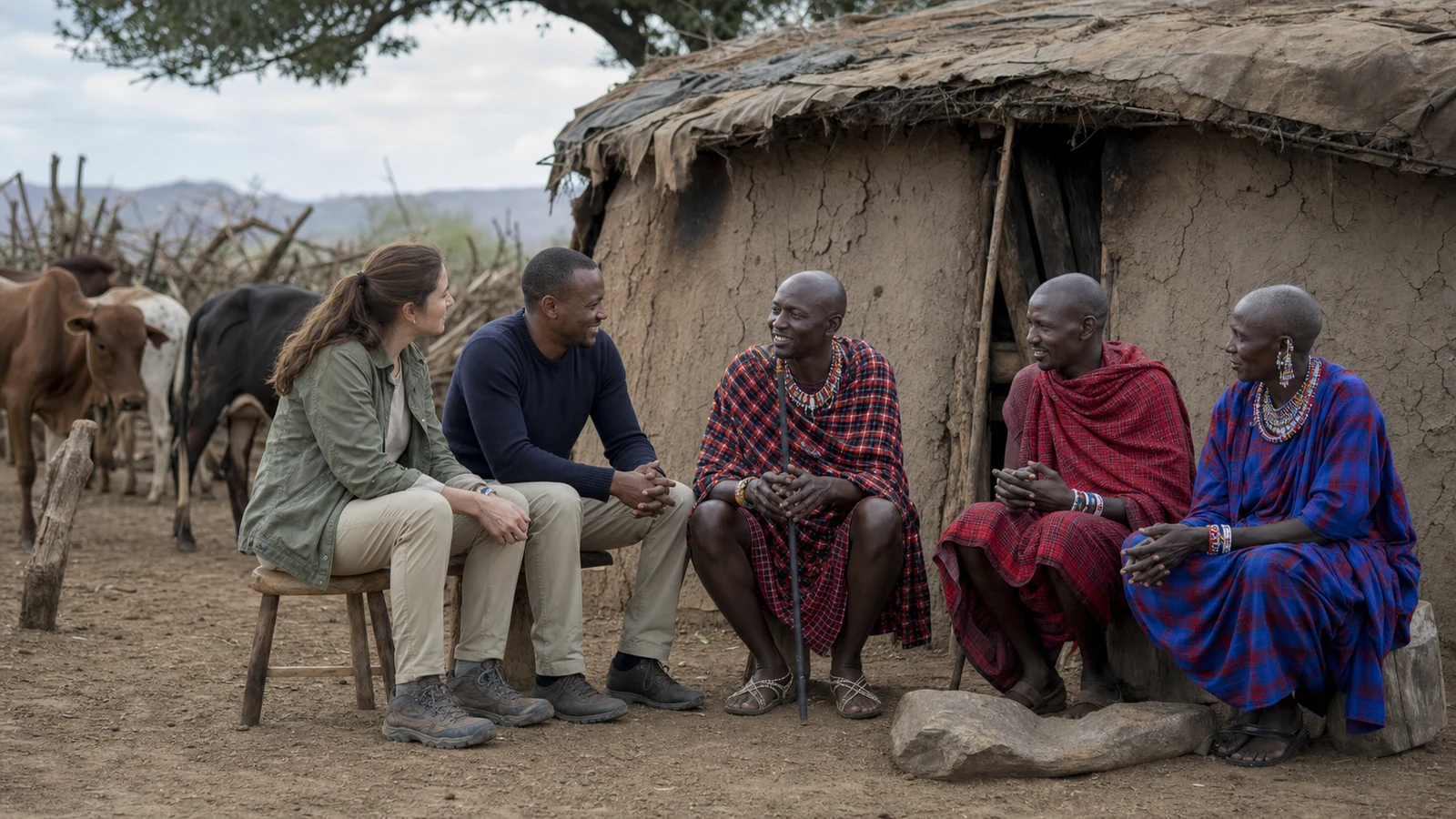
What that conversation looks like in practice: sitting in a boma at dusk while an elder explains the cattle hierarchy – which animals are prestige animals, which are for bride price, which represent accumulated family wealth across generations. Asking a junior warrior what the transition between age sets actually feels like rather than watching the ceremony that marks it. Talking about drought, about land pressure, about what the Maasai think of conservation boundaries that limit traditional grazing routes. These are not comfortable conversations. They’re real ones.
Maasai Village Tour Ethics: What to Look For
The ethics of Maasai village tour experiences reduce to three questions that are worth asking before any cultural visit is booked.
Who benefits economically? The community should be the primary beneficiary – not a tour operator who pays an access fee to a community elder while retaining most of the margin. Community-owned operations, where the economic relationship is transparent and the majority of revenue stays local, are the standard we apply. Il Ngwesi is community-owned. The Maasai-owned camps in the Mara conservancies are community-owned. These are the operations worth supporting.
Who controls the narrative? In a genuine cultural visit, the community decides what is shared, how it’s shared, and what remains private. Visits where the guide sets the agenda without community input – where the jumping ceremony happens because the itinerary says it happens rather than because the community chose to share it – are visits where the community’s role is decorative rather than substantive.
Does the interaction go both ways? The most reliable indicator of an authentic encounter is whether the community members are curious about the guests as well as accommodating them. When a Maasai elder asks where you’re from, what your family structure looks like, how your cattle system compares to his – that’s an interaction happening on equal terms. When the community members are waiting for the visit to end, that’s not.
Community Conservancies Kenya: The Model That Works
The community conservancies Kenya has developed across the Laikipia plateau and the Mara ecosystem represent the most thoughtful approach to the cultural safari question anywhere in East Africa.
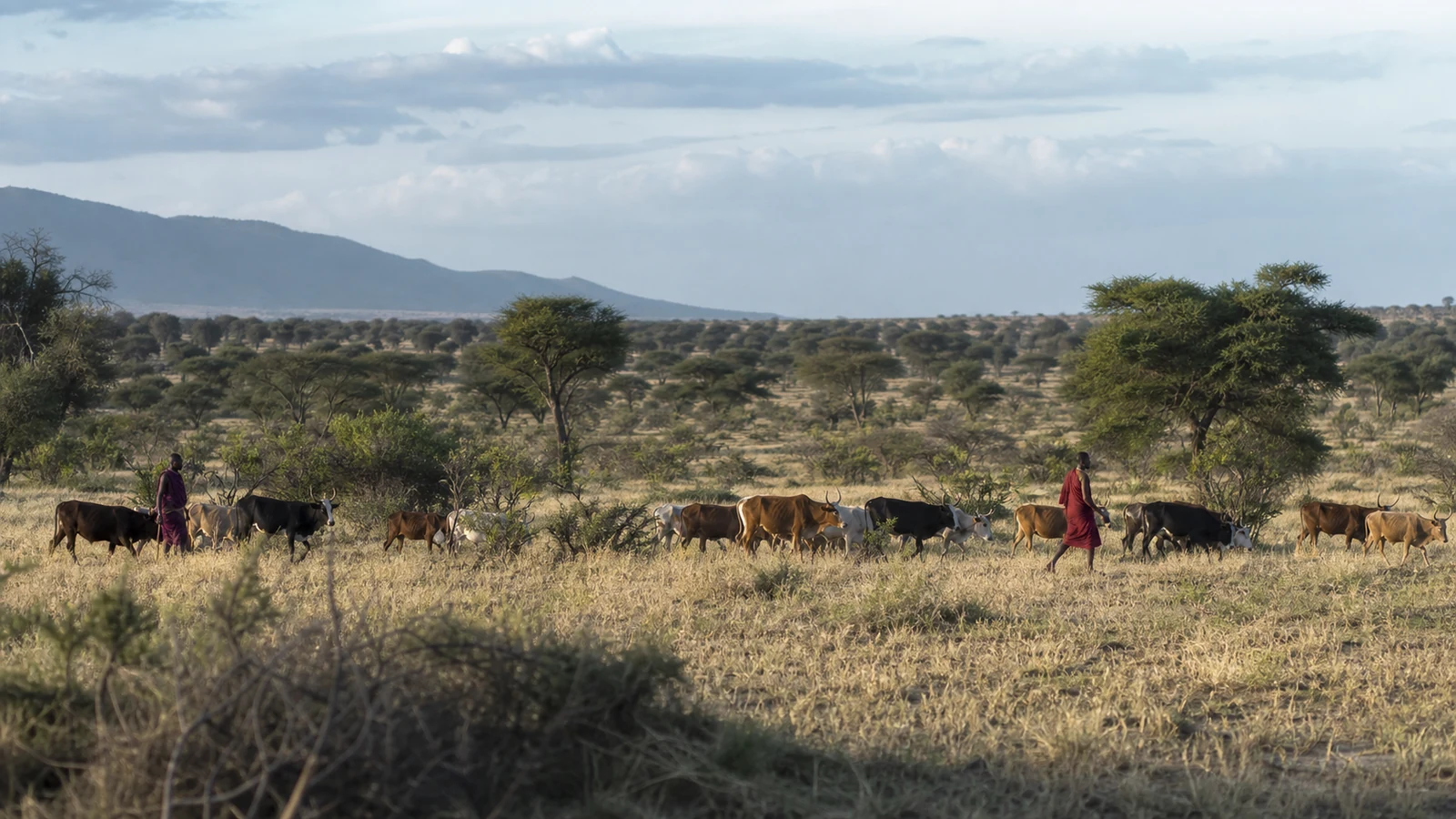
The model works like this: Maasai communities lease their land to conservation organizations or operate their own conservancies, retaining ownership and decision-making authority while generating tourism revenue that replaces or supplements the cattle economy. The wildlife that moves through the land is a resource rather than a competitor. The tourism that comes to see the wildlife creates income that funds schools, health clinics, and the scholarships that allow community members to choose their futures rather than have them determined by land pressure and drought cycles.
Il Ngwesi in Laikipia is the original and still the most complete example. The lodge was built in 1996 by the Il Ngwesi community with support from the Lewa Wildlife Conservancy – the first community-owned luxury safari lodge in Kenya. The revenue model is transparent: lodge income goes directly to the community trust, which allocates funds to education, water, and healthcare. Guests stay in a lodge owned by the people whose land they’re visiting. The cultural interaction happens on terms the community controls.
Ol Kinyei Conservancy in the Mara ecosystem runs a similar model – Maasai landowners lease to a conservation organization that manages the wildlife and the tourism, with the lease fees funding community development. The guides at Ol Kinyei are Maasai. The game scouts are Maasai. The benefit flows directly rather than through an intermediary operator.
Naboisho Conservancy, also in the Mara, is a coalition of Maasai landowners who pooled their land to create a wildlife area specifically because the conservation income exceeded what cattle alone could generate from the same acreage. The community made that calculation themselves. The tourism that followed came on the community’s terms.
Cultural Safari Kenya: What the Right Visit Produces
The cultural safari Kenya moment that guests describe most consistently – the one that stays after everything else has faded – isn’t the jumping ceremony. It’s a conversation.
A guest sitting with a Maasai elder who has managed this land for fifty years, asking about what has changed and what hasn’t. The elder’s answer about cattle – always cattle, always the relationship between land and herd and family wealth – and then, unexpectedly, his question about what the guest’s equivalent is. What do you accumulate? What do you pass to your children? What do you lose when you lose it?
That conversation doesn’t happen in forty-five minutes at a designated cultural village. It happens when the community owns the context, when the guide has a real relationship with the elder, and when the guest has been brought to a place where both parties have enough time and enough trust to stop performing and start talking.
We build cultural safari Kenya visits around that possibility. Not as a guarantee – conversation can’t be scheduled – but as the condition we create when we choose the right camps, the right guides, and the right communities to work with.
How Only One Safaris Chooses Which Maasai Visits to Recommend
The authentic Maasai experience isn’t harder to arrange than the performative version. It requires knowing which camps and conservancies have built their model around community ownership rather than community access – and being willing to prioritize that distinction when building the itinerary. The payoff is a cultural encounter that operates like a real human interaction rather than a ticketed attraction. In thirty years of building Kenya safaris, that payoff has never once disappointed a guest who was ready for it.
If Kenya is on the itinerary and a Maasai cultural visit is part of the plan, the version we arrange is the one built on community ownership and genuine exchange – not the forty-five minute version that ends at a craft market. We know Il Ngwesi well, we know the guides in the Mara conservancies who make the cultural visits real, and we know how to position this within a Kenya safari that earns it. Let’s build something that goes deeper than the surface.
Frequently Asked Questions: Cultural Respect: Authentic Maasai Visits
What makes an authentic Maasai experience different from a standard village tour?
Community ownership of the experience is the primary differentiator. Authentic visits happen at conservancies and lodges where the Maasai community is the principal beneficiary and controls what is shared and how. Standard village tours involve a transaction – an access fee paid to a designated cultural village where performance has replaced genuine exchange. The difference is apparent within minutes of arriving.
How do Maasai village tour ethics apply to photography?
The same principle that applies to Himba photography applies here: ask before photographing, respect refusals, and understand that payment for photographs converts a cultural encounter into a transaction that benefits neither party in any meaningful way. The guides at the community conservancies we recommend are explicit about photography protocols before the visit begins.
What are the best community conservancies Kenya offers for a genuine Maasai cultural encounter?
Il Ngwesi in Laikipia is our primary recommendation for the most complete community-owned experience. Ol Kinyei and Naboisho in the Mara ecosystem are the strongest options for guests combining a cultural visit with Mara wildlife. All three are built on genuine community ownership rather than access-fee tourism arrangements.
Can a cultural safari Kenya visit be combined with a standard wildlife safari?
Yes, and that’s how we structure every Kenya itinerary that includes a Maasai cultural component. A night or two at Il Ngwesi in Laikipia, with its combination of rhino conservancy access and community cultural visits, connects naturally to Samburu in the north or the Mara in the south. The cultural visit doesn’t replace the wildlife safari – it adds a human layer that the wildlife alone never provides.
{
“@context”: “https://schema.org”,
“@type”: “FAQPage”,
“mainEntity”: [
{
“@type”: “Question”,
“name”: “What makes an authentic Maasai experience different from a standard village tour?”,
“acceptedAnswer”: {
“@type”: “Answer”,
“text”: “Community ownership of the experience is the primary differentiator. Authentic visits happen at conservancies and lodges where the Maasai community is the principal beneficiary and controls what is shared and how. Standard village tours involve a transaction – an access fee paid to a designated cultural village where performance has replaced genuine exchange. The difference is apparent within minutes of arriving.”
}
},
{
“@type”: “Question”,
“name”: “How do Maasai village tour ethics apply to photography?”,
“acceptedAnswer”: {
“@type”: “Answer”,
“text”: “The same principle that applies to Himba photography applies here: ask before photographing, respect refusals, and understand that payment for photographs converts a cultural encounter into a transaction that benefits neither party in any meaningful way. The guides at the community conservancies we recommend are explicit about photography protocols before the visit begins.”
}
},
{
“@type”: “Question”,
“name”: “What are the best community conservancies Kenya offers for a genuine Maasai cultural encounter?”,
“acceptedAnswer”: {
“@type”: “Answer”,
“text”: “Il Ngwesi in Laikipia is our primary recommendation for the most complete community-owned experience. Ol Kinyei and Naboisho in the Mara ecosystem are the strongest options for guests combining a cultural visit with Mara wildlife. All three are built on genuine community ownership rather than access-fee tourism arrangements.”
}
},
{
“@type”: “Question”,
“name”: “Can a cultural safari Kenya visit be combined with a standard wildlife safari?”,
“acceptedAnswer”: {
“@type”: “Answer”,
“text”: “Yes, and that’s how we structure every Kenya itinerary that includes a Maasai cultural component. A night or two at Il Ngwesi in Laikipia, with its combination of rhino conservancy access and community cultural visits, connects naturally to Samburu in the north or the Mara in the south. The cultural visit doesn’t replace the wildlife safari – it adds a human layer that the wildlife alone never provides.”
}
}
]
}