TL;DR – Botswana’s safari camps are connected by small light aircraft with strict luggage limits – typically 15kg in a soft-sided bag, no hard cases. For most travelers, this is the most stressful logistical detail of the entire trip. It doesn’t need to be. The safari packing list Botswana requires is shorter than you think, the camps handle laundry daily, and we’ve refined this list across hundreds of trips.
- The light aircraft luggage allowance is 15kg soft bag – understanding why makes the limit easier to accept and easier to work with
- Complimentary same-day laundry at virtually every Botswana camp means packing three to four days of clothing for any length trip
- The Mack Air luggage limit is enforced – pack to it from the start rather than hoping for flexibility at the airstrip
- Camera equipment requires specific planning within the 15kg total; one body, one zoom lens, and a carry-on camera bag covers most situations
The Duffel Bag Problem
It happens on almost every Botswana trip we plan. The itinerary is built, the camps are booked, the flights are confirmed – and then, somewhere between receiving the pre-departure information and standing at the airport check-in counter, the luggage question produces a level of anxiety disproportionate to its actual complexity.
“Fifteen kilograms? For ten days? In a soft bag?”
Yes. And it’s genuinely fine. We promise.
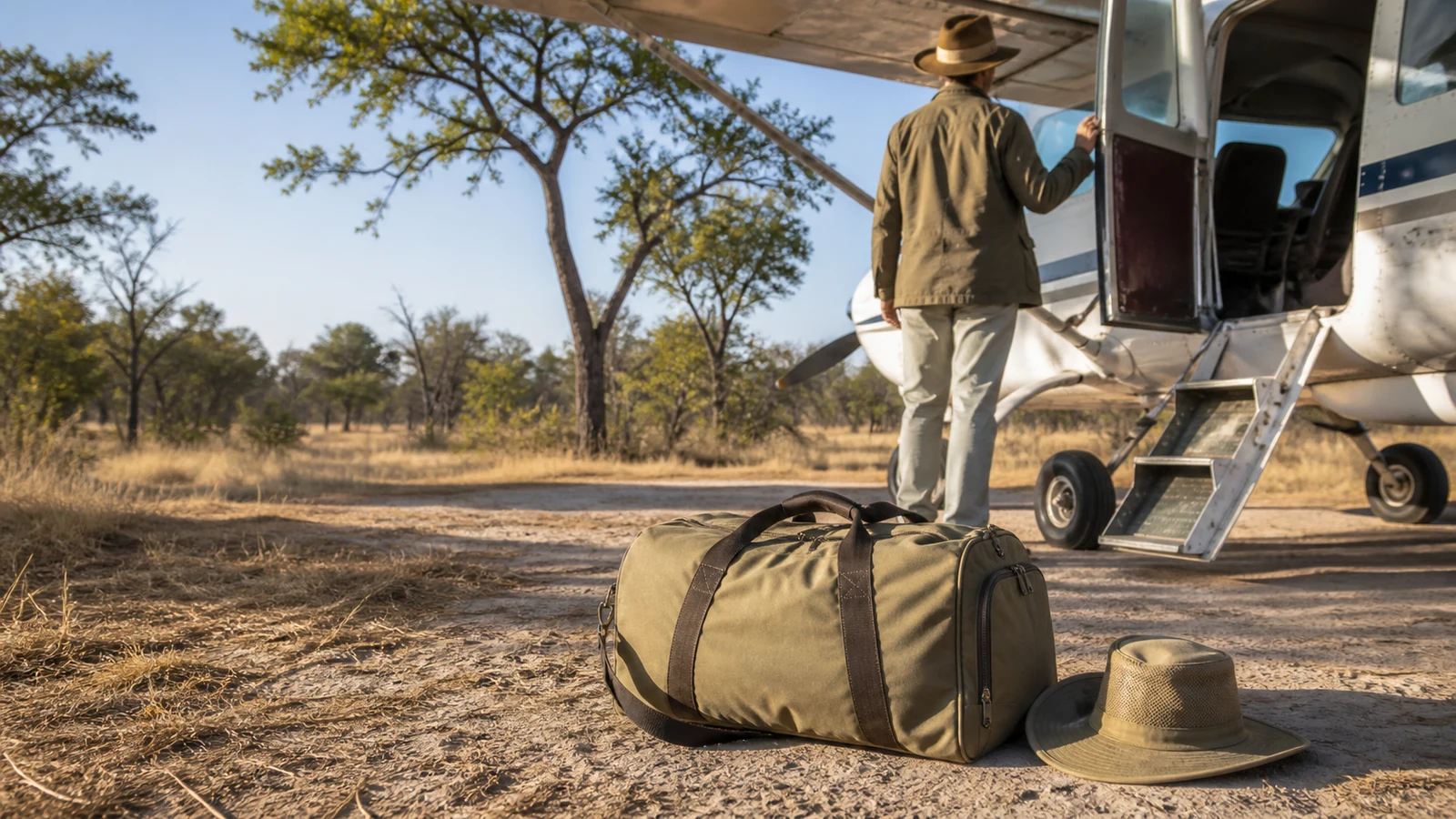
The 15kg limit exists for reasons that have nothing to do with inconveniencing travelers and everything to do with physics. The Cessna Caravans and similar light aircraft that connect Botswana’s remote camps carry six to nine passengers across short bush strips, operating in heat and at altitudes where weight directly affects fuel consumption, takeoff distance, and safety margins. The soft bag requirement exists because cargo holds in these aircraft are irregular shapes – hard-sided cases don’t fit and can’t be secured properly.
Understanding the reason makes the constraint easier to accept. And once you’ve worked through the packing list once, the 15kg limit stops feeling like a restriction and starts feeling like a gift – the freedom of moving through Africa with only what you actually need.
Light Aircraft Luggage Allowance: The Actual Rules
Different operators set slightly different limits, so clarity before you arrive at the airstrip is worth having.
The standard light aircraft luggage allowance across Botswana’s main carriers is 15kg total, in a soft-sided bag. This includes everything – clothing, toiletries, camera equipment, day bag. The bag itself should be collapsible: a soft duffel, a foldable backpack, or a soft-sided travel bag. No wheeled hard cases, no frame backpacks that can’t compress.
The Mack Air luggage limit – Mack Air being one of Botswana’s primary safari charter operators – follows the same 15kg soft bag standard. The Mack Air luggage limit is enforced at check-in and at the airstrip. Excess baggage can sometimes be stored at the Maun or Kasane departure points, but this requires advance arrangement and isn’t guaranteed. The cleaner solution is simply not to bring what you don’t need.
A few practical notes on the rules as they apply:
- Camera bags carried as a personal item are sometimes accommodated separately – confirm with your specific operator before departure
- Children’s luggage is typically included in the family’s combined allowance rather than allocated per person – worth checking at booking
- Medical equipment, CPAP machines, and similar items are generally accommodated with advance notice to the operator
What to Pack for Botswana: The Actual List
The safari packing list Botswana requires is built around three principles: neutral colors, layering, and less than you think.
Clothing – the core list:
- 3-4 neutral-colored shirts or tops (khaki, olive, tan, grey – avoid white and bright colors on game drives)
- 2 pairs of safari trousers or convertible pants
- 1 pair of shorts for camp downtime
- 1 lightweight fleece or mid-layer – mornings in the Okavango and Kalahari are cold June through August
- 1 lightweight waterproof jacket – essential for green season, useful year-round
- 4-5 days of underwear and socks (camps do laundry – more on that below)
- 1 smart-casual outfit for dinner at camp – not formal, but most camps have a dress standard that makes shorts and a game drive shirt feel slightly underdressed at the dinner table
- Comfortable walking shoes or light hiking boots
- Sandals for camp
Toiletries:
- Keep to travel sizes. Every gram counts at 15kg.
- Sunscreen and insect repellent are essential – DEET-based repellent for Botswana’s malaria zones
- Most camps provide basic toiletries but don’t rely on it for specific products
Extras that earn their weight:
- Binoculars – non-negotiable for serious game viewing; the camps provide them but your own pair is better
- A headlamp – power outages at remote camps are occasional
- A lightweight dry bag for boat-based activities and mokoro rides in the Delta
- Lip balm and hand cream – the Botswana dry season produces a specific kind of skin dryness that nobody warns you about
What to leave behind:
- Hair dryers and styling tools (camps have power but the voltage fluctuates and most provide basic drying options)
- Multiple pairs of shoes beyond the two listed above
- Full-sized toiletry bottles
- Anything you’d be genuinely upset to lose or damage in a bush environment
The Laundry Secret Most Travelers Don’t Know About
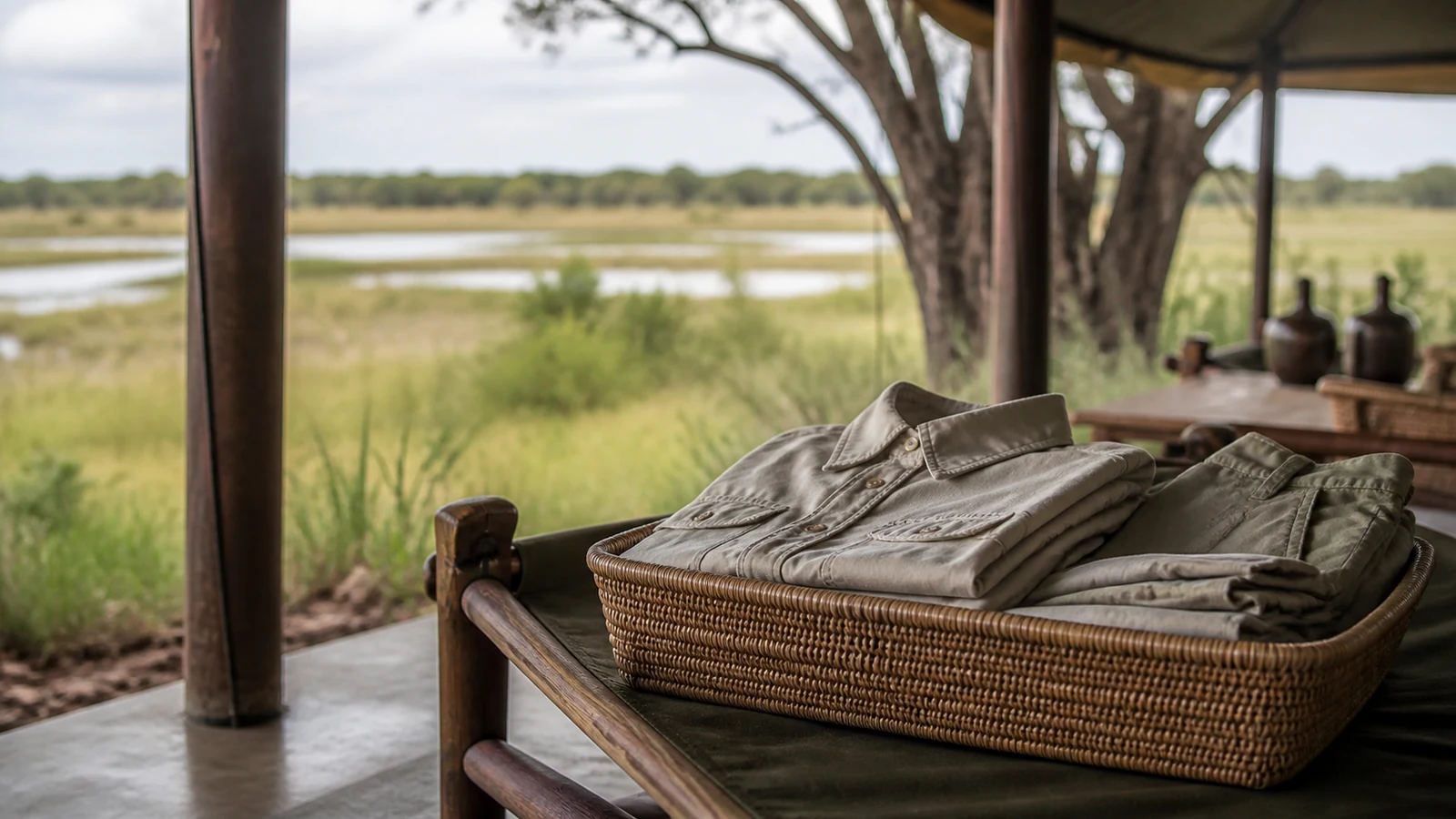
The single piece of information that resolves most packing anxiety for Botswana trips is this: virtually every safari camp in Botswana offers same-day laundry service, and it’s almost always complimentary.
Hand your clothing to camp staff in the morning before the game drive. It comes back clean, dry, and folded by the time you return for lunch or dinner. This is standard practice across the Okavango camps, the Kalahari camps, and the Linyanti and Chobe concessions.
What this means in practice is that what to pack for Botswana is genuinely three to four days of clothing, not ten. The camps handle the rest. A ten-day Botswana itinerary requires the same clothing volume as a four-day itinerary, because the laundry cycle runs faster than the trip does.
This is the piece of pre-departure information we give every Botswana-bound guest, and it consistently produces the same response: mild disbelief, followed by relief, followed by a much lighter duffel bag at the airport.
Camera Gear: The Weight Problem and How to Solve It
For guests traveling with serious camera equipment – long lenses, multiple bodies, tripods – the 15kg limit requires specific planning that goes beyond the clothing list.
A 500mm telephoto lens alone can weigh three kilograms. A camera body, a zoom lens, a laptop, and a few accessories can eat the entire allowance before a single item of clothing is packed. The solution is prioritization and consolidation.
The most practical approach:
- One camera body – Botswana’s light is extraordinary and the wildlife access is extraordinary; one body with two lenses covers almost everything
- A 100-400mm or 150-600mm zoom rather than multiple prime lenses – the zoom range flexibility is worth the slight image quality trade-off in a safari context
- No laptop unless essential – the camps have Wi-Fi, limited but functional; most modern cameras allow direct image backup to cloud storage via phone
- A carry-on camera bag – most operators allow a small personal bag in addition to the checked duffel; this is where the camera body and primary lens travel
The guests who over-pack camera equipment are consistently less happy with their Botswana experience than those who travel light and pick up the camera quickly. The best shot you miss because you were changing lenses is still a miss.
Only One Safaris on the Packing Conversation We Have Before Every Botswana Trip
The 15kg challenge is the logistical detail that produces the most pre-trip anxiety and the least actual problem once guests are on the ground. The camps are designed around the constraint – laundry facilities, lending libraries of books and binoculars, charging stations for camera equipment. What you need in Botswana is less than you think, and what you don’t bring is weight you don’t carry onto a six-seat aircraft in 35-degree heat.
If the luggage question is causing more stress than the trip planning itself, that’s exactly the kind of thing we iron out in the pre-departure consultation we do with every guest. We’ve packed for Botswana hundreds of times across every season and every camp type. We know what makes the 15kg work and what makes guests wish they’d left the extra pair of shoes at home. Reach out before you start filling the duffel – it’s a fifteen-minute conversation that saves three weeks of packing anxiety.
Frequently Asked Questions: Pack Light, Fly High: The 15kg Challenge
What is the Mack Air luggage limit and is it strictly enforced?
15kg in a soft-sided bag, and yes – it’s enforced at the airstrip. Overweight bags are sometimes accommodated if the flight is under capacity, but this cannot be counted on. Storage facilities at Maun airport can hold excess luggage for the duration of the trip, but this requires advance arrangement through your operator. The cleaner solution is packing to the limit from the start.
Does the light aircraft luggage allowance include camera equipment?
Yes, everything counts toward the 15kg total unless specifically arranged otherwise with your operator in advance. Camera bags carried as a personal item are sometimes accommodated separately – confirm this directly with Mack Air or your charter operator before departure, not at the airstrip.
What colors should I avoid on a Botswana safari?
White, bright blue, red, and any fluorescent color. These are visible to wildlife from significant distances and can affect animal behavior on game drives. Neutral earth tones – khaki, olive, tan, brown, grey – are the standard for a reason. Black and dark navy absorb more heat than you want in Botswana’s dry season temperatures and attract tsetse flies in certain areas.
Is the free laundry service available at all Botswana camps?
At the vast majority of camps across the Okavango Delta, Chobe, Linyanti, and Kalahari regions, yes. Mobile camping experiences and a small number of more budget-oriented camps may not offer it. We confirm laundry availability at every camp we book and factor it into our packing guidance for each specific itinerary.
{
“@context”: “https://schema.org”,
“@type”: “FAQPage”,
“mainEntity”: [
{
“@type”: “Question”,
“name”: “What is the Mack Air luggage limit and is it strictly enforced?”,
“acceptedAnswer”: {
“@type”: “Answer”,
“text”: “15kg in a soft-sided bag, and yes – it’s enforced at the airstrip. Overweight bags are sometimes accommodated if the flight is under capacity, but this cannot be counted on. Storage facilities at Maun airport can hold excess luggage for the duration of the trip, but this requires advance arrangement through your operator. The cleaner solution is packing to the limit from the start.”
}
},
{
“@type”: “Question”,
“name”: “Does the light aircraft luggage allowance include camera equipment?”,
“acceptedAnswer”: {
“@type”: “Answer”,
“text”: “Yes, everything counts toward the 15kg total unless specifically arranged otherwise with your operator in advance. Camera bags carried as a personal item are sometimes accommodated separately – confirm this directly with Mack Air or your charter operator before departure, not at the airstrip.”
}
},
{
“@type”: “Question”,
“name”: “What colors should I avoid on a Botswana safari?”,
“acceptedAnswer”: {
“@type”: “Answer”,
“text”: “White, bright blue, red, and any fluorescent color. These are visible to wildlife from significant distances and can affect animal behavior on game drives. Neutral earth tones – khaki, olive, tan, brown, grey – are the standard for a reason. Black and dark navy absorb more heat than you want in Botswana’s dry season temperatures and attract tsetse flies in certain areas.”
}
},
{
“@type”: “Question”,
“name”: “Is the free laundry service available at all Botswana camps?”,
“acceptedAnswer”: {
“@type”: “Answer”,
“text”: “At the vast majority of camps across the Okavango Delta, Chobe, Linyanti, and Kalahari regions, yes. Mobile camping experiences and a small number of more budget-oriented camps may not offer it. We confirm laundry availability at every camp we book and factor it into our packing guidance for each specific itinerary.”
}
}
]
}